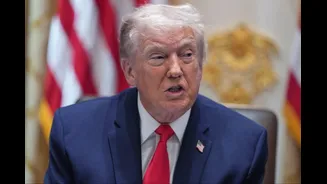

India is one of such allies. The Republican leader has, not once, but on several occasions, shifted his rhetoric towards India. Trump's tariffs became a point of contention in the India-US relationship. However, tariffs were not the only loggerheads that took their relationship downhill.
Here are five things that Trump got wrong about India:
Tariff would force India surrender to his demands
Trump's "favourite word" tariff became almost synonymous with the president in his second term. Like most countries in the world, India was also subjected to reciprocal and punitive levies.
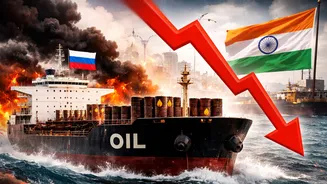
Citing India as the "tariff king," President Trump imposed a 50 per cent tariff on various Indian goods in mid-2025. The administration has repeatedly targeted India for its continued purchase of Russian crude oil. Trump recently asserted that Prime Minister Modi was "making him happy" by cutting some Russian oil imports to avoid even steeper tariffs, while simultaneously threatening to raise duties "very quickly" if India does not comply fully.
But none of these assertions forced India to deter or surrender to his demands. The Indian government under Prime Minister Narendra Modi has been able to offset the effects of Trump tariffs by accelerating policy reforms, like GST restructuring, to bolster economic confidence and growth.
In addition to this, PM Modi has repeatedly been pushing for self-reliance by encouraging citizens to exclusively purchase and promote 'Made in India' products to achieve national self-reliance and development.
Trump couldn't push India to buy F-35s
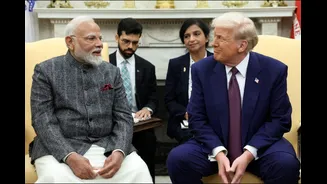
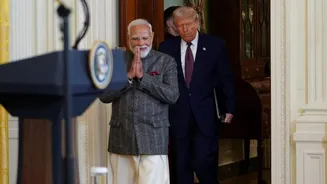
Just a month after his inauguration in January, Trump met PM Modi at the Oval Office, making the prime minister one of the first leaders to meet the president. At a joint press conference, Trump offered India F-35 fighter jets, which were later rejected by New Delhi.
In fact, at the time of Trump's announcement, Indian Foreign Secretary Vikram Misri said that there was a process to be followed for military procurements and that the formal process in this regard hadn’t started “as yet”.
In August 2025, India reportedly rejected Trump's offer to buy more F-35s over his tariff threats. Despite a persistent push from Washington, defence acquisitions remained off the table, effectively declining a primary American objective.
Wrong about Apache helicopters
Trump's hyperbolic self made an appearance earlier this month when he said that India has ordered 68 Apache attack helicopters from the United States. The president went a step ahead to claim that PM Modi sought a meeting with him to discuss the slow delivery of the choppers.
However, an examination of official contracts, delivery logs, deployment information, and consultations with military and diplomatic sources shows the claim to be inaccurate. India ordered only 28 Apache helicopters, and all were delivered by December 2025.
India signed its first Apache deal in September 2015, in the final months of the Obama administration, agreeing to acquire 22 helicopters for the Indian Air Force in a contract worth about $2.2 billion. All aircraft were delivered on schedule, with the last arriving in 2020 during the first Trump administration, and were inducted into two frontline squadrons.
Never right about India-Pak conflict
The US president has been relentlessly claiming that he stopped India and Pakistan from escalating the conflict in May, during India's Operation Sindoor, launched after the Pahalgam attack.
Trump has not once, not twice, not thrice, but more than 200 times, said that he stopped the India-Pakistan conflict, a claim that has been vehemently rejected by New Delhi. Pakistan, on the other hand, has thanked the president for its support during Operation Sindoor that crippled Islamabad's defences.
'India's dead economy'
Trump has shifted from praising India to using more abrasive language regarding its economic status. In late 2025, he described India as a "dead economy" that does "very little business" with the US during a social media rant.
Despite recent external rhetoric, India remains the fastest-growing major economy in the world, with a real GDP growth rate of 8.2 per cent recorded in the second quarter of the 2025–26 fiscal year.
Far from being a 'dead' or stagnant economy, India has officially surpassed Japan to become the world's fourth-largest economy in 2025, with a nominal GDP exceeding $4.1 trillion.