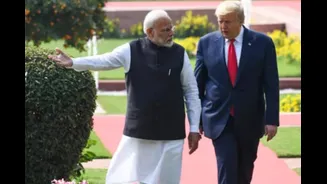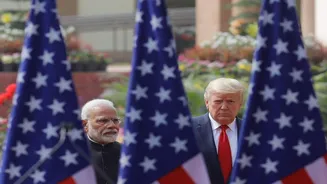

And on Sunday (January 18), US President Donald Trump extended an invite to India to join the Board of Peace as it is being called, the ‘most impressive and consequential Board ever assembled’ as described by the American leader.
But New Delhi is still weighing its options on joining this group, as it poses several complications. Here’s what we know about them.
About Trump’s ‘Board of Peace’
The Board of Peace forms part of the second phase of the Gaza Peace Plan that US President Donald Trump first proposed in September 2025. The peace plan came into effect in October 2025, as phase 1 involved observing a ceasefire in Gaza. In return, Hamas released all Israeli hostages who were captured in the October 7, 2023 attack. Then late last year, the United Nations Security Council approved the Board.
Donald Trump will be the chairman of the ‘Board of Peace’. He also tapped US Secretary of State Marco Rubio and former British Prime Minister Tony Blair as founding members of the Gaza board of peace.
According to a White House statement, the US president also named his special envoy Steve Witkoff, son-in-law Jared Kushner and World Bank President Ajay Banga among those on the seven-member “founding executive board”.
Speaking on the board, Trump said it was the “greatest and most prestigious board ever assembled at any time, any place”.
According to the charter of the Board of Peace, countries can become permanent members by paying the hefty price of $1 billion. “Each Member State shall serve a term of no more than three years from this Charter’s entry into force, subject to renewal by the Chairman. The three-year membership term shall not apply to Member States that contribute more than $1,000,000,000 in cash funds to the Board of Peace within the first year of the Charter’s entry into force,” the draft charter states.
What is even more interesting is that the charter makes no mention of the Board’s role being specific to the Gaza Strip. Moreover, it appoints Trump as the “inaugural chairman” with no term limits, essentially ensuring his control even after his presidential term ends.
The Times of Israel has reported that the US is planning to hold a signing ceremony for President Donald Trump’s Board of Peace on Thursday (January 22) on the sidelines of the World Economic Forum in Davos, Switzerland. However, it’s unclear as to how many countries will join Trump in the signing as well as the group.
Trump’s invite to India to join ‘Board of Peace’
Once announced, Trump extended invites to several countries to join the Board of Peace, including to countries like Pakistan and Russia.
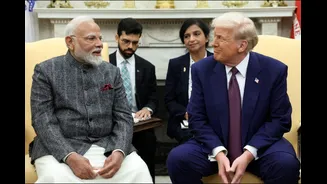
And on Sunday (January 18), the US president invited India to be part of the Board through a letter he addressed to Prime Minister Narendra Modi.
In his invite to Modi, the US president said it was his great honour to invite the prime minister to join him in a “critically historic and magnificent effort to solidify peace” in West Asia and, at the same time, to embark on a “bold new approach to resolving global conflict”.
In the invite, Trump wrote: “On September 29th, 2025, I announced the comprehensive plan to end the Gaza conflict, an extraordinary 20-point roadmap quickly embraced by all world leaders, including major heads of state across the Arab world, Israel, and Europe… Now it is time to turn all of these dreams into reality. At the heart of the plan is the Board of Peace, the most impressive and consequential Board ever assembled, which will be established as a new international organisation and transitional governing administration.”
He further added that the effort is to bring together a “distinguished group of nations” ready to shoulder the “noble responsibility” of building lasting peace — “an honour reserved for those prepared to lead by example and brilliantly invest in a secure and prosperous future for generations to come”.
Honored to convey @POTUS
invitation to Prime Minister @narendramodi to participate in the Board of Peace which will bring lasting peace to Gaza. The Board will support effective governance to achieve stability and prosperity! pic.twitter.com/HikLnXFFMp
— Ambassador Sergio Gor (@USAmbIndia) January 18, 2026
An invite or a dilemma for India
While India has been sent an invite to join Trump’s Board of Peace, New Delhi is yet to accept or decline it; as of now, they are mulling their options with authorities adding that they are looking into the issue as it involves several sensitive aspects.
But there are many reasons for India to be wary of joining Trump’s Board of Peace. Firstly, the charter for the Board of Peace states that it is, “the most impressive and consequential Board ever assembled”, will be “established as a new international organisation and transitional governing administration”, and that the effort is not just to “solidify peace in the Middle East”, but also “to embark on a bold new approach to resolving global conflict!”
Many experts note that the charter doesn’t mention Gaza at all but talks of “the courage to depart from approaches and institutions that have too often failed”, and emphasises “the need for a more nimble and effective international peace-building body.”
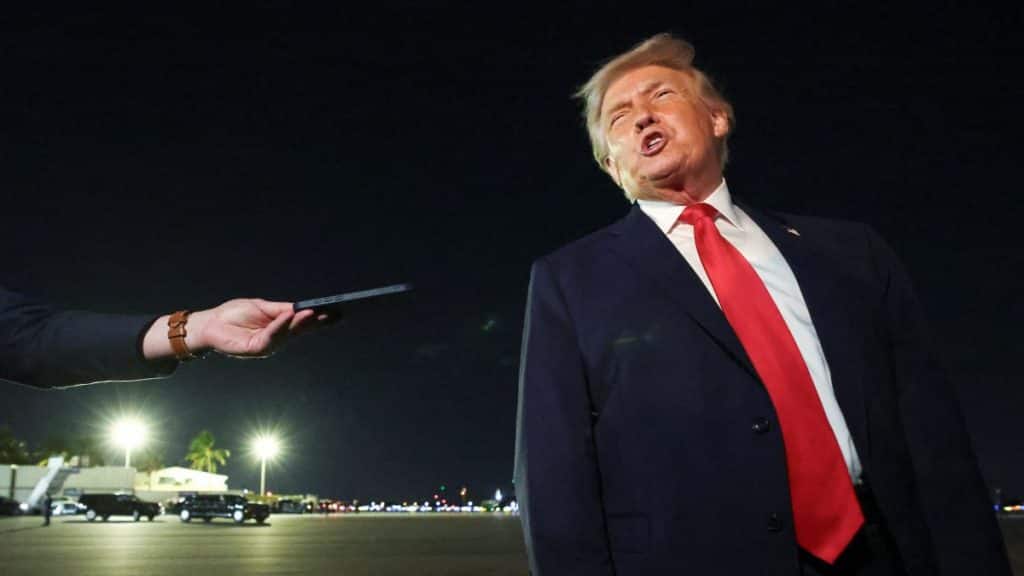
The lack of clarity on the purpose, agenda and contours of the Board of Peace formed by Donald Trump may make India wary about joining it. File image/Reuters
This could indicate that the Board of Peace could intervene in future global conflicts — not something that India would like to be a part of. As Khinvraj Jangid, professor and director at the Jindal Centre for Israel Studies, O P Jindal Global University, noted: “This Board of Peace has a much more ambitious scheme of things that Trump is right now after.
“In fact, the document doesn’t say the word Gaza as such. This Board of Peace is under the guidance of Donald Trump that will advise and make all the interventions in many global conflicts,” he told
Many experts have pointed out that the Board of Peace could be Trump’s effort to sideline the United Nations. Already, Trump has cut funds to the UN and withdrawn the US from many related bodies. This puts India in a tough spot, as New Delhi has defended the importance of an agency such as the UN in the past.
Also, India has been a champion of multilateralism and joining a US-dominated forum could weaken its credibility as a champion of a multilateral order.
There’s also the factor of leadership. The Board’s chairman will permanently be Donald Trump. The charter reads, “Donald J Trump shall serve as inaugural Chairman of the Board of Peace, and he shall separately serve as inaugural representative of the United States of America.”
Also, the charter notes that the chairman can be removed only if he voluntarily resigns, or is voted incapable unanimously by the Executive Board full of his appointees, in which case a successor designated by him shall take over. This means that if India joins the Board, they will be answerable in some ways to Trump — even when he is no longer the US president.
Some even point out that the cost of joining the Board could be an issue. To become a permanent member of the Board of Peace, a country has to pay at least $1 billion to a reconstruction fund. Analysts note that this would make the process selective and fragmented, unlike the UN system where all stakeholders have a voice.
There’s also the issue of where India stands with the US presently. In the one year since Trump has returned to power, US-India ties have been on a downward spiral thanks to the tariffs the US president has levied as well as the deportations and changes to the H-1B visa programme.
Another reason why the Board of Peace invite is problematic for India is the fact that Pakistan has also been invited for the same. If India accepts the invite from Trump, it will be sharing a platform with Islamabad that could invite criticism, considering India currently holds a no-talk position with its neighbouring nation.
As former Foreign Secretary Kanwal Sibal noted on X, “India should not be part of an arrangement that is arbitrarily set up, without UN approval, full of potential difficulties, with business interests of private parties built into the structure. Let the Arab countries principally handle this highly complex Arab issue.”
But not accepting Trump’s invite to the Board of Peace is also problematic. A refusal could be seen by Trump as an affront — and India will be wary of how the US president could respond to what he would perceive as a slight.
With inputs from agencies