








What is the story about?
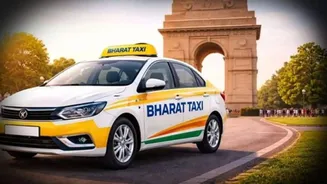
Move over, Uber and Ola, there’s a new ride on the road. Union Cooperation Minister Amit Shah on Thursday officially launched Bharat Taxi, India’s first cooperative-led ride-hailing platform, promising a fairer, commission-free system that puts drivers, not corporate giants, in the driver’s seat.
The launch marks a new chapter in India’s mobility story. After a successful two-month pilot, Bharat Taxi has gone live in Delhi-NCR and Gujarat, with plans to expand across every state and Union Territory within two years.
“In three years, Bharat Taxi will be rolled out across the country, from Kashmir to Kanniyakumari and Dwarka to Kamakhya,” Shah said at the launch event. “The profits will be shared directly with the drivers associated with Bharat Taxi.”
Speaking at the launch event, Shah said the Bharat Taxi service will provide major convenience for taxi drivers, saying that “sahkar (helper), not Sarkar (government)" is formally entering the taxi sector.
“In this system, every driver (Sarathi) is the owner of the taxi, and this structure will bring a revolutionary economic transformation. Like Amul in Gujarat, this is a unique cooperative model of its kind in the world. The wheels of your taxi will run for the benefit of the Sarathi community, this is the spirit of cooperation," he said.
Bharat Taxi isn’t your typical cab app. It’s a driver-owned cooperative, meaning that every driver, referred to as a Sarathi, has a stake in the business. Instead of losing a chunk of their earnings to commissions, drivers pay a flat Rs 30 access fee and keep 100 per cent of their fares.
The platform operates under the Multi-State Cooperative Societies Act, 2002, and was officially registered on 6 June 2025. It’s backed by eight leading cooperative organisations, signalling strong institutional support for a mobility model rooted in equality and profit-sharing.
According to the Ministry of Cooperation, Bharat Taxi has already made waves during its pilot phase. More than 3 lakh drivers have joined, 1 lakh users have registered, and over 10,000 rides were being completed daily across Delhi-NCR and Gujarat. To date, the platform has distributed ₹10 crore directly to drivers, money that would otherwise have gone to middlemen or aggregator commissions.
The service allows users to book cars, three-wheelers and two-wheelers, offering flexibility similar to existing players but with a distinctly cooperative twist.
Bharat Taxi’s biggest promise is no surge pricing, ever. The platform aims to end the frustration of unpredictable fares that spike during rush hours, bad weather, or public holidays. Instead, prices remain stable, and drivers receive fair compensation. There are several other reasons how Bharat Taxi is different than Ola and Uber.
The company also says it’s building a comprehensive social security net for drivers, including health insurance, accident cover, retirement savings, and dedicated support services, benefits that are often missing from the gig economy.
The launch marks a new chapter in India’s mobility story. After a successful two-month pilot, Bharat Taxi has gone live in Delhi-NCR and Gujarat, with plans to expand across every state and Union Territory within two years.
“In three years, Bharat Taxi will be rolled out across the country, from Kashmir to Kanniyakumari and Dwarka to Kamakhya,” Shah said at the launch event. “The profits will be shared directly with the drivers associated with Bharat Taxi.”
Speaking at the launch event, Shah said the Bharat Taxi service will provide major convenience for taxi drivers, saying that “sahkar (helper), not Sarkar (government)" is formally entering the taxi sector.
“In this system, every driver (Sarathi) is the owner of the taxi, and this structure will bring a revolutionary economic transformation. Like Amul in Gujarat, this is a unique cooperative model of its kind in the world. The wheels of your taxi will run for the benefit of the Sarathi community, this is the spirit of cooperation," he said.
Bharat Taxi app launched in India
Bharat Taxi isn’t your typical cab app. It’s a driver-owned cooperative, meaning that every driver, referred to as a Sarathi, has a stake in the business. Instead of losing a chunk of their earnings to commissions, drivers pay a flat Rs 30 access fee and keep 100 per cent of their fares.
The platform operates under the Multi-State Cooperative Societies Act, 2002, and was officially registered on 6 June 2025. It’s backed by eight leading cooperative organisations, signalling strong institutional support for a mobility model rooted in equality and profit-sharing.
According to the Ministry of Cooperation, Bharat Taxi has already made waves during its pilot phase. More than 3 lakh drivers have joined, 1 lakh users have registered, and over 10,000 rides were being completed daily across Delhi-NCR and Gujarat. To date, the platform has distributed ₹10 crore directly to drivers, money that would otherwise have gone to middlemen or aggregator commissions.
The service allows users to book cars, three-wheelers and two-wheelers, offering flexibility similar to existing players but with a distinctly cooperative twist.
Zero surge, zero commission
Bharat Taxi’s biggest promise is no surge pricing, ever. The platform aims to end the frustration of unpredictable fares that spike during rush hours, bad weather, or public holidays. Instead, prices remain stable, and drivers receive fair compensation. There are several other reasons how Bharat Taxi is different than Ola and Uber.
The company also says it’s building a comprehensive social security net for drivers, including health insurance, accident cover, retirement savings, and dedicated support services, benefits that are often missing from the gig economy.