







What is the story about?
After three persons died in a hantavirus outbreak on a cruise ship, the WHO on Monday said that limited human‑to‑human transmission is possible but stressed that such infections involve close and prolonged contact — not general and short contact.
The World Health Organization (WHO) has assessed that the risk to the general global population remains low.
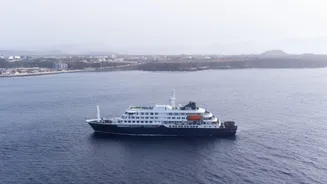
The WHO’s update follows seven people falling ill from confirmed and suspected infections of hantavirus on board the cruise ship MV Hondius. Three of them have died and four are undergoing treatment — one in a hospital in South Africa and the other three on the ship itself.
The cruise, operated by Dutch company Oceanwide Expeditions, set sail from Argentina around three weeks ago for the Canary Islands. It is currently anchored off Cape Verde, an island nation around 500 kilometres off the west coast of Africa.
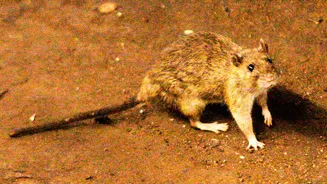
Hantavirus causes hantavirus pulmonary syndrome, a rare infectious disease that begins with flu‑like symptoms and deteriorates rapidly. The virus is mostly carried by rodents. Once infected, patients may require care in an intensive care unit (ICU), including breathing support.
In its update, the WHO said that hantavirus infections in humans are unlikely and human‑to‑human transmission is even more unlikely.
Primarily, the WHO noted, humans acquire hantavirus through contact with the urine, faeces or saliva of infected rodents.
While human‑to‑human transmission is rare, the WHO said that limited human‑to‑human spread has been reported in previous outbreaks.
Even in such cases, the WHO said, human‑to‑human transmission has been observed in community settings involving close and prolonged contact.
“Exposure typically occurs during activities such as cleaning buildings with rodent infestations, though it may also occur during routine activities in heavily infested areas. Human cases are most commonly reported in rural settings, such as forests, fields and farms, where rodents are present and opportunities for exposure are greater,” the WHO update said.
The World Health Organization (WHO) has assessed that the risk to the general global population remains low.
The WHO’s update follows seven people falling ill from confirmed and suspected infections of hantavirus on board the cruise ship MV Hondius. Three of them have died and four are undergoing treatment — one in a hospital in South Africa and the other three on the ship itself.
The cruise, operated by Dutch company Oceanwide Expeditions, set sail from Argentina around three weeks ago for the Canary Islands. It is currently anchored off Cape Verde, an island nation around 500 kilometres off the west coast of Africa.
Hantavirus causes hantavirus pulmonary syndrome, a rare infectious disease that begins with flu‑like symptoms and deteriorates rapidly. The virus is mostly carried by rodents. Once infected, patients may require care in an intensive care unit (ICU), including breathing support.
How does hantavirus spread between people?
In its update, the WHO said that hantavirus infections in humans are unlikely and human‑to‑human transmission is even more unlikely.
Primarily, the WHO noted, humans acquire hantavirus through contact with the urine, faeces or saliva of infected rodents.
While human‑to‑human transmission is rare, the WHO said that limited human‑to‑human spread has been reported in previous outbreaks.
Even in such cases, the WHO said, human‑to‑human transmission has been observed in community settings involving close and prolonged contact.
“Exposure typically occurs during activities such as cleaning buildings with rodent infestations, though it may also occur during routine activities in heavily infested areas. Human cases are most commonly reported in rural settings, such as forests, fields and farms, where rodents are present and opportunities for exposure are greater,” the WHO update said.