








What is the story about?
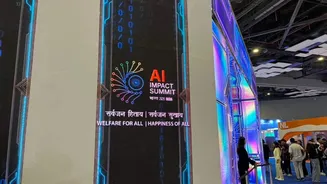
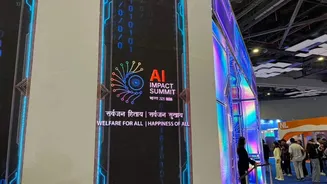
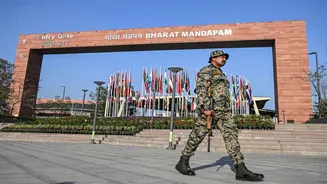
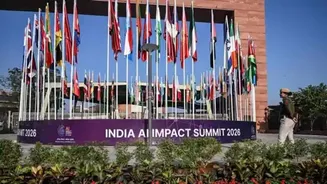
The India AI Impact Summit 2026, taking place from February 16 to 20 in New Delhi, is hosting a distinguished lineup of global leaders, heads of state, and technology executives. Positioned as the first major global AI summit in the Global South, the event focuses on AI's practical impact, safety, and governance. The summit will be attended by 15-20 heads of government, over 50 ministers, and more than 40 global CEOs, with discussions centred around the "People, Planet, and Progress" framework for AI development.
The India AI Impact Summit 2026 will serve as a defining moment in global technology governance, representing the first major AI summit hosted in the Global South. It shifts the global conversation from theoretical dialogue to demonstrable impact and practical implementation. The previous host countries in this specific series were the United Kingdom (2023), South Korea (2024) and France (2025). The summit is built on a framework designed to ensure AI serves as a tool for inclusive, responsible, and sustainable development. By hosting the summit, India has emphasised the role of the Global South. The summit amplifies the voice of emerging economies, ensuring that AI norms and resources are not concentrated in a few regions.
Prominent political leaders scheduled to attend include Prime Minister of India Narendra Modi (who will inaugurate the event), President of France Emmanuel Macron, President of Brazil Luiz Inácio Lula da Silva, United Nations Secretary-General António Guterres, Crown Prince of Abu Dhabi Sheikh Khaled bin Mohamed bin Zayed Al Nahyan, Prime Minister of Bhutan Tshering Tobgay, President of Sri Lanka Anura Kumara Dissanayake, President of Switzerland Guy Parmelin, Prime Minister of the Netherlands Dick Schoof, President of Serbia Aleksandar Vucic, President of Spain Pedro Sánchez Pérez-Castejón, and former British Prime Ministers Rishi Sunak and Tony Blair, along with Deputy Prime Minister of the UK David Lammy.
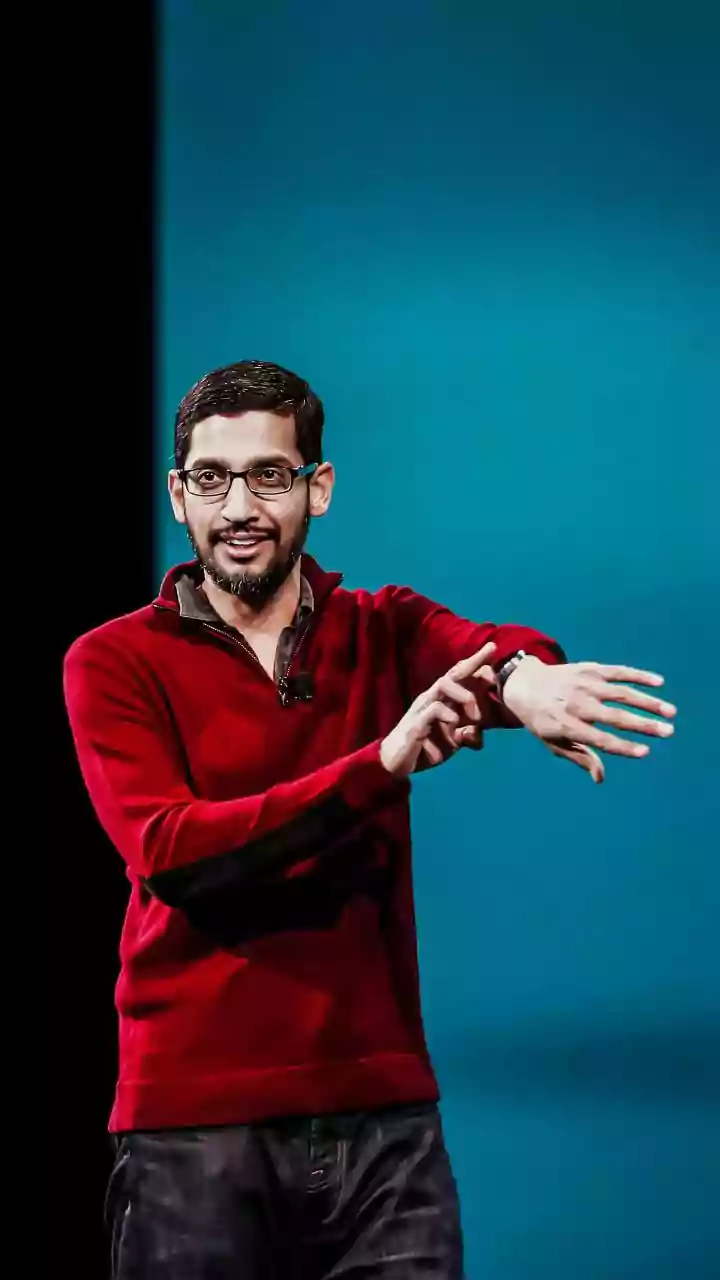
Key figures from the tech industry are also expected, such as Sundar Pichai (CEO of Google and Alphabet), Sam Altman (CEO of OpenAI), Demis Hassabis (co-founder & CEO of Google DeepMind), Dario Amodei (CEO of Anthropic), Brad Smith (president & vice chair of Microsoft), Bill Gates (chair of the Gates Foundation), Alexandr Wang (chief AI officer at Meta), Arthur Mensch (co-founder and CEO of Mistral AI), Cristiano Amon (president & CEO of Qualcomm Incorporated), and Julie Sweet (chair & CEO of Accenture).
Notable Indian business leaders participating include Mukesh Ambani (Chairman and Managing Director of Reliance Industries), Nandan Nilekani (co-founder and Chairman of Infosys), Natarajan Chandrasekaran (Chairman of Tata Sons), and Kiran Mazumdar-Shaw (Chairperson of Biocon Group).
The Three Sutras (foundational principles) which will guide the summit's vision are:
People: Focus on human-centric AI that protects rights and ensures equitable benefits.
Planet: Advancing energy-efficient AI to support climate action and environmental resilience.
Progress: Using AI to drive inclusive economic growth and national productivity.
The summit's work is divided into seven thematic areas (chakras) designed to drive specific changes that India considers very important:
The high-profile attendance of global AI leaders at the 2026 India AI Impact Summit in New Delhi signifies India's emergence as a pivotal, strategic, and foundational hub in the global AI ecosystem. It highlights the country's shift from an outsourcing hub to a major player in shaping, developing, and deploying AI, focusing on inclusive, responsible, and practical applications. By bringing together international stakeholders in New Delhi, India aims to directly influence global AI governance, safety standards, and regulatory frameworks.
The event emphasises the Indian government's commitment to making AI, such as large language models, accessible to startups and academic institutions, enhancing its ecosystem. According to Forbes, the summit signifies a power shift, positioning India as a crucial player alongside the US and China in determining the future of artificial intelligence.
The summit marks a shift from theoretical discussion to practical implementation and measurable outcomes at a population scale. India aims to bridge the "AI divide" by pushing for equitable access to compute power, datasets, and algorithms so that developing nations aren't just passive users. Moving away from the rigid regulatory focus of the Global North, India is promoting a "third way" focused on using AI for inclusive growth in sectors like healthcare, agriculture, and education. The event highlights India's status as the 3rd most AI-competitive nation and its IndiaAI Mission, which includes a ₹10,372 crore investment in indigenous foundation models.
India's economic strategy behind hosting the AI Impact Summit 2026 focuses on accelerating domestic AI adoption for GDP growth, positioning itself as a global AI hub for innovation, and democratising access to technology through the IndiaAI Mission. The strategy highlights fostering a skilled workforce, enabling cost-effective AI development via, for instance, 38,000+ available GPUs, and promoting AI-driven solutions for inclusive social empowerment. India is eyeing approximately $100 billion in investment commitments during the summit to fuel its goal of becoming a $5 trillion economy.
Summing up, the AI Impact Summit 2026 will serve as a major strategic milestone, positioning India as a global leader in artificial intelligence by shifting the focus from abstract regulation to actionable, human-centric, and scalable AI solutions. The event positions India not just as a consumer of AI, but as a producer, with a "full-stack AI leader" potential.
The summit leverages India's reputation for building large-scale digital public infrastructure (like UPI and Aadhaar), aiming to replicate that success in AI, focusing on real-world deployment in agriculture, healthcare, and education. The summit is a declaration that India intends to steer the next phase of AI development to be equitable, inclusive, and beneficial to humanity.
(The writer is a retired Indian diplomat and had previously served as ambassador in Kuwait and Morocco and as Consul General in New York. Views expressed in the above piece are personal and solely those of the author. They do not necessarily reflect Firstpost’s views.)
The India AI Impact Summit 2026 will serve as a defining moment in global technology governance, representing the first major AI summit hosted in the Global South. It shifts the global conversation from theoretical dialogue to demonstrable impact and practical implementation. The previous host countries in this specific series were the United Kingdom (2023), South Korea (2024) and France (2025). The summit is built on a framework designed to ensure AI serves as a tool for inclusive, responsible, and sustainable development. By hosting the summit, India has emphasised the role of the Global South. The summit amplifies the voice of emerging economies, ensuring that AI norms and resources are not concentrated in a few regions.
Prominent political leaders scheduled to attend include Prime Minister of India Narendra Modi (who will inaugurate the event), President of France Emmanuel Macron, President of Brazil Luiz Inácio Lula da Silva, United Nations Secretary-General António Guterres, Crown Prince of Abu Dhabi Sheikh Khaled bin Mohamed bin Zayed Al Nahyan, Prime Minister of Bhutan Tshering Tobgay, President of Sri Lanka Anura Kumara Dissanayake, President of Switzerland Guy Parmelin, Prime Minister of the Netherlands Dick Schoof, President of Serbia Aleksandar Vucic, President of Spain Pedro Sánchez Pérez-Castejón, and former British Prime Ministers Rishi Sunak and Tony Blair, along with Deputy Prime Minister of the UK David Lammy.
Key figures from the tech industry are also expected, such as Sundar Pichai (CEO of Google and Alphabet), Sam Altman (CEO of OpenAI), Demis Hassabis (co-founder & CEO of Google DeepMind), Dario Amodei (CEO of Anthropic), Brad Smith (president & vice chair of Microsoft), Bill Gates (chair of the Gates Foundation), Alexandr Wang (chief AI officer at Meta), Arthur Mensch (co-founder and CEO of Mistral AI), Cristiano Amon (president & CEO of Qualcomm Incorporated), and Julie Sweet (chair & CEO of Accenture).
Notable Indian business leaders participating include Mukesh Ambani (Chairman and Managing Director of Reliance Industries), Nandan Nilekani (co-founder and Chairman of Infosys), Natarajan Chandrasekaran (Chairman of Tata Sons), and Kiran Mazumdar-Shaw (Chairperson of Biocon Group).
The Three Sutras (foundational principles) which will guide the summit's vision are:
People: Focus on human-centric AI that protects rights and ensures equitable benefits.
Planet: Advancing energy-efficient AI to support climate action and environmental resilience.
Progress: Using AI to drive inclusive economic growth and national productivity.
The summit's work is divided into seven thematic areas (chakras) designed to drive specific changes that India considers very important:
- Advancing equitable skilling to prepare the workforce for AI-driven job transitions
- Designing AI that is inclusive by design to serve marginalised communities
- Establishing domestic and global frameworks for transparency and bias mitigation
- Accelerating discovery in health and climate through shared research capacity
- Promoting "frugal AI"—sustainable, low-resource models that work in developing contexts
- Expanding access to critical datasets and GPU compute for startups
- Scaling high-impact use cases into national and global exemplars (ideological models)
The high-profile attendance of global AI leaders at the 2026 India AI Impact Summit in New Delhi signifies India's emergence as a pivotal, strategic, and foundational hub in the global AI ecosystem. It highlights the country's shift from an outsourcing hub to a major player in shaping, developing, and deploying AI, focusing on inclusive, responsible, and practical applications. By bringing together international stakeholders in New Delhi, India aims to directly influence global AI governance, safety standards, and regulatory frameworks.
The event emphasises the Indian government's commitment to making AI, such as large language models, accessible to startups and academic institutions, enhancing its ecosystem. According to Forbes, the summit signifies a power shift, positioning India as a crucial player alongside the US and China in determining the future of artificial intelligence.
The summit marks a shift from theoretical discussion to practical implementation and measurable outcomes at a population scale. India aims to bridge the "AI divide" by pushing for equitable access to compute power, datasets, and algorithms so that developing nations aren't just passive users. Moving away from the rigid regulatory focus of the Global North, India is promoting a "third way" focused on using AI for inclusive growth in sectors like healthcare, agriculture, and education. The event highlights India's status as the 3rd most AI-competitive nation and its IndiaAI Mission, which includes a ₹10,372 crore investment in indigenous foundation models.
India's economic strategy behind hosting the AI Impact Summit 2026 focuses on accelerating domestic AI adoption for GDP growth, positioning itself as a global AI hub for innovation, and democratising access to technology through the IndiaAI Mission. The strategy highlights fostering a skilled workforce, enabling cost-effective AI development via, for instance, 38,000+ available GPUs, and promoting AI-driven solutions for inclusive social empowerment. India is eyeing approximately $100 billion in investment commitments during the summit to fuel its goal of becoming a $5 trillion economy.
Summing up, the AI Impact Summit 2026 will serve as a major strategic milestone, positioning India as a global leader in artificial intelligence by shifting the focus from abstract regulation to actionable, human-centric, and scalable AI solutions. The event positions India not just as a consumer of AI, but as a producer, with a "full-stack AI leader" potential.
The summit leverages India's reputation for building large-scale digital public infrastructure (like UPI and Aadhaar), aiming to replicate that success in AI, focusing on real-world deployment in agriculture, healthcare, and education. The summit is a declaration that India intends to steer the next phase of AI development to be equitable, inclusive, and beneficial to humanity.
(The writer is a retired Indian diplomat and had previously served as ambassador in Kuwait and Morocco and as Consul General in New York. Views expressed in the above piece are personal and solely those of the author. They do not necessarily reflect Firstpost’s views.)