






What is the story about?
In late April, Union Home Minister Amit Shah stood on stage in West Medinipur in West Bengal and told Mamata Banerjee, “I want to tell Didi from Chandipur, ‘Tata, bye-bye. Your time is up! You’ve troubled the people of Bengal a lot. It’s time for you to leave and for the BJP to make an entry.”
Now, weeks later, on May 4, it seems that Amit Shah’s statement has come true after the BJP romped to victory in the state, winning 206 of the 294 seats, while Mamata’s party — the Trinamool Congress — stared at a defeat, securing just 81 seats.
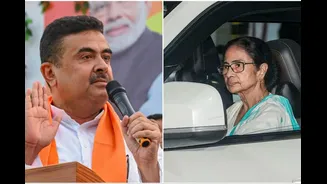
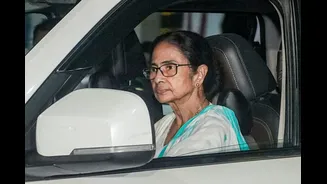
For the BJP, the win is significant; they have not just ousted Mamata Banerjee from her 15-year rule but also won the state for the first time. The win has acquired added political drama and symbolic heft as Chief Minister Mamata Banerjee was defeated in the prestigious
Bhabanipur seat by BJP’s Suvendu Adhikari.
But how did the BJP script such a historic victory? At the centre of this triumph stands none other than Home Minister Amit Shah. And supporting him in this mammoth task were the Fabulous Five — Dharmendra Pradhan, Bhupender Yadav, Sunil Bansal, Biplab Deb, and Amit Malviya.
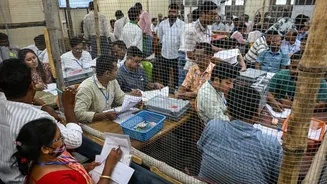
Monday (May 4) was a day of high drama. As counting began in West Bengal, tentative early leads soon hardened into a decisive wave for the BJP. The saffron party swept across the state, securing 206 seats, leaving Mamata’s TMC far behind with just 81 seats.
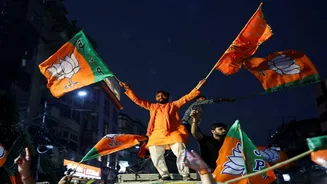
Soon after, celebrations began with the BJP marking this momentous occasion. However, the implications of this win go beyond West Bengal — with this victory, the BJP has breached its last major eastern bastion, completing its saffron arc across ‘Anga, Banga and Kalinga’ (Bihar, Bengal and Odisha).
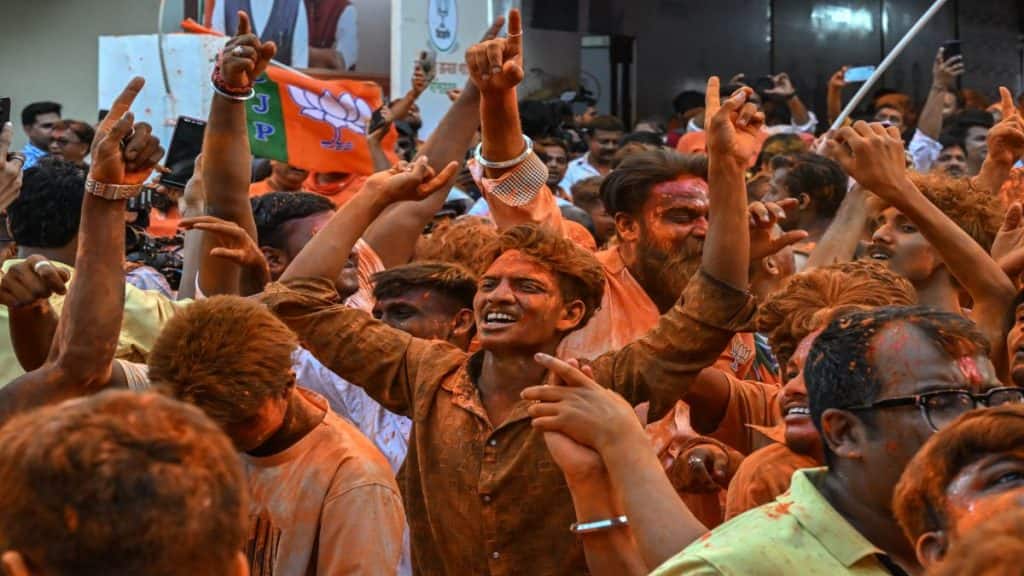
Addressing workers after the historic win, Prime Minister Narendra Modi said, “The lotus blooms in West Bengal,” adding that the party would work to fulfil the aspirations of the people.
Interestingly, the BJP’s win in Bengal isn’t the result of an overnight effort. For years, the party has been trying to make inroads into the state. From a marginal vote share of around four per cent in 2011, the BJP surged to nearly 40 per cent in 2019 and then secured 77 seats in the 2021 Assembly elections, displacing the Left and Congress as the principal challenger to the TMC. Yet, converting that expansion into power had remained elusive until now.
One man can be attributed for the BJP’s stellar performance and that is Amit Shah, also known as the BJP’s Chanakya. Starting in January, he worked to build a methodical booth-level organisation and held a series of night-long meetings with state leaders.
He also travelled the length and breadth of the state — he carried out 66 rallies and roadshows, according to a Moneycontrol analysis — amplifying the BJP’s message to voters. He infused energy into the party cadres and delivered a direct message to the electorate.
Amit Shah also made some big-ticket announcements during his rallies. He promised the implementation of the 7th Pay Commission for government employees and a commitment to strictly enforce law and order.
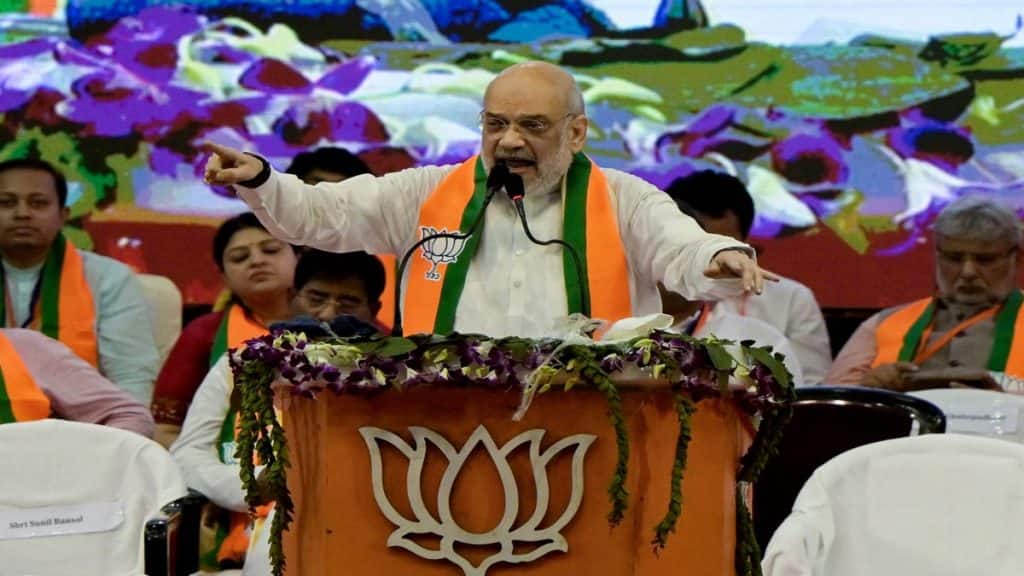
Shah also vowed to seal the Bangladesh border within 45 days, accusing Trinamool of encouraging infiltration for vote-bank politics, while repeatedly targeting alleged corruption through the “cut money” culture and syndicate system. Shah also raised concerns over women’s safety and law and order, and promised measures such as 33 per cent reservation in government jobs. His campaign included welfare pledges like Rs 3,000 monthly support for women, improved salaries for government employees, and land rights for tea garden workers.
Political observers said that the BJP’s strategy this time was sharper, deeper yet far less rhetorical than in 2021 when it had allegedly turned intensely personal, and backfired. This can also be attributed to Amit Shah’s thinking. The BJP under Shah’s directive focused on corruption, scams, and lawlessness under the Trinamool government. In fact, the Union minister hardly ever made personal attacks against Mamata, realising that this strategy hadn’t worked in the previous polls.
But the BJP’s victory was not the result of one person’s strategy alone. Shah was aided by five leaders, who worked in sync with one another to ensure the saffron wave spread across West Bengal, this time around.
These five leaders are: Dharmendra Pradhan, Bhupender Yadav, Sunil Bansal, Biplab Deb, and Amit Malviya.
Dharmendra Pradhan: The Union education minister served as Amit Shah’s chief strategist during the entire campaign period. His main role was to act as a bridge between the central leadership and the state unit. His organisational skills and understanding of local dynamics helped coordinate resources and central visits with the party’s needs on the ground.
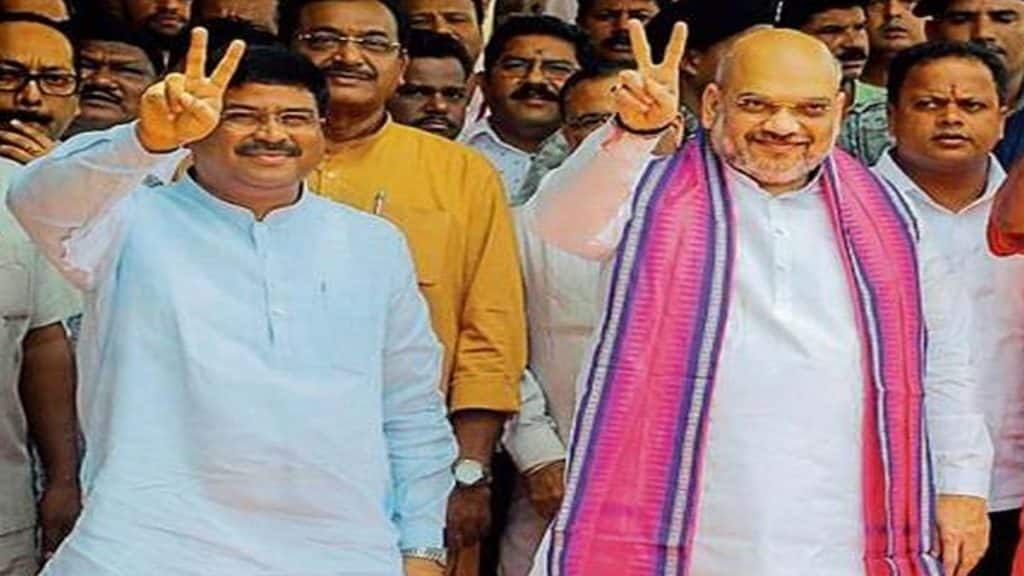
Bhupender Yadav: For the nitty-gritty and smaller details, Amit Shah looked towards Union Environment Minister Bhupender Yadav. He was tasked with mobilising party workers down to the booth level. Amit Shah picked Yadav to aid in the Bengal efforts as the minister has a vast experience of managing elections in large states like Bihar. And it seems that this was handy in handling the complex dynamics of Bengal, where the party faced many challenges.
Sunil Bansal: Amit Shah also roped in national general secretary Sunil Bansal for the Bengal mission. Bansal has worked previously in Uttar Pradesh. Bansal adopted the ‘Panna Pramukh’ model and established a network of party workers, who could pose a direct challenge to the TMC’s cadres.
He also played a crucial role in bridging the gaps and resolving internal differences among the various leaders. Using feedback received from every constituency, he helped to address the shortcomings.
Biplab Deb: The former Tripura CM was also roped in for the BJP Bengal mission. Amit Shah wanted to tap him as he had direct experience of countering the Left. He galvanised local party workers and even encouraged an aggressive style of campaigning among the leaders.
Amit Malviya: Last but not least is the BJP’s I-T cell head. He led the BJP’s battle online, creating narratives and countering those created by the TMC. He used issues like Sandeshkhali and the RG Kar Medical College rape-murder case to highlight the TMC’s lack of governance effectively online, causing a strong anti-TMC sentiment.
All in all, it was a group effort by these six leaders, along with Prime Minister Narendra Modi, that was able to oust the TMC government after 15 long years. Their efforts have introduced a new chapter in Bengal politics.
With inputs from agencies
Now, weeks later, on May 4, it seems that Amit Shah’s statement has come true after the BJP romped to victory in the state, winning 206 of the 294 seats, while Mamata’s party — the Trinamool Congress — stared at a defeat, securing just 81 seats.
For the BJP, the win is significant; they have not just ousted Mamata Banerjee from her 15-year rule but also won the state for the first time. The win has acquired added political drama and symbolic heft as Chief Minister Mamata Banerjee was defeated in the prestigious
- Catch the latest updates from the Assembly election results here
But how did the BJP script such a historic victory? At the centre of this triumph stands none other than Home Minister Amit Shah. And supporting him in this mammoth task were the Fabulous Five — Dharmendra Pradhan, Bhupender Yadav, Sunil Bansal, Biplab Deb, and Amit Malviya.
BJP’s win for the history books
Monday (May 4) was a day of high drama. As counting began in West Bengal, tentative early leads soon hardened into a decisive wave for the BJP. The saffron party swept across the state, securing 206 seats, leaving Mamata’s TMC far behind with just 81 seats.
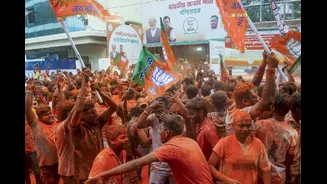
Soon after, celebrations began with the BJP marking this momentous occasion. However, the implications of this win go beyond West Bengal — with this victory, the BJP has breached its last major eastern bastion, completing its saffron arc across ‘Anga, Banga and Kalinga’ (Bihar, Bengal and Odisha).
Bharatiya Janata Party (BJP) supporters celebrate after winning the West Bengal Legislative Assembly elections in Kolkata. AFP
Addressing workers after the historic win, Prime Minister Narendra Modi said, “The lotus blooms in West Bengal,” adding that the party would work to fulfil the aspirations of the people.
Interestingly, the BJP’s win in Bengal isn’t the result of an overnight effort. For years, the party has been trying to make inroads into the state. From a marginal vote share of around four per cent in 2011, the BJP surged to nearly 40 per cent in 2019 and then secured 77 seats in the 2021 Assembly elections, displacing the Left and Congress as the principal challenger to the TMC. Yet, converting that expansion into power had remained elusive until now.
The Chanakya rises
One man can be attributed for the BJP’s stellar performance and that is Amit Shah, also known as the BJP’s Chanakya. Starting in January, he worked to build a methodical booth-level organisation and held a series of night-long meetings with state leaders.
He also travelled the length and breadth of the state — he carried out 66 rallies and roadshows, according to a Moneycontrol analysis — amplifying the BJP’s message to voters. He infused energy into the party cadres and delivered a direct message to the electorate.
Amit Shah also made some big-ticket announcements during his rallies. He promised the implementation of the 7th Pay Commission for government employees and a commitment to strictly enforce law and order.
Amit Shah, India's Minister of Home Affairs, addresses party activists during a gathering in Kolkata. During campaigning, Amit Shah carried out at least 60 rallies to galvanise the workers. File image/AFP
Shah also vowed to seal the Bangladesh border within 45 days, accusing Trinamool of encouraging infiltration for vote-bank politics, while repeatedly targeting alleged corruption through the “cut money” culture and syndicate system. Shah also raised concerns over women’s safety and law and order, and promised measures such as 33 per cent reservation in government jobs. His campaign included welfare pledges like Rs 3,000 monthly support for women, improved salaries for government employees, and land rights for tea garden workers.
Political observers said that the BJP’s strategy this time was sharper, deeper yet far less rhetorical than in 2021 when it had allegedly turned intensely personal, and backfired. This can also be attributed to Amit Shah’s thinking. The BJP under Shah’s directive focused on corruption, scams, and lawlessness under the Trinamool government. In fact, the Union minister hardly ever made personal attacks against Mamata, realising that this strategy hadn’t worked in the previous polls.
Amit Shah’s 5 helping hands
But the BJP’s victory was not the result of one person’s strategy alone. Shah was aided by five leaders, who worked in sync with one another to ensure the saffron wave spread across West Bengal, this time around.
These five leaders are: Dharmendra Pradhan, Bhupender Yadav, Sunil Bansal, Biplab Deb, and Amit Malviya.
Dharmendra Pradhan: The Union education minister served as Amit Shah’s chief strategist during the entire campaign period. His main role was to act as a bridge between the central leadership and the state unit. His organisational skills and understanding of local dynamics helped coordinate resources and central visits with the party’s needs on the ground.
In his efforts, Amit Shah was aided by Dharmendra Pradhan. File image/PTI
Bhupender Yadav: For the nitty-gritty and smaller details, Amit Shah looked towards Union Environment Minister Bhupender Yadav. He was tasked with mobilising party workers down to the booth level. Amit Shah picked Yadav to aid in the Bengal efforts as the minister has a vast experience of managing elections in large states like Bihar. And it seems that this was handy in handling the complex dynamics of Bengal, where the party faced many challenges.
Sunil Bansal: Amit Shah also roped in national general secretary Sunil Bansal for the Bengal mission. Bansal has worked previously in Uttar Pradesh. Bansal adopted the ‘Panna Pramukh’ model and established a network of party workers, who could pose a direct challenge to the TMC’s cadres.
He also played a crucial role in bridging the gaps and resolving internal differences among the various leaders. Using feedback received from every constituency, he helped to address the shortcomings.
Biplab Deb: The former Tripura CM was also roped in for the BJP Bengal mission. Amit Shah wanted to tap him as he had direct experience of countering the Left. He galvanised local party workers and even encouraged an aggressive style of campaigning among the leaders.
Amit Malviya, the BJP's I-T cell head helped create narratives online. Image Courtesy: @amitmalviya/X
Amit Malviya: Last but not least is the BJP’s I-T cell head. He led the BJP’s battle online, creating narratives and countering those created by the TMC. He used issues like Sandeshkhali and the RG Kar Medical College rape-murder case to highlight the TMC’s lack of governance effectively online, causing a strong anti-TMC sentiment.
All in all, it was a group effort by these six leaders, along with Prime Minister Narendra Modi, that was able to oust the TMC government after 15 long years. Their efforts have introduced a new chapter in Bengal politics.
With inputs from agencies