




What is the story about?
Spain is reeling from a deadly collision between two high-speed trains. At least 21 people died and more than 70 were injured after a high-speed train derailed and slammed into another oncoming train on Sunday (January 18).
The accident took place near the town of Adamuz, close to the city of Cordoba, about 360 km south of the capital Madrid, at 6:40 pm local time (17:40 GMT). Authorities fear the death toll could rise.
Here’s what we know about the Spain train crash.
A high-speed train travelling from Malaga to Madrid derailed and crossed over onto another track, smashing into another oncoming train in southern Spain.
The Iryo-operated train went off the rails near Cordoba and collided with the second train, heading to Huelva from Madrid.
Iryo, the private rail company, said around 300 passengers were on the train that first derailed.
"The Iryo 6189 Malaga - (to Madrid) train has derailed from the track at Adamuz, crashing onto the adjacent track. The (Madrid) to Huelva train which was travelling on the adjacent track has also derailed," Adif, Spain's rail network operator, posted on social media.
The second train, operated by state-funded Renfe, was travelling at a speed of 200 km per hour at the time of the incident, reported El Pais newspaper.
As per Television Espanola, a public broadcaster, the 27-year-old driver of the Renfe train was among the casualties.
As many as 75 people have been hospitalised, of whom 15 are in serious condition, Reuters reported, citing the chief of Andalucia's regional government, Juanma Moreno.
"The forcefulness of the accident has been very strong ... we will likely find (more) corpses," Moreno said.
Some of the train carriages had plunged down the side of a railway embankment of four metres, according to Antonio Sanz, the top emergencies official in Andalusia.
Spanish Minister of Transport Oscar Puente told reporters at a news conference in Madrid that the cause of the crash was not yet known. He said it was "really strange" that the train derailed on a straight stretch of track, which was refurbished in May last year.
Puente said most of those killed and injured were in the first two carriages of the second train. The first carriage had 37 people on board and the second, 16, he added.
The transport minister said that it could take at least a month to determine the crash's cause.
Cordoba fire chief Francisco Carmona told Spanish public broadcaster RTVE that the Renfe carriages were badly damaged, with twisted metal and seats. Hundreds of passengers were trapped in the wreckage.
"The problem is that the carriages are twisted, so the metal is twisted with the people inside. We have even had to remove a dead person to be able to reach someone alive. It is hard, tricky work," he added.
"There are still people trapped. The operation is concentrating on getting people out of areas which are very narrow," the Cordoba fire chief said.
Salvador Jimenez, a journalist with RTVE who was on one of the trains, described the impact felt like an "earthquake".
"I was in the first carriage. There was a moment when it felt like an earthquake and the train had indeed derailed," Jimenez said.
He told TVE by phone that passengers had used emergency hammers to smash the windows and climb out of the stricken trains.
Lucas Meriako, who was travelling on the first train that derailed, told La Sexta television that "this looks like a horror movie".
"We felt a very strong hit from behind and the feeling that the whole train was about to collapse, break... there were many injured due to the glass," he said.
"There are many injured. I am still trembling," Maria San José, 33, a passenger in coach 6 of the first train, told El Pais.
A woman named Carmen wrote on X that she was also on board the train to Madrid. "Ten minutes after departing [from Cordoba] the train started to shake a lot, and it derailed from coach 6 behind us," she wrote.
"The lights went out."
A passenger on the second train, who was not identified, told TVE: "There were people screaming, their bags fell from the shelves. I was travelling to Huelva in the fourth carriage, the last, luckily."
While most of the 400 passengers on the two ill-fated trains were Spaniards, it remains unclear how many tourists may have been on board, as January is not a holiday season in Spain.
The regional Civil Protection chief, María Belén Moya Rojas, told TV channel Canal Sur that the crash happened in an area hard to access. Local people were providing blankets and water at the scene to help the victims, she said.
Spain's Prime Minister, Pedro Sánchez, said the country will endure a "night of deep pain".
"No words can alleviate such great suffering, but I want them to know that the whole country is by their side in this tough moment," he wrote on X.
The mayor of Adamuz, Rafael Moreno, who was among the first people on the scene of the accident, called it "a nightmare".
The Emergency Agency of Andalucía urged any crash survivors to inform they are alive through social media.
Foreign embassies sent text messages to staff to confirm they were safe, reported Reuters.
Troops have also been deployed from a military base near the crash site to aid rescue and recovery efforts, the Military Emergency Service said.
King Felipe VI and Queen Letizia said they were following the news with "with great concern".
"We extend our most heartfelt condolences to the relatives and loved ones of the dead, as well as our love and wishes for a swift recovery to the injured," the royal palace posted on X.
French President Emmanuel Macron and European Commission chief Ursula von der Leyen also offered condolences.
All rail services between Madrid and Andalusia were suspended after the accident and will remain closed on Monday.
The Spanish Red Cross has dispatched emergency support services to the scene, along with offering counselling to families nearby.
Miguel Ángel Rodríguez from the Red Cross told RNE radio: "The families are going through a situation of great anxiety due to the lack of information. These are very distressing moments."
With inputs from agencies
The accident took place near the town of Adamuz, close to the city of Cordoba, about 360 km south of the capital Madrid, at 6:40 pm local time (17:40 GMT). Authorities fear the death toll could rise.
Here’s what we know about the Spain train crash.
2 trains collide in Spain
A high-speed train travelling from Malaga to Madrid derailed and crossed over onto another track, smashing into another oncoming train in southern Spain.
The Iryo-operated train went off the rails near Cordoba and collided with the second train, heading to Huelva from Madrid.
Iryo, the private rail company, said around 300 passengers were on the train that first derailed.
"The Iryo 6189 Malaga - (to Madrid) train has derailed from the track at Adamuz, crashing onto the adjacent track. The (Madrid) to Huelva train which was travelling on the adjacent track has also derailed," Adif, Spain's rail network operator, posted on social media.
The second train, operated by state-funded Renfe, was travelling at a speed of 200 km per hour at the time of the incident, reported El Pais newspaper.
As per Television Espanola, a public broadcaster, the 27-year-old driver of the Renfe train was among the casualties.
As many as 75 people have been hospitalised, of whom 15 are in serious condition, Reuters reported, citing the chief of Andalucia's regional government, Juanma Moreno.
"The forcefulness of the accident has been very strong ... we will likely find (more) corpses," Moreno said.
Some of the train carriages had plunged down the side of a railway embankment of four metres, according to Antonio Sanz, the top emergencies official in Andalusia.
Spanish Minister of Transport Oscar Puente told reporters at a news conference in Madrid that the cause of the crash was not yet known. He said it was "really strange" that the train derailed on a straight stretch of track, which was refurbished in May last year.
Puente said most of those killed and injured were in the first two carriages of the second train. The first carriage had 37 people on board and the second, 16, he added.
The transport minister said that it could take at least a month to determine the crash's cause.
Cordoba fire chief Francisco Carmona told Spanish public broadcaster RTVE that the Renfe carriages were badly damaged, with twisted metal and seats. Hundreds of passengers were trapped in the wreckage.
"The problem is that the carriages are twisted, so the metal is twisted with the people inside. We have even had to remove a dead person to be able to reach someone alive. It is hard, tricky work," he added.
"There are still people trapped. The operation is concentrating on getting people out of areas which are very narrow," the Cordoba fire chief said.
‘Felt like earthquake’
Salvador Jimenez, a journalist with RTVE who was on one of the trains, described the impact felt like an "earthquake".
"I was in the first carriage. There was a moment when it felt like an earthquake and the train had indeed derailed," Jimenez said.
He told TVE by phone that passengers had used emergency hammers to smash the windows and climb out of the stricken trains.
Lucas Meriako, who was travelling on the first train that derailed, told La Sexta television that "this looks like a horror movie".
"We felt a very strong hit from behind and the feeling that the whole train was about to collapse, break... there were many injured due to the glass," he said.
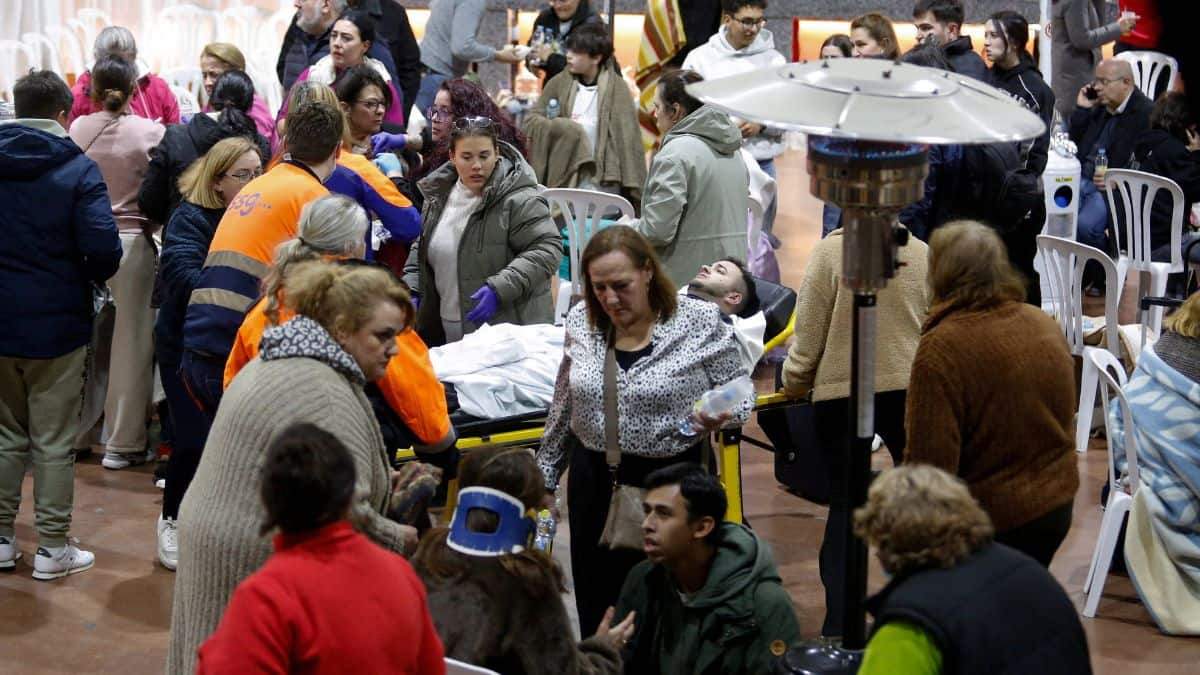
People affected by a deadly train derailment are transferred and treated at the Caseta Municipal in the town of Adamuz, after a high-speed train derailed and collided with another approaching train near Cordoba, Spain, January 18, 2026. Reuters
"There are many injured. I am still trembling," Maria San José, 33, a passenger in coach 6 of the first train, told El Pais.
A woman named Carmen wrote on X that she was also on board the train to Madrid. "Ten minutes after departing [from Cordoba] the train started to shake a lot, and it derailed from coach 6 behind us," she wrote.
"The lights went out."
A passenger on the second train, who was not identified, told TVE: "There were people screaming, their bags fell from the shelves. I was travelling to Huelva in the fourth carriage, the last, luckily."
While most of the 400 passengers on the two ill-fated trains were Spaniards, it remains unclear how many tourists may have been on board, as January is not a holiday season in Spain.
The regional Civil Protection chief, María Belén Moya Rojas, told TV channel Canal Sur that the crash happened in an area hard to access. Local people were providing blankets and water at the scene to help the victims, she said.
Spain shocked by train accident
Spain's Prime Minister, Pedro Sánchez, said the country will endure a "night of deep pain".
"No words can alleviate such great suffering, but I want them to know that the whole country is by their side in this tough moment," he wrote on X.
The mayor of Adamuz, Rafael Moreno, who was among the first people on the scene of the accident, called it "a nightmare".
The Emergency Agency of Andalucía urged any crash survivors to inform they are alive through social media.
Foreign embassies sent text messages to staff to confirm they were safe, reported Reuters.
Troops have also been deployed from a military base near the crash site to aid rescue and recovery efforts, the Military Emergency Service said.
King Felipe VI and Queen Letizia said they were following the news with "with great concern".
"We extend our most heartfelt condolences to the relatives and loved ones of the dead, as well as our love and wishes for a swift recovery to the injured," the royal palace posted on X.
French President Emmanuel Macron and European Commission chief Ursula von der Leyen also offered condolences.
All rail services between Madrid and Andalusia were suspended after the accident and will remain closed on Monday.
The Spanish Red Cross has dispatched emergency support services to the scene, along with offering counselling to families nearby.
Miguel Ángel Rodríguez from the Red Cross told RNE radio: "The families are going through a situation of great anxiety due to the lack of information. These are very distressing moments."
With inputs from agencies