







What is the story about?
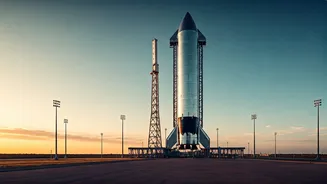
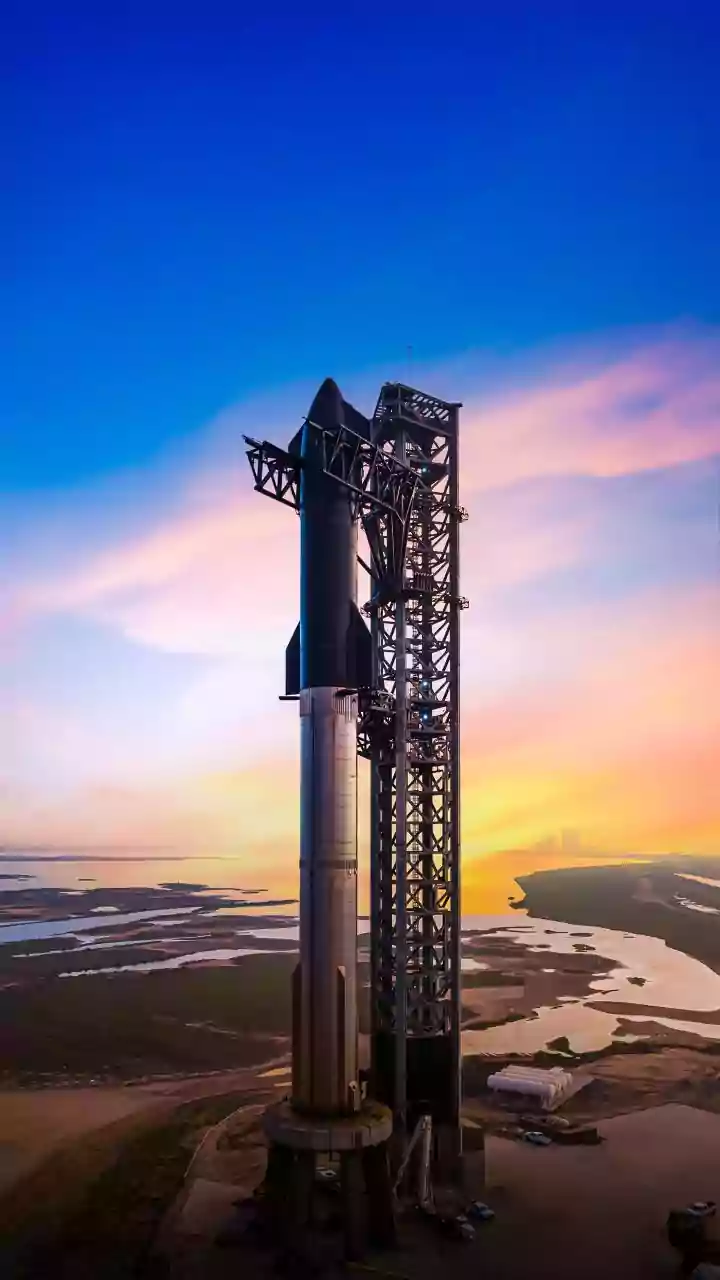
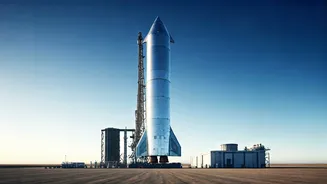
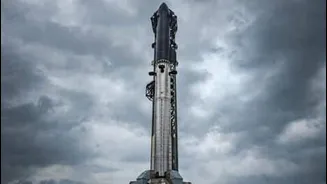
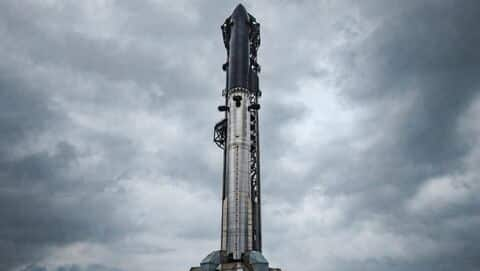
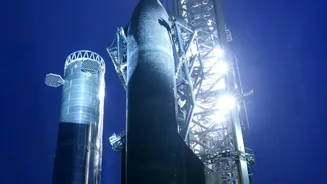
Towering more than 400 feet into the sky, SpaceX has fully stacked its newest Starship rocket for the first time, assembling what could become the company’s most important spacecraft yet. Known as Starship Version 3, the upgraded vehicle is not just another prototype. It represents the next major step in Elon Musk’s plan to turn Starship from an experimental rocket into a functioning deep-space transport system.
And this time, the changes are not subtle.
The new Starship is taller, more powerful and significantly redesigned compared to earlier versions. If upcoming test flights go well, this could be the vehicle that finally pushes SpaceX beyond dramatic launch tests and into real orbital operations, including refuelling missions, Moon landings and eventually, journeys toward Mars.
The fully stacked rocket now standing at SpaceX’s Starbase facility near Brownsville, Texas measures around 408 feet tall, making it even larger than previous Starship variants.
Its upgrades touch nearly every part of the system.
At the heart of the redesign are improved Raptor 3 engines, which SpaceX says are more efficient and capable of producing higher thrust. During liftoff, Starship V3 is expected to generate around 18 million pounds of thrust, roughly 10 per cent more than earlier Super Heavy boosters.
The scale of the vehicle remains almost difficult to comprehend. One internal methane transfer tube inside the booster is reportedly about the same size as an entire Falcon 9 first-stage rocket.
There are also visible structural changes. SpaceX has redesigned the booster’s hot-staging system with a reusable lattice-like structure near the top of the rocket. The grid fins used to guide the booster back to Earth have also been modified, dropping from four fins to three in a redesigned configuration aimed at improving recovery operations.
These upgrades are not simply about making Starship bigger. They are designed to prepare the vehicle for more complex missions in space.
One of the biggest future milestones for Starship V3 will be orbital refuelling. Engineers see this as essential for long-distance space travel because spacecraft heading to the Moon or Mars cannot carry all the fuel they need at launch. Instead, they must refuel while already in orbit.
That capability is especially important for NASA’s Artemis programme, which plans to use Starship as a lunar lander for future Moon missions.
Before Starship V3 can fly, however, SpaceX still has several hurdles left to clear.
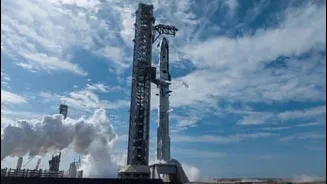
The company recently completed a major launch rehearsal, loading more than 11 million pounds of super-cooled methane and liquid oxygen into the rocket after overcoming earlier technical issues. Earlier this month, SpaceX also successfully test-fired all 33 Raptor engines on the Super Heavy booster.
The upcoming mission will mark the 12th full-scale Starship test flight overall and the first launch from a brand-new launch pad at Starbase.
If the mission proceeds successfully, the upper stage will attempt a controlled splashdown in the Indian Ocean roughly an hour after launch. Eventually, SpaceX plans to catch both the booster and the ship itself using giant mechanical arms mounted on the launch tower, something the company has already demonstrated with boosters during earlier tests.
Still, final preparations remain underway. Workers must install the rocket’s flight termination system, which would destroy the vehicle if it veers off course. SpaceX is also still waiting for final launch approval from the Federal Aviation Administration.
For now, Starship V3 remains grounded. But if it flies successfully, it could mark the moment SpaceX’s giant rocket finally starts behaving less like an experiment and more like the future of space travel.
And this time, the changes are not subtle.
The new Starship is taller, more powerful and significantly redesigned compared to earlier versions. If upcoming test flights go well, this could be the vehicle that finally pushes SpaceX beyond dramatic launch tests and into real orbital operations, including refuelling missions, Moon landings and eventually, journeys toward Mars.
Starship Version 3 is bigger, stronger and built for longer missions
The fully stacked rocket now standing at SpaceX’s Starbase facility near Brownsville, Texas measures around 408 feet tall, making it even larger than previous Starship variants.
Its upgrades touch nearly every part of the system.
Starship’s twelfth flight test will debut the next generation Starship and Super Heavy vehicles, powered by the next evolution of the Raptor engine and launching from a newly designed pad at Starbase. The launch is targeted as early as Tuesday, May 19 → https://t.co/2gZQUxS6mm pic.twitter.com/JxmpL2WE4w
— SpaceX (@SpaceX) May 12, 2026
At the heart of the redesign are improved Raptor 3 engines, which SpaceX says are more efficient and capable of producing higher thrust. During liftoff, Starship V3 is expected to generate around 18 million pounds of thrust, roughly 10 per cent more than earlier Super Heavy boosters.
The scale of the vehicle remains almost difficult to comprehend. One internal methane transfer tube inside the booster is reportedly about the same size as an entire Falcon 9 first-stage rocket.
There are also visible structural changes. SpaceX has redesigned the booster’s hot-staging system with a reusable lattice-like structure near the top of the rocket. The grid fins used to guide the booster back to Earth have also been modified, dropping from four fins to three in a redesigned configuration aimed at improving recovery operations.
These upgrades are not simply about making Starship bigger. They are designed to prepare the vehicle for more complex missions in space.
One of the biggest future milestones for Starship V3 will be orbital refuelling. Engineers see this as essential for long-distance space travel because spacecraft heading to the Moon or Mars cannot carry all the fuel they need at launch. Instead, they must refuel while already in orbit.
That capability is especially important for NASA’s Artemis programme, which plans to use Starship as a lunar lander for future Moon missions.
What happens next before launch?
Before Starship V3 can fly, however, SpaceX still has several hurdles left to clear.
The company recently completed a major launch rehearsal, loading more than 11 million pounds of super-cooled methane and liquid oxygen into the rocket after overcoming earlier technical issues. Earlier this month, SpaceX also successfully test-fired all 33 Raptor engines on the Super Heavy booster.
The upcoming mission will mark the 12th full-scale Starship test flight overall and the first launch from a brand-new launch pad at Starbase.
If the mission proceeds successfully, the upper stage will attempt a controlled splashdown in the Indian Ocean roughly an hour after launch. Eventually, SpaceX plans to catch both the booster and the ship itself using giant mechanical arms mounted on the launch tower, something the company has already demonstrated with boosters during earlier tests.
Still, final preparations remain underway. Workers must install the rocket’s flight termination system, which would destroy the vehicle if it veers off course. SpaceX is also still waiting for final launch approval from the Federal Aviation Administration.
For now, Starship V3 remains grounded. But if it flies successfully, it could mark the moment SpaceX’s giant rocket finally starts behaving less like an experiment and more like the future of space travel.