








What is the story about?
Amazon’s ambitious push into satellite internet is finally nearing a milestone. In his latest annual letter to shareholders, CEO Andy Jassy revealed that Amazon Leo, the company’s answer to Starlink, is slated for a “mid-2026” launch.
While the announcement signals progress, key details around consumer availability remain unclear.
In the letter to shareholders, Jassy noted that the service is already generating traction among enterprise and government clients.
“While Amazon Leo is officially scheduled to launch in mid-2026, we already have meaningful revenue commitments from enterprises and governments,” he wrote, pointing to partnerships with airlines such as Delta and JetBlue, alongside telecom and institutional players including AT&T, Vodafone, DirecTV Latin America, and NASA.
The company has also been quietly testing the system with select enterprise customers since late last year, focusing on delivering high-speed, low-latency connectivity. However, whether everyday users will gain access at launch is still uncertain.
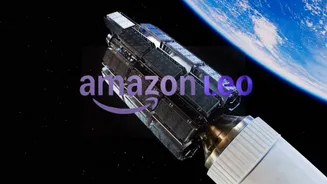
Despite the momentum, Amazon’s satellite project has struggled with execution challenges. The constellation currently consists of only around 240 satellites, far short of what is required for reliable global coverage. This shortfall has already forced the company to seek regulatory relief.
Earlier this year, Amazon approached the Federal Communications Commission for an extension on a looming July 2026 deadline that mandates at least 1,600 satellites in orbit. The company acknowledged it would likely fall well short, estimating that only about 700 satellites will be operational by then.
The delays highlight the scale and complexity of building a low-Earth orbit network.
Amazon has attempted to reassure regulators by emphasising its long-term commitment, stating it has invested billions to secure launch contracts through early 2029. It has also outlined plans to increase launch frequency and maximise payload efficiency by fitting more satellites into each mission.
“By this date, Amazon Leo also expects to have its customer terminals in the hands of more enterprise and government customers, and to be poised to roll out service more broadly in the US and across the globe,” the company said in its communication with regulators.
Amazon’s biggest challenge is not just launching satellites, but catching up with an already dominant rival. Starlink, operated by SpaceX, has surged ahead with more than 10 million users globally and a constellation exceeding 10,000 satellites.
Leo aims to differentiate itself through performance and pricing. According to Jassy, the service will deliver significant improvements in speed, particularly for uploads. “First, the performance will be stronger (about six to eight times better on uplink, and two times better on downlink) than what customers have access to now,” he said. “Second, this performance will come at a lower cost than alternatives."
Another key advantage Amazon is betting on is integration with its cloud ecosystem. “Leo will seamlessly integrate with AWS to enable enterprises and governments to move data back and forth for storage, analytics, and AI,” Jassy added, signalling a strong enterprise-first strategy.
However, scale remains the decisive factor. Starlink began its beta rollout in 2020 with roughly 800 satellites, a number Amazon is still working towards. Until Leo can match that level of infrastructure, delivering consistent global service will remain a challenge.
For now, Amazon Leo represents both promise and pressure, a high-stakes effort to carve out space in a market where the competition already has a significant head start.
While the announcement signals progress, key details around consumer availability remain unclear.
In the letter to shareholders, Jassy noted that the service is already generating traction among enterprise and government clients.
“While Amazon Leo is officially scheduled to launch in mid-2026, we already have meaningful revenue commitments from enterprises and governments,” he wrote, pointing to partnerships with airlines such as Delta and JetBlue, alongside telecom and institutional players including AT&T, Vodafone, DirecTV Latin America, and NASA.
The company has also been quietly testing the system with select enterprise customers since late last year, focusing on delivering high-speed, low-latency connectivity. However, whether everyday users will gain access at launch is still uncertain.
Amazon Leo is delayed
Despite the momentum, Amazon’s satellite project has struggled with execution challenges. The constellation currently consists of only around 240 satellites, far short of what is required for reliable global coverage. This shortfall has already forced the company to seek regulatory relief.
Earlier this year, Amazon approached the Federal Communications Commission for an extension on a looming July 2026 deadline that mandates at least 1,600 satellites in orbit. The company acknowledged it would likely fall well short, estimating that only about 700 satellites will be operational by then.
The delays highlight the scale and complexity of building a low-Earth orbit network.
Amazon has attempted to reassure regulators by emphasising its long-term commitment, stating it has invested billions to secure launch contracts through early 2029. It has also outlined plans to increase launch frequency and maximise payload efficiency by fitting more satellites into each mission.
“By this date, Amazon Leo also expects to have its customer terminals in the hands of more enterprise and government customers, and to be poised to roll out service more broadly in the US and across the globe,” the company said in its communication with regulators.
Amazon Leo vs SpaceX Starlink
Amazon’s biggest challenge is not just launching satellites, but catching up with an already dominant rival. Starlink, operated by SpaceX, has surged ahead with more than 10 million users globally and a constellation exceeding 10,000 satellites.
Leo aims to differentiate itself through performance and pricing. According to Jassy, the service will deliver significant improvements in speed, particularly for uploads. “First, the performance will be stronger (about six to eight times better on uplink, and two times better on downlink) than what customers have access to now,” he said. “Second, this performance will come at a lower cost than alternatives."
Another key advantage Amazon is betting on is integration with its cloud ecosystem. “Leo will seamlessly integrate with AWS to enable enterprises and governments to move data back and forth for storage, analytics, and AI,” Jassy added, signalling a strong enterprise-first strategy.
However, scale remains the decisive factor. Starlink began its beta rollout in 2020 with roughly 800 satellites, a number Amazon is still working towards. Until Leo can match that level of infrastructure, delivering consistent global service will remain a challenge.
For now, Amazon Leo represents both promise and pressure, a high-stakes effort to carve out space in a market where the competition already has a significant head start.