






What is the story about?
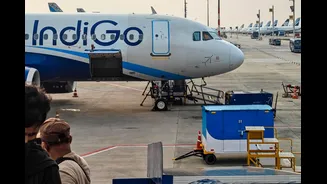
Air travel disruptions across Asia have caused chaos. Thousands of passengers were stranded as more than 60 flights were cancelled and thousands of others delayed on Monday (April 13) at major airports across India, Thailand, Japan and other Asian countries.
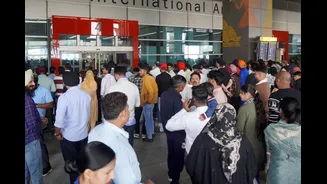
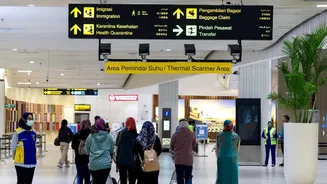
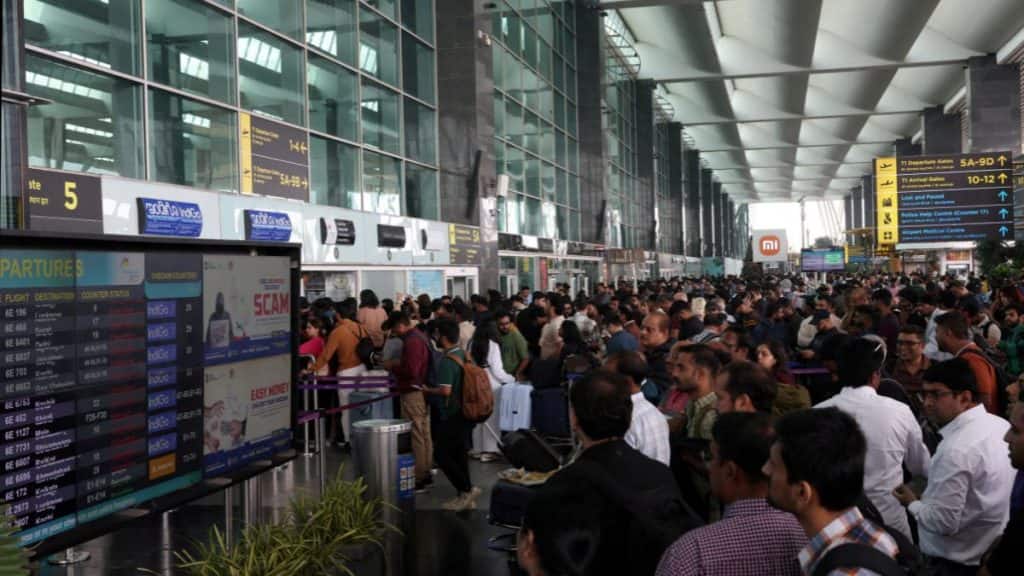
Long queues and overcrowded terminals were seen at major airports across the region. IndiGo, Batik Air and Singapore Airlines were among the dozens of carriers affected by the disruptions.
But what happened? We take a closer look.
Amid air travel disruptions, passengers can adopt a proactive approach and take the following steps:
Long queues and overcrowded terminals were seen at major airports across the region. IndiGo, Batik Air and Singapore Airlines were among the dozens of carriers affected by the disruptions.
But what happened? We take a closer look.
How bad was air travel disruption across Asia?
- As many as 67 flights were cancelled and 1,470 were delayed across 13 major airports across Asia, including Thailand, India, the United Arab Emirates (UAE), Japan and Singapore.
- According to aviation data from April 12, there were a total of 445 cancellations and more than 3,800 delays across Asia and the Gulf, reported the travel media platform Travel And Tour World.
- The airlines most affected were Batik Air, which witnessed 10 cancellations and 75 delays, Emirates, Singapore Airlines, Thai Airways, and Lion Air. All Nippon Airways (ANA) postponed 75 flights, largely due to congestion in Tokyo.
- In India, IndiGo, Air India, and SpiceJet reported the largest volume of flight delays. Air India suspended four flights while 74 others were delayed, with most disruptions occurring at Delhi and Mumbai airports.
- Asian cities that bore the brunt of flight delays were the Indonesian capital of Jakarta and Bangkok in Thailand. Japan's Tokyo and Delhi also saw significant disruptions due to high passenger volumes, as per the report. Other affected cities were Dubai, Mumbai, Bengaluru, and Singapore.
- The Soekarno-Hatta International Airport in Jakarta, which recorded 216 delays and 13 cancellations, was among the worst affected. Bangkok’s Suvarnabhumi Airport had 199 delays, while Tokyo’s Haneda Airport saw 182 delays. At the Narita International Airport in Japan, 90 flights were delayed and 10 were grounded.
- In India, Mumbai's Chhatrapati Shivaji Maharaj International Airport recorded 108 flight delays and five cancellations. At the Indira Gandhi International Airport in Delhi, five flights were cancelled and 176 were delayed. Four flights were cancelled and 76 were deferred at Bengaluru's Kempegowda International Airport.
Travellers wait in queues at IndiGo ticketing kiosks to check their flight status at Kempegowda International Airport in Bengaluru, December 5, 2025. File Photo/Reuters
How were passengers impacted?
- Thousands of passengers were left stranded across Asia amid flight disruptions. Flyers travelling between Asia, the Gulf region and Europe experienced long layovers and overnight delays. They also had to witness last-minute route changes as airlines tried to reposition aircraft and crew.
- According to the data, Asian aviation saw one of the most severe single-day disruptions in recent months amid rising global tensions and fuel cost pressures.
What caused the air travel disruptions across Asia?
- The large-scale disruptions across airports in Asia can be attributed to reported high air traffic and operational challenges. The war in West Asia has caused airspace restrictions and driven up fuel costs as Iran keeps the Strait of Hormuz shut.
- Amid the geopolitical tensions, a surge in operating costs has made it difficult for airlines to maintain smooth operations.
- Airlines with expanded domestic and regional networks reported the most delays, while cancellations affected certain carriers.
- Indian carriers have already cancelled over 10,000 flights since the United States and Israel launched a war against Iran on February 28, according to a senior government official.
- The shutdown of key transit corridors forced airlines to suspend or reroute services, especially on long-haul routes to Europe and North America. "On an average, Indian carriers used to fly about 300 to 350 flights daily to the Middle East (both ways put together). Today, that number has come down to 80-90. That takes the total (flights cancelled by Indian carriers) since the beginning of the situation, that is from February 28, to over 10,000," Asangba Chuba Ao, Joint Secretary in the Ministry of Civil Aviation, said at a news briefing on West Asia developments, last week.
- The war in West Asia has led to airspace closure or severe restrictions in several countries across the region, including Israel, Jordan, Lebanon, Kuwait, Qatar, Bahrain, and the UAE.
What can passengers do?
Amid air travel disruptions, passengers can adopt a proactive approach and take the following steps:
- Before heading to the airport, check real-time flight updates on the airline's website or app.
- Reach out to the airlines for rescheduling or compensation.
- Reach the airport before time to prevent last-minute issues.
- Keep travel documents handy.
- Stay alert for any follow-up announcements for gate or timing changes.