



What is the story about?
In a last-ditch effort to avoid a major escalation, mediators are pushing for a two-phase proposal for the end of the US-Iran war, according to Axios.
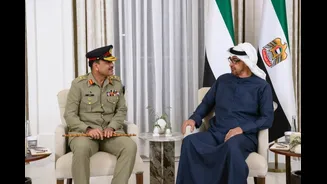
Pakistan, Egypt, and Turkey are working with the United States and Iran to reach a 45-day ceasefire that could lead to a permanent end of the war, Axios reported four sources as saying.
Sources admitted that chances of reaching such a deal in the final two days was slim but described the effort as the only chance to prevent a major escalation.
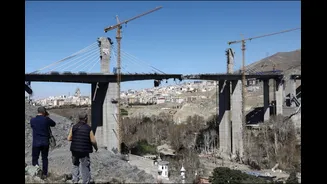
Trump has set 8 pm ET on Tuesday as the deadline for Iran to accept his terms and warned non-compliance would lead to the United States raining hellfire and blowing up all bridges and power plants in the country. Iran is also expected to retaliate massively to any such attack, striking without restraint at critical infrastructure in the region, such as oil and gas facilities and water desalination plants.
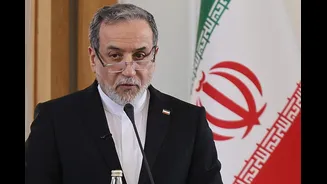
Sources said that US Special Envoy Steve Witkoff and Iranian Foreign Minister Seyed Abbas Araghchi had also exchanged direct messages.
The distrust appears to be such that neither side appears to be compromising. Sources said that while the Donald Trump administration wants Iran to engage in confidence-building measures, Iran is concerned of entering a trap like the Gaza Strip where multi-stage ceasefire exists but only on paper.
Strikes on desalination plants could be particularly damning as major cities like Dubai, Abu Dhabi, or Doha depend almost entirely on desalination plants for drinking waters. The Associated Press has previously reported that 90 per cent of Kuwait, 86 per cent of Oman, and 70 per cent of Saudi Arabia for drinking water.
The core idea that mediators are working on includes a 45-day temporary ceasefire during which they could negotiate a permanent end of the war, as per Axios.
Just like negotiations for Gaza, one of the sources said, the initial ceasefire could be extended.
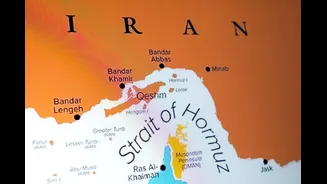
Sources believe that fully reopening the Strait of Hormuz and a solution for Iran's highly enriched Uranium could only be a result of a final deal. They said that uranium could either be removed from the country or diluted from its current near-weapons grade level of 60 per cent to harmless level of 3-5 per cent.
On these two points, sources said mediators are working to convince Iran to implement certain confidence-building measures. They did not go into the specifics.
At the same time, mediators are also trying to convince the Trump administration to give Iran guarantees that the ceasefire will not be temporary and that the war will not resume, according to sources.
Amid such talks, sources said that Iranian officials have made it clear that they don't want to be caught in a Gaza- or Lebanon-type situation where a ceasefire remains under lengthy negotiations but Israel and the United States could conduct attacks anyway.
Pakistan, Egypt, and Turkey are working with the United States and Iran to reach a 45-day ceasefire that could lead to a permanent end of the war, Axios reported four sources as saying.
Sources admitted that chances of reaching such a deal in the final two days was slim but described the effort as the only chance to prevent a major escalation.
Trump has set 8 pm ET on Tuesday as the deadline for Iran to accept his terms and warned non-compliance would lead to the United States raining hellfire and blowing up all bridges and power plants in the country. Iran is also expected to retaliate massively to any such attack, striking without restraint at critical infrastructure in the region, such as oil and gas facilities and water desalination plants.
Sources said that US Special Envoy Steve Witkoff and Iranian Foreign Minister Seyed Abbas Araghchi had also exchanged direct messages.
The distrust appears to be such that neither side appears to be compromising. Sources said that while the Donald Trump administration wants Iran to engage in confidence-building measures, Iran is concerned of entering a trap like the Gaza Strip where multi-stage ceasefire exists but only on paper.
Strikes on desalination plants could be particularly damning as major cities like Dubai, Abu Dhabi, or Doha depend almost entirely on desalination plants for drinking waters. The Associated Press has previously reported that 90 per cent of Kuwait, 86 per cent of Oman, and 70 per cent of Saudi Arabia for drinking water.
As mediators push for confidence-building measures, Iran fears Gaza-like trap
The core idea that mediators are working on includes a 45-day temporary ceasefire during which they could negotiate a permanent end of the war, as per Axios.
Just like negotiations for Gaza, one of the sources said, the initial ceasefire could be extended.
Sources believe that fully reopening the Strait of Hormuz and a solution for Iran's highly enriched Uranium could only be a result of a final deal. They said that uranium could either be removed from the country or diluted from its current near-weapons grade level of 60 per cent to harmless level of 3-5 per cent.
On these two points, sources said mediators are working to convince Iran to implement certain confidence-building measures. They did not go into the specifics.
At the same time, mediators are also trying to convince the Trump administration to give Iran guarantees that the ceasefire will not be temporary and that the war will not resume, according to sources.
Amid such talks, sources said that Iranian officials have made it clear that they don't want to be caught in a Gaza- or Lebanon-type situation where a ceasefire remains under lengthy negotiations but Israel and the United States could conduct attacks anyway.