




What is the story about?
As US President Donald Trump has given Iran a new deadline to agree to a peace deal and end the war, Israel has apparently entered a race against time to achieve its main objective of destroying Iran’s nuclear programme. Its success rests largely on an anticipated commando raid on Iranian nuclear sites that lie deep behind enemy lines and hundreds of feet underground to extract and destroy near-weapons grade uranium.
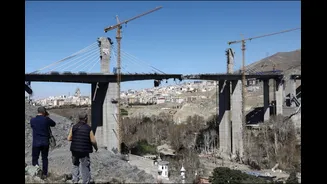
If Iran does not agree to Trump’s peace proposal by 8 pm America’s eastern time on Tuesday, the US president would rain “hellfire” and blow up all bridges and power plants in the country, he warned on Sunday.
While the wanton destruction would help neither the United States nor Israel achieve the war’s stated goals, the spectacle could pave the way for an exit after claiming victory.
The sense in Israel is that a major escalation is imminent but Prime Minister Benjamin Netanyahu and President Trump are at odds whether the escalation should comprise deadlier strikes on critical infrastructure, such as energy plants, or ground operations, such as raids on Iran’s nuclear facilities, a well-informed person told Firstpost.
For Israel to achieve a real victory, it would at least need to destroy Iran’s nuclear programme if not overthrow the regime.
Strikes on energy infrastructure, whether inland or on Kharg Island, would weaken the Iranian regime but would not help achieve these objectives, and that’s why ground operations have become essential, according to military expert Prof Daphné Richemond Barak.
“At this point, ground operations could be more important for Israel than for the United States. That’s because the United States could live with a margin of error of 25-30 per cent when it comes to the Iranian nuclear programme, but there is no such scope for Israel — certainty is existential for Israel,” said Barak of the Lauder School of Government, Diplomacy and Strategy at Reichman University.
“Without ground operations, Israel could never be certain of destroying Iran’s nuclear capabilities,” she said.
Unlike a quick in‑and‑out raid like the one targeting al Qaeda chief Osama bin Laden in Pakistan, a raid on an Iranian nuclear site could take several days, if not weeks, and involve hundreds —possibly thousands— of troops supported by dozens or even hundreds of aircraft.
Israel is expected to target multiple sites at Iranian nuclear facilities located deep inside mountains and underground at Natanz, Fordow, and Isfahan. These facilities sit within some of the country’s most heavily guarded military bases.
Barak, an expert in subterranean warfare, said these sites are not only buried beneath hundreds of feet of rock and soil, but also reinforced with concrete and hardened protective structures. Iran has previously claimed that some of its facilities lie as deep as 1,600 feet.
Any raid on such sites would involve at least five stages: Infiltration, securing the facilities on the surface, breaching facilities to go underground, locating and securing the uranium, and extraction.
This account is based on interviews with military experts and people familiar with plans discussed in official circles over the years as well as a review of scientific and military literature on the handling of nuclear materials.
Stage 1: Infiltration
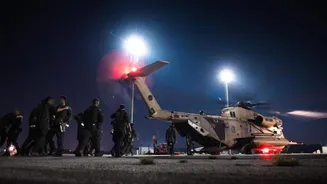
Hundreds, if not thousands, of commandos would infiltrate Iran. They are most likely to be paradropped deep behind enemy lines.
People familiar with wargames over the years said the numbers may seem staggering at first since commando raids usually involve just dozens of personnel at most. But they said as the mission would involve raids on at least three facilities —Natanz, Fordow, and Isfahan— deep inside Iran and hundreds of miles apart from each other, the mission would involve three separate intensive battles instead of one surgical strike that could go on for days if not weeks.
And that would mean hundreds, if not thousands of personnel, drawn from various American military units, people familiar with the wargames said.
These troops would most likely be paradropped near these facilities amid intense bombardment to suppress the Iranian ability to detect and intercept these personnel. Once on the ground, the commandos would enter the facilities, neutralise any resistance, secure the perimeter, and make way for the next stage.
The Trump administration has moved around 2,000 personnel from the 82nd Airborne Division to West Asia — exactly the kind of troops needed at this stage.
Stage 2: Securing the facilities
After entering the site, commandos would establish blocking positions to prevent Iranian counter‑attacks and secure the surface perimeter.
After securing the perimeter, their task would be to hold the 'surface' to allow the special forces personnel, likely from Delta Force or Navy Seals, to arrive and go underground to locate and extract uranium.
Depending on how mission planners envision the extraction —by air or overland— the second stage could also involve constructing a temporary airstrip at or near the facility. This would require inserting engineers and heavy equipment, adding another layer of security responsibility for the forces holding the site.
A C-130 Hercules could use the dirt strip to extract the uranium recovered from the site since an overland convoy all the way to the coast or a 'green zone' inside Iran would be highly vulnerable to attacks. While aerial transport would have its own problems, Firstpost understands it would be one of the options on the table.
Stage 3: Underground operations
For the core mission —recovering Iran’s uranium and destroying critical nuclear infrastructure— special forces personnel would first need to locate entry points to the underground facilities and then penetrate them.
As entry points could be deliberately blocked by Iranian forces or damaged by earlier American strikes, commandos might be required to dig their way in using saws, blowtorches, or even excavators. As a last resort, the US Air Force could ‘soften’ the sites with additional precision strikes using bunker‑buster munitions.
"Either bunker buster munitions or missiles could be launched on top of each other. It would be like hammering a nail repeatedly into the earth until it would break through the concrete and reinforced covering. This is how Israel killed Hezbollah chief Nasrallah in Beirut by hammering in 80 tons of explosives within 10 seconds," said Barak.
Once underground, special forces would need to fight through booby‑trapped, pitch‑dark labyrinths to locate uranium stockpiles, possibly encountering the last remaining Iranian commandos defending the facility. After securing the area, they would need to haul uranium cylinders back to the surface.
Any firefight would take place in an alien battlespace against adversaries with little to lose. Iranian forces would also have an incentive to use the uranium itself in a desperate ‘dirty’ attack. Even after securing it, the cylinders would need protection from crossfire during recovery and extraction.
Moreover, special forces would almost certainly be accompanied by members of the Nuclear Emergency Support Team (Nest), drawn from the Department of Energy and the military, to handle the uranium. As these specialists are not elite combatants, additional protection would be required, further complicating and slowing the mission.
Stage 4: Extracting uranium
Once the underground facility is secured, forces would hold the site to allow Nest specialists to prepare the uranium for transport — much like airborne troops would have secured the surface to enable the subterranean operation.
Although these stages may sound sequential and swift, they would likely unfold over days, if not weeks. Sweeping vast, dark tunnel networks extending for miles would itself consume significant time, as would drilling through rubble and reinforced earth to gain entry.
Once Nest would give the go-ahead, they would haul uranium to the surface, retracing their steps through the facility. Before leaving, they could also decide to blow nuclear infrastructure, such as centrifuges, control panels, and other dual-use equipment.
Stage 5: Exit
After days or weeks of continuous combat and bombardment, the exit could prove the most dangerous phase of the mission.
If US forces achieve sufficient air dominance, fixed‑wing aircraft could be used to extract uranium cylinders. If not, ground transport to pre‑established ‘green zones’ inside Iran would be required, from where helicopters could be used.
“More than a month of an aerial campaign and days of ground operations would likely give them a degree of control on the ground and in the air. They would also have insiders within the regime assisting them. Personally, I would not put uranium on a helicopter. I would move it by land convoy. Even then, it would be more dangerous than anything ever attempted but not impossible,” said Barak.
Once secured, specialists would down‑blend the uranium from near‑weapons‑grade levels to low‑enriched levels of 3-5 per cent.
Firstpost understands that while Israel wants any raid on Iran’s nuclear facilities to be a joint mission with the United States, it is prepared to go in alone, as the government has assessed that the Iranian regime is at its weakest and the opportunity may not come again.
Whether Israel will actually proceed without the Americans, however, remains undecided.
A solo mission would be extremely difficult for Israel, particularly because it lacks the firepower that the United States can provide. For instance, only the United States possesses the GBU-57 bunker‑buster munitions —and the B-2 aircraft capable of delivering them— needed to penetrate deeply buried nuclear sites.
Israel also lacks the numbers the United States can bring to such an operation. Israel’s famed 'tier one' units, Sayeret Matkal and Shaldag, number in the hundreds, not thousands, and the broader commando force is believed to total only 2-4,000 personnel. As this mission would likely require several hundred, if not thousands, of elite troops of several types, Israel could face severe personnel constraints.
For context, the United States has moved 2,000 paratroopers to West Asia from the 82nd Airborne Division. That's merely a fifth of the division but still larger than almost the entire special operations force available with Israel.
Moreover, Israel does not have sufficient aerial refuelling tankers to support the round‑the‑clock combat and transport sorties that an operation lasting days or weeks would demand.
It appears that much would depend on Netanyahu’s willingness for taking more risks in the Iran war for what Israel perceives as a secure future. But without an American back-up, he might risk taking on far more than Israel can realistically handle.
If Iran does not agree to Trump’s peace proposal by 8 pm America’s eastern time on Tuesday, the US president would rain “hellfire” and blow up all bridges and power plants in the country, he warned on Sunday.
While the wanton destruction would help neither the United States nor Israel achieve the war’s stated goals, the spectacle could pave the way for an exit after claiming victory.
The sense in Israel is that a major escalation is imminent but Prime Minister Benjamin Netanyahu and President Trump are at odds whether the escalation should comprise deadlier strikes on critical infrastructure, such as energy plants, or ground operations, such as raids on Iran’s nuclear facilities, a well-informed person told Firstpost.
For Israel to achieve a real victory, it would at least need to destroy Iran’s nuclear programme if not overthrow the regime.
Strikes on energy infrastructure, whether inland or on Kharg Island, would weaken the Iranian regime but would not help achieve these objectives, and that’s why ground operations have become essential, according to military expert Prof Daphné Richemond Barak.
“At this point, ground operations could be more important for Israel than for the United States. That’s because the United States could live with a margin of error of 25-30 per cent when it comes to the Iranian nuclear programme, but there is no such scope for Israel — certainty is existential for Israel,” said Barak of the Lauder School of Government, Diplomacy and Strategy at Reichman University.
“Without ground operations, Israel could never be certain of destroying Iran’s nuclear capabilities,” she said.
Unlike a quick in‑and‑out raid like the one targeting al Qaeda chief Osama bin Laden in Pakistan, a raid on an Iranian nuclear site could take several days, if not weeks, and involve hundreds —possibly thousands— of troops supported by dozens or even hundreds of aircraft.
The 5-stage unavoidable mission that Israel needs to pull off
Israel is expected to target multiple sites at Iranian nuclear facilities located deep inside mountains and underground at Natanz, Fordow, and Isfahan. These facilities sit within some of the country’s most heavily guarded military bases.
Barak, an expert in subterranean warfare, said these sites are not only buried beneath hundreds of feet of rock and soil, but also reinforced with concrete and hardened protective structures. Iran has previously claimed that some of its facilities lie as deep as 1,600 feet.
Any raid on such sites would involve at least five stages: Infiltration, securing the facilities on the surface, breaching facilities to go underground, locating and securing the uranium, and extraction.
This account is based on interviews with military experts and people familiar with plans discussed in official circles over the years as well as a review of scientific and military literature on the handling of nuclear materials.
Stage 1: Infiltration
Hundreds, if not thousands, of commandos would infiltrate Iran. They are most likely to be paradropped deep behind enemy lines.
People familiar with wargames over the years said the numbers may seem staggering at first since commando raids usually involve just dozens of personnel at most. But they said as the mission would involve raids on at least three facilities —Natanz, Fordow, and Isfahan— deep inside Iran and hundreds of miles apart from each other, the mission would involve three separate intensive battles instead of one surgical strike that could go on for days if not weeks.
And that would mean hundreds, if not thousands of personnel, drawn from various American military units, people familiar with the wargames said.
These troops would most likely be paradropped near these facilities amid intense bombardment to suppress the Iranian ability to detect and intercept these personnel. Once on the ground, the commandos would enter the facilities, neutralise any resistance, secure the perimeter, and make way for the next stage.
The Trump administration has moved around 2,000 personnel from the 82nd Airborne Division to West Asia — exactly the kind of troops needed at this stage.
Stage 2: Securing the facilities
After entering the site, commandos would establish blocking positions to prevent Iranian counter‑attacks and secure the surface perimeter.
After securing the perimeter, their task would be to hold the 'surface' to allow the special forces personnel, likely from Delta Force or Navy Seals, to arrive and go underground to locate and extract uranium.
Depending on how mission planners envision the extraction —by air or overland— the second stage could also involve constructing a temporary airstrip at or near the facility. This would require inserting engineers and heavy equipment, adding another layer of security responsibility for the forces holding the site.
A C-130 Hercules could use the dirt strip to extract the uranium recovered from the site since an overland convoy all the way to the coast or a 'green zone' inside Iran would be highly vulnerable to attacks. While aerial transport would have its own problems, Firstpost understands it would be one of the options on the table.
Stage 3: Underground operations
For the core mission —recovering Iran’s uranium and destroying critical nuclear infrastructure— special forces personnel would first need to locate entry points to the underground facilities and then penetrate them.
As entry points could be deliberately blocked by Iranian forces or damaged by earlier American strikes, commandos might be required to dig their way in using saws, blowtorches, or even excavators. As a last resort, the US Air Force could ‘soften’ the sites with additional precision strikes using bunker‑buster munitions.
"Either bunker buster munitions or missiles could be launched on top of each other. It would be like hammering a nail repeatedly into the earth until it would break through the concrete and reinforced covering. This is how Israel killed Hezbollah chief Nasrallah in Beirut by hammering in 80 tons of explosives within 10 seconds," said Barak.
Once underground, special forces would need to fight through booby‑trapped, pitch‑dark labyrinths to locate uranium stockpiles, possibly encountering the last remaining Iranian commandos defending the facility. After securing the area, they would need to haul uranium cylinders back to the surface.
Any firefight would take place in an alien battlespace against adversaries with little to lose. Iranian forces would also have an incentive to use the uranium itself in a desperate ‘dirty’ attack. Even after securing it, the cylinders would need protection from crossfire during recovery and extraction.
Moreover, special forces would almost certainly be accompanied by members of the Nuclear Emergency Support Team (Nest), drawn from the Department of Energy and the military, to handle the uranium. As these specialists are not elite combatants, additional protection would be required, further complicating and slowing the mission.
Stage 4: Extracting uranium
Once the underground facility is secured, forces would hold the site to allow Nest specialists to prepare the uranium for transport — much like airborne troops would have secured the surface to enable the subterranean operation.
Although these stages may sound sequential and swift, they would likely unfold over days, if not weeks. Sweeping vast, dark tunnel networks extending for miles would itself consume significant time, as would drilling through rubble and reinforced earth to gain entry.
Once Nest would give the go-ahead, they would haul uranium to the surface, retracing their steps through the facility. Before leaving, they could also decide to blow nuclear infrastructure, such as centrifuges, control panels, and other dual-use equipment.
Stage 5: Exit
After days or weeks of continuous combat and bombardment, the exit could prove the most dangerous phase of the mission.
If US forces achieve sufficient air dominance, fixed‑wing aircraft could be used to extract uranium cylinders. If not, ground transport to pre‑established ‘green zones’ inside Iran would be required, from where helicopters could be used.
“More than a month of an aerial campaign and days of ground operations would likely give them a degree of control on the ground and in the air. They would also have insiders within the regime assisting them. Personally, I would not put uranium on a helicopter. I would move it by land convoy. Even then, it would be more dangerous than anything ever attempted but not impossible,” said Barak.
Once secured, specialists would down‑blend the uranium from near‑weapons‑grade levels to low‑enriched levels of 3-5 per cent.
Can Israel do it alone?
Firstpost understands that while Israel wants any raid on Iran’s nuclear facilities to be a joint mission with the United States, it is prepared to go in alone, as the government has assessed that the Iranian regime is at its weakest and the opportunity may not come again.
Whether Israel will actually proceed without the Americans, however, remains undecided.
A solo mission would be extremely difficult for Israel, particularly because it lacks the firepower that the United States can provide. For instance, only the United States possesses the GBU-57 bunker‑buster munitions —and the B-2 aircraft capable of delivering them— needed to penetrate deeply buried nuclear sites.
Israel also lacks the numbers the United States can bring to such an operation. Israel’s famed 'tier one' units, Sayeret Matkal and Shaldag, number in the hundreds, not thousands, and the broader commando force is believed to total only 2-4,000 personnel. As this mission would likely require several hundred, if not thousands, of elite troops of several types, Israel could face severe personnel constraints.
For context, the United States has moved 2,000 paratroopers to West Asia from the 82nd Airborne Division. That's merely a fifth of the division but still larger than almost the entire special operations force available with Israel.
Moreover, Israel does not have sufficient aerial refuelling tankers to support the round‑the‑clock combat and transport sorties that an operation lasting days or weeks would demand.
It appears that much would depend on Netanyahu’s willingness for taking more risks in the Iran war for what Israel perceives as a secure future. But without an American back-up, he might risk taking on far more than Israel can realistically handle.