








What is the story about?
The powerful twin earthquakes that struck northern Venezuela on Thursday have created a humanitarian catastrophe with the death toll crossing 235 and counting.
Acting President Delcy Rodríguez declaring a nationwide state of emergency as attention has shifted to rescue efforts.
But about 15,000 kilometres away, many are asking a critical question: could the disaster affect one of the world's largest oil-producing nations and, by extension, countries that depend heavily on imported crude such as India?
The seismic event that struck Venezuela on June 24 was unusual. Northern Venezuela experienced what seismologists describe as an earthquake "doublet" — two major earthquakes occurring in rapid succession.
A magnitude 7.2 foreshock was followed merely 39 seconds later by a shallow magnitude 7.5 mainshock. The epicentres were located near Morón and San Felipe, generating severe ground shaking across several densely populated regions, including the Capital District, Miranda and the coastal state of La Guaira.
The human impact has been devastating. Buildings collapsed across multiple cities, rescue teams continue searching through debris and authorities have declared a nationwide emergency as casualty figures continue to rise.
On the other hand, investors and energy traders immediately began examining whether one of the world's largest holders of proven crude oil reserves had suffered damage capable of interrupting exports.
Such concerns are not without precedent. Large natural disasters have historically disrupted production facilities, damaged export terminals, interrupted pipeline operations and reduced refinery output in several energy-producing countries.
Any prolonged interruption in a major producer can tighten global crude supplies and influence benchmark oil prices.
But in Venezuela's case, the country's petroleum industry is spread across different regions rather than being concentrated near the affected urban centres.
Most of Venezuela's crude production originates from the Orinoco Heavy Oil Belt, located far to the south and east of the earthquake zone. This vast region accounts for the overwhelming majority of the country's present oil production, which stands at nearly 1.2 million barrels per day.
Because the Orinoco production fields are situated well away from the areas experiencing the strongest ground shaking, the country's upstream production capacity has largely remained unaffected.
Similarly, Venezuela's principal crude export infrastructure is geographically separated from the most severely damaged regions. Major export facilities, including the Jose Terminal situated along the northeastern coastline, are located hundreds of kilometres from the western fault system that generated the earthquakes.
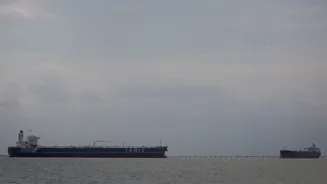
According to state-owned oil company PDVSA, tanker loading operations and crude exports have continued despite the disaster.
This distinction is important because production fields and export terminals represent the backbone of Venezuela's oil industry. Had either suffered significant structural damage, the consequences for international oil markets could have been much more severe.
Instead, available assessments suggest that while localised industrial disruptions have occurred, the country's primary export capability remains operational.
The most visible impact has been on refining and petrochemical operations located closer to the affected region. Among the facilities experiencing disruptions is the El Palito refinery, which has a processing capacity of around 146,000 barrels per day.
Rather than suffering catastrophic structural failure, the refinery experienced a complete power grid outage following the earthquakes. The loss of electricity forced operators to shut down several processing units, including its fluid catalytic cracker.
Reports have also indicated limited damage to some nearby storage tanks, prompting engineers to conduct comprehensive inspections before resuming normal operations.
The nearby Morón petrochemical complex encountered similar operational interruptions.
These shutdowns were largely precautionary or power-related rather than resulting from structural collapse of refinery equipment. Technical teams have already begun restarting affected units as electricity supply is gradually restored across the region.
Power availability remains one of the principal concerns. While oil wells themselves have not suffered major damage, maintaining production requires stable electricity for pumping operations, processing systems and associated infrastructure.
Ongoing power shortages therefore create uncertainty over whether Venezuela can consistently sustain production at its pre-earthquake level of approximately 1.2 million barrels per day if electricity restoration takes longer than expected.
Authorities and oil companies are continuing inspections across production fields, pipelines, storage facilities and export infrastructure to determine whether any additional problems emerge.
For global crude buyers — including India — the more immediate issue may not be whether Venezuela can extract oil, but how quickly it can move shipments through its export system.
The earthquakes have introduced several logistical obstacles that, while not halting exports, are capable of slowing them. One of the most significant challenges originates not at oil fields or ports but in Caracas.
Much of Venezuela's export administration remains centralised in the capital. Shipping documentation, customs approvals, export manifests and crude allocation procedures handled by PDVSA all depend upon administrative systems based there.
The earthquakes caused extensive damage across several districts of Caracas, including Altamira and Los Palos Grandes. More importantly for exporters, electricity and telecommunications networks suffered widespread disruption.
Internet connectivity remains unreliable in several areas, while mobile communications continue to experience interruptions. These conditions have slowed administrative processing considerably.
As a consequence, tankers waiting at export terminals are increasingly experiencing paperwork-related delays rather than mechanical or production-related interruptions.
Another factor affecting exports involves mandatory engineering inspections. Even though major export terminals — including Jose, Puerto La Cruz, Amuay and Cardón — remain operational, authorities have implemented additional safety protocols before allowing normal loading operations to resume.
Following an earthquake of this magnitude, structural engineers and marine inspection teams are required to examine underwater pipelines, jetty foundations, loading equipment and coastal storage facilities to ensure that no hidden damage exists beneath the waterline.
Such inspections are standard practice after major seismic events and are intended to prevent accidents or environmental incidents during loading operations.
Until engineers complete integrity assessments across nearby coastal infrastructure, authorities are expected to maintain controlled loading rates rather than immediately returning terminals to maximum operating capacity.
These precautions inevitably slow export schedules even when facilities remain fundamentally operational.
Meanwhile, shipping companies whose vessels remain anchored outside Venezuelan ports while awaiting clearance may incur demurrage charges — penalties paid when ships exceed their allocated loading time.
Although the United States Treasury has moved quickly to provide a temporary sanctions waiver until October 23 to facilitate earthquake relief efforts and ease logistical constraints, insurers continue evaluating the additional risks involved in sending vessels into affected areas.
As a result, shipowners and charterers may face short-term increases in insurance premiums covering hull, machinery and related maritime risks.
The earthquakes have attracted considerable attention in India not simply because Venezuela is a major oil producer, but because the South American nation has rapidly climbed the list of New Delhi's crude suppliers over the past year.
Official figures from the Ministry of Petroleum and Natural Gas illustrate how dramatically India's purchases have increased. During FY2025-26, India's average monthly crude imports from Venezuela stood at approximately 64.027 thousand metric tonnes (TMT).
That picture changed significantly in the opening months of FY2026-27. Between April and May 2026, average monthly imports surged to 1,047.148 TMT.
Over recent months, India has been actively diversifying its crude procurement strategy in response to uncertainty affecting traditional supply routes.
Tensions in West Asia and repeated concerns surrounding shipping through the Strait of Hormuz encouraged Indian refiners to broaden their sourcing portfolio rather than rely excessively on any single region.
Within that strategy, Venezuelan crude became an attractive option. The country's heavy crude grades are particularly suitable for several Indian refineries, including facilities operated by both public-sector companies and private refiners.
India's sophisticated refining network has the capability to process these heavier crude varieties efficiently, allowing refiners to integrate Venezuelan supplies into their procurement mix without requiring major operational changes.
Therefore, any disruption affecting Venezuelan exports naturally attracts attention in New Delhi because it concerns not merely one supplier but an increasingly significant component of India's evolving energy strategy. Nevertheless, the current assessments provide reassurance.
Since Venezuela's principal producing regions remain operational and export terminals continue functioning, India's newly expanded supply relationship does not appear to face an immediate threat.
Even if the earthquake results in modest logistical delays over the coming days or weeks, India's refining sector appears well positioned to manage the situation. One important reason is the diversity of India's overall crude import basket.
India currently imports oil from around 40 countries, ensuring that no single supplier dominates procurement. Russia remains India's largest crude source, while substantial quantities are also purchased from Iraq, Saudi Arabia, the United Arab Emirates, the United States, Brazil and several African producers.
This diversified sourcing strategy gives refiners flexibility whenever disruptions occur in one exporting nation.
Indian oil companies also maintain inventories and routinely adjust procurement depending on international availability, commercial pricing and logistical considerations. Such flexibility has become increasingly important in recent years as geopolitical developments have periodically affected global shipping routes and crude flows.
Private refiners are particularly well equipped to absorb temporary interruptions. Reliance Industries and Nayara Energy significantly expanded purchases of Venezuelan heavy crude during April and May, importing more than one million metric tonnes during that period.
If Venezuelan shipments experience prolonged transit delays because of administrative bottlenecks, engineering inspections or shipping congestion, these refiners possess the capability to substitute comparable heavy crude supplies from alternative producers.
Possible replacements include heavy grades originating in West Asia or discounted Russian Urals crude if required.
Based on the latest information, there is little indication that Indian consumers should expect an immediate increase in fuel prices because of the Venezuelan earthquake.
Retail petrol and diesel prices in India are determined by several other factors rather than any single international event.
Global crude benchmarks remain important, but exchange rates, taxation and pricing decisions taken by state-owned oil marketing companies also influence what consumers ultimately pay at fuel stations.
A temporary disruption affecting one supplier country, particularly when production continues and alternative sources remain available, is generally insufficient to trigger an immediate upward revision in retail prices.
Retail fuel prices across major metropolitan centres—including New Delhi, Mumbai, Chennai and Kolkata — have remained unchanged despite the earthquake.
There is also increasing discussion over whether lower international crude prices could eventually create room for reductions in domestic fuel prices. At present, however, oil marketing companies continue absorbing the benefits of cheaper crude rather than announcing revisions.
With inputs from agencies
Acting President Delcy Rodríguez declaring a nationwide state of emergency as attention has shifted to rescue efforts.
But about 15,000 kilometres away, many are asking a critical question: could the disaster affect one of the world's largest oil-producing nations and, by extension, countries that depend heavily on imported crude such as India?
Was Venezuela's oil impacted by the earthquake?
The seismic event that struck Venezuela on June 24 was unusual. Northern Venezuela experienced what seismologists describe as an earthquake "doublet" — two major earthquakes occurring in rapid succession.
A magnitude 7.2 foreshock was followed merely 39 seconds later by a shallow magnitude 7.5 mainshock. The epicentres were located near Morón and San Felipe, generating severe ground shaking across several densely populated regions, including the Capital District, Miranda and the coastal state of La Guaira.
The human impact has been devastating. Buildings collapsed across multiple cities, rescue teams continue searching through debris and authorities have declared a nationwide emergency as casualty figures continue to rise.
On the other hand, investors and energy traders immediately began examining whether one of the world's largest holders of proven crude oil reserves had suffered damage capable of interrupting exports.
Such concerns are not without precedent. Large natural disasters have historically disrupted production facilities, damaged export terminals, interrupted pipeline operations and reduced refinery output in several energy-producing countries.
Any prolonged interruption in a major producer can tighten global crude supplies and influence benchmark oil prices.
But in Venezuela's case, the country's petroleum industry is spread across different regions rather than being concentrated near the affected urban centres.
Most of Venezuela's crude production originates from the Orinoco Heavy Oil Belt, located far to the south and east of the earthquake zone. This vast region accounts for the overwhelming majority of the country's present oil production, which stands at nearly 1.2 million barrels per day.
Because the Orinoco production fields are situated well away from the areas experiencing the strongest ground shaking, the country's upstream production capacity has largely remained unaffected.
Similarly, Venezuela's principal crude export infrastructure is geographically separated from the most severely damaged regions. Major export facilities, including the Jose Terminal situated along the northeastern coastline, are located hundreds of kilometres from the western fault system that generated the earthquakes.
According to state-owned oil company PDVSA, tanker loading operations and crude exports have continued despite the disaster.
This distinction is important because production fields and export terminals represent the backbone of Venezuela's oil industry. Had either suffered significant structural damage, the consequences for international oil markets could have been much more severe.
Instead, available assessments suggest that while localised industrial disruptions have occurred, the country's primary export capability remains operational.
Which parts of Venezuela's oil industry have been affected?
The most visible impact has been on refining and petrochemical operations located closer to the affected region. Among the facilities experiencing disruptions is the El Palito refinery, which has a processing capacity of around 146,000 barrels per day.
Rather than suffering catastrophic structural failure, the refinery experienced a complete power grid outage following the earthquakes. The loss of electricity forced operators to shut down several processing units, including its fluid catalytic cracker.
Reports have also indicated limited damage to some nearby storage tanks, prompting engineers to conduct comprehensive inspections before resuming normal operations.
The nearby Morón petrochemical complex encountered similar operational interruptions.
These shutdowns were largely precautionary or power-related rather than resulting from structural collapse of refinery equipment. Technical teams have already begun restarting affected units as electricity supply is gradually restored across the region.
Power availability remains one of the principal concerns. While oil wells themselves have not suffered major damage, maintaining production requires stable electricity for pumping operations, processing systems and associated infrastructure.
Ongoing power shortages therefore create uncertainty over whether Venezuela can consistently sustain production at its pre-earthquake level of approximately 1.2 million barrels per day if electricity restoration takes longer than expected.
Authorities and oil companies are continuing inspections across production fields, pipelines, storage facilities and export infrastructure to determine whether any additional problems emerge.
Could logistics become the bigger challenge now?
For global crude buyers — including India — the more immediate issue may not be whether Venezuela can extract oil, but how quickly it can move shipments through its export system.
The earthquakes have introduced several logistical obstacles that, while not halting exports, are capable of slowing them. One of the most significant challenges originates not at oil fields or ports but in Caracas.
Much of Venezuela's export administration remains centralised in the capital. Shipping documentation, customs approvals, export manifests and crude allocation procedures handled by PDVSA all depend upon administrative systems based there.
The earthquakes caused extensive damage across several districts of Caracas, including Altamira and Los Palos Grandes. More importantly for exporters, electricity and telecommunications networks suffered widespread disruption.
Internet connectivity remains unreliable in several areas, while mobile communications continue to experience interruptions. These conditions have slowed administrative processing considerably.
As a consequence, tankers waiting at export terminals are increasingly experiencing paperwork-related delays rather than mechanical or production-related interruptions.
Another factor affecting exports involves mandatory engineering inspections. Even though major export terminals — including Jose, Puerto La Cruz, Amuay and Cardón — remain operational, authorities have implemented additional safety protocols before allowing normal loading operations to resume.
Following an earthquake of this magnitude, structural engineers and marine inspection teams are required to examine underwater pipelines, jetty foundations, loading equipment and coastal storage facilities to ensure that no hidden damage exists beneath the waterline.
Such inspections are standard practice after major seismic events and are intended to prevent accidents or environmental incidents during loading operations.
Until engineers complete integrity assessments across nearby coastal infrastructure, authorities are expected to maintain controlled loading rates rather than immediately returning terminals to maximum operating capacity.
These precautions inevitably slow export schedules even when facilities remain fundamentally operational.
Meanwhile, shipping companies whose vessels remain anchored outside Venezuelan ports while awaiting clearance may incur demurrage charges — penalties paid when ships exceed their allocated loading time.
Although the United States Treasury has moved quickly to provide a temporary sanctions waiver until October 23 to facilitate earthquake relief efforts and ease logistical constraints, insurers continue evaluating the additional risks involved in sending vessels into affected areas.
As a result, shipowners and charterers may face short-term increases in insurance premiums covering hull, machinery and related maritime risks.
Why has Venezuela become important for India?
The earthquakes have attracted considerable attention in India not simply because Venezuela is a major oil producer, but because the South American nation has rapidly climbed the list of New Delhi's crude suppliers over the past year.
Official figures from the Ministry of Petroleum and Natural Gas illustrate how dramatically India's purchases have increased. During FY2025-26, India's average monthly crude imports from Venezuela stood at approximately 64.027 thousand metric tonnes (TMT).
That picture changed significantly in the opening months of FY2026-27. Between April and May 2026, average monthly imports surged to 1,047.148 TMT.
Over recent months, India has been actively diversifying its crude procurement strategy in response to uncertainty affecting traditional supply routes.
Tensions in West Asia and repeated concerns surrounding shipping through the Strait of Hormuz encouraged Indian refiners to broaden their sourcing portfolio rather than rely excessively on any single region.
Within that strategy, Venezuelan crude became an attractive option. The country's heavy crude grades are particularly suitable for several Indian refineries, including facilities operated by both public-sector companies and private refiners.
India's sophisticated refining network has the capability to process these heavier crude varieties efficiently, allowing refiners to integrate Venezuelan supplies into their procurement mix without requiring major operational changes.
Therefore, any disruption affecting Venezuelan exports naturally attracts attention in New Delhi because it concerns not merely one supplier but an increasingly significant component of India's evolving energy strategy. Nevertheless, the current assessments provide reassurance.
Since Venezuela's principal producing regions remain operational and export terminals continue functioning, India's newly expanded supply relationship does not appear to face an immediate threat.
Can Indian refiners manage temporary disruptions if shipments slow?
Even if the earthquake results in modest logistical delays over the coming days or weeks, India's refining sector appears well positioned to manage the situation. One important reason is the diversity of India's overall crude import basket.
India currently imports oil from around 40 countries, ensuring that no single supplier dominates procurement. Russia remains India's largest crude source, while substantial quantities are also purchased from Iraq, Saudi Arabia, the United Arab Emirates, the United States, Brazil and several African producers.
This diversified sourcing strategy gives refiners flexibility whenever disruptions occur in one exporting nation.
Indian oil companies also maintain inventories and routinely adjust procurement depending on international availability, commercial pricing and logistical considerations. Such flexibility has become increasingly important in recent years as geopolitical developments have periodically affected global shipping routes and crude flows.
Private refiners are particularly well equipped to absorb temporary interruptions. Reliance Industries and Nayara Energy significantly expanded purchases of Venezuelan heavy crude during April and May, importing more than one million metric tonnes during that period.
If Venezuelan shipments experience prolonged transit delays because of administrative bottlenecks, engineering inspections or shipping congestion, these refiners possess the capability to substitute comparable heavy crude supplies from alternative producers.
Possible replacements include heavy grades originating in West Asia or discounted Russian Urals crude if required.
Will petrol and diesel prices increase in India?
Based on the latest information, there is little indication that Indian consumers should expect an immediate increase in fuel prices because of the Venezuelan earthquake.
Retail petrol and diesel prices in India are determined by several other factors rather than any single international event.
Global crude benchmarks remain important, but exchange rates, taxation and pricing decisions taken by state-owned oil marketing companies also influence what consumers ultimately pay at fuel stations.
A temporary disruption affecting one supplier country, particularly when production continues and alternative sources remain available, is generally insufficient to trigger an immediate upward revision in retail prices.
Retail fuel prices across major metropolitan centres—including New Delhi, Mumbai, Chennai and Kolkata — have remained unchanged despite the earthquake.
There is also increasing discussion over whether lower international crude prices could eventually create room for reductions in domestic fuel prices. At present, however, oil marketing companies continue absorbing the benefits of cheaper crude rather than announcing revisions.
With inputs from agencies