







What is the story about?
In December 1972, American astronauts Eugene Cernan and Harrison Schmitt landed on the Moon, spending three days on the surface. When the Nasa astronauts returned to Earth, no one thought it would be the last.
However, that’s exactly what happened, until now. After more than 50 years, Nasa is prepping for the Artemis II mission, with an expected launch date on February 8. It is poised to send astronauts around the Moon and back.
But the Artemis II mission hit a snag on Tuesday (February 3), days before its launch, when engineers detected leaking hydrogen at the tail end of the next-generation Space Launch System rocket. Following the snags, Nasa has pushed back the mission to March.
Now, as we await the future of Artemis II, we explain what is the mission and its significance.
The Artemis II mission is part of Nasa’s Artemis programme — a lunar exploration programme. In Artemis II mission, Nasa aims to return humans to the Moon for the first time since in 54 years, which was the last mission of the Apollo programme.
Earlier in November 2022, Nasa launched the Artemis I mission in which it sent an empty Orion crew capsule to circle the Moon to ultimately test Nasa’s Space Launch System (SLS) rocket.
The Artemis programme is part of Nasa’s long-term plans to build a space station — called Lunar Gateway — where astronauts will be able to live and work and prepare for missions to Mars. It is also America’s attempt of getting a leg up on China in the space race.
The Artemis II is a 10-day mission carrying four astronauts to the vicinity of the moon. It’s important to note here that this flight isn’t a lunar lander. Artemis II will see the astronauts loop around the moon, returning on the tenth day, making a splashdown in the Pacific Ocean, just off the coast of San Diego.
While in space, the astronauts will carry out a number of experiments to test life support, navigation and communication systems to confirm everything operates as it should in deep space. Many of these tests will be completed while the capsule is still in the Earth’s orbit, so that the astronauts are closer to home in the event of anything going wrong.
The capsule will then enter Earth's high orbit where the crew will manually pilot Orion, the capsule, before control is handed back to controllers at Nasa’s Johnson Space Centre in Houston, Texas.
The astronauts will then spend four days circling the moon, travelling approximately 4,600 miles beyond its far side before returning to Earth.
Now, that we have understood what’s the mission, let’s take a closer look at who will be on board.
Artemis II’s crew consists of three American astronauts — Nasa astronauts Reid Wiseman, Victor Glover and Christina Koch — and Canadian Space Agency’s Jeremy Hansen.
Weisman will be the commander, being the longest-serving astronaut among the crew. He previously served as a flight engineer on the International Space Station from May to November in 2014. Glover, who is the pilot of this mission, became a Nasa astronaut in 2013 and previously served as pilot of the Space X Crew-1 Dragon spacecraft which flew to the International Space Station in November 2020.
Next comes Koch, who is the mission specialist. An astronaut since 2013, she spent nearly all of 2019 working on the International Space Station, raking up a total of 328 consecutive days in space, where she also participated in the first all-female spacewalks. Prior to being an astronaut, she was a scientific field engineer in the Antarctic and Arctic. Last but not the least is Hansen who has been an astronaut since 2011 and has participated in international training missions as well as working at Nasa’s Mission Control Centre in Houston, Texas.
While Artemis II isn’t a moon landing, it is yet significant for Nasa. First and foremost, Artemis II would see the crew fly deeper into space than any human ever before — about 4 lakh km from Earth.
Additionally, this mission is a stepping stone towards getting astronauts back on the Moon, establishing a sustained presence there, and then using it as a gateway for Mars missions in the future.
As John Pernet-Fisher, a research fellow at the University of Manchester told Euronews, “This is a massive milestone for Nasa and the Artemis programme because this is going to be the first time that a crew of humans will see the far side of the Moon, and is such an important milestone in Nasa’s eventual goal of getting two feet, human feet, back on the lunar surface.”
“It’s also exciting because it’s a huge technological achievement. The huge new rocket and the spacecraft that they’re riding in, and they’re also going to be the fastest moving humans that have ever existed on re-entry when they come back into the Earth’s atmosphere. We expect them to be going about 25,000 mph,” he added.
Beyond just space exploration, it indicates a renewed human ambition to explore beyond Earth.
Nasa has now announced that it will target March as the earliest possible launch opportunity for the flight test. Moving off a February launch window also means the Artemis II astronauts will be released from quarantine, which they entered in Houston on January 21. As a result, they will not travel to Nasa Kennedy Space Centre in Florida. Crew will enter quarantine again about two weeks out from the next targeted launch opportunity.
With inputs from agencies
However, that’s exactly what happened, until now. After more than 50 years, Nasa is prepping for the Artemis II mission, with an expected launch date on February 8. It is poised to send astronauts around the Moon and back.
But the Artemis II mission hit a snag on Tuesday (February 3), days before its launch, when engineers detected leaking hydrogen at the tail end of the next-generation Space Launch System rocket. Following the snags, Nasa has pushed back the mission to March.
NASA completed a wet dress rehearsal for the Artemis II mission in the early morning hours on Feb. 3. To allow teams to review data and conduct a second wet dress rehearsal, NASA will now target March as the the earliest possible launch opportunity for the Artemis II mission.… pic.twitter.com/jSnCUPLQb6
— NASA (@NASA) February 3, 2026
Now, as we await the future of Artemis II, we explain what is the mission and its significance.
What is the Artemis programme?
The Artemis II mission is part of Nasa’s Artemis programme — a lunar exploration programme. In Artemis II mission, Nasa aims to return humans to the Moon for the first time since in 54 years, which was the last mission of the Apollo programme.
Earlier in November 2022, Nasa launched the Artemis I mission in which it sent an empty Orion crew capsule to circle the Moon to ultimately test Nasa’s Space Launch System (SLS) rocket.
The Artemis programme is part of Nasa’s long-term plans to build a space station — called Lunar Gateway — where astronauts will be able to live and work and prepare for missions to Mars. It is also America’s attempt of getting a leg up on China in the space race.
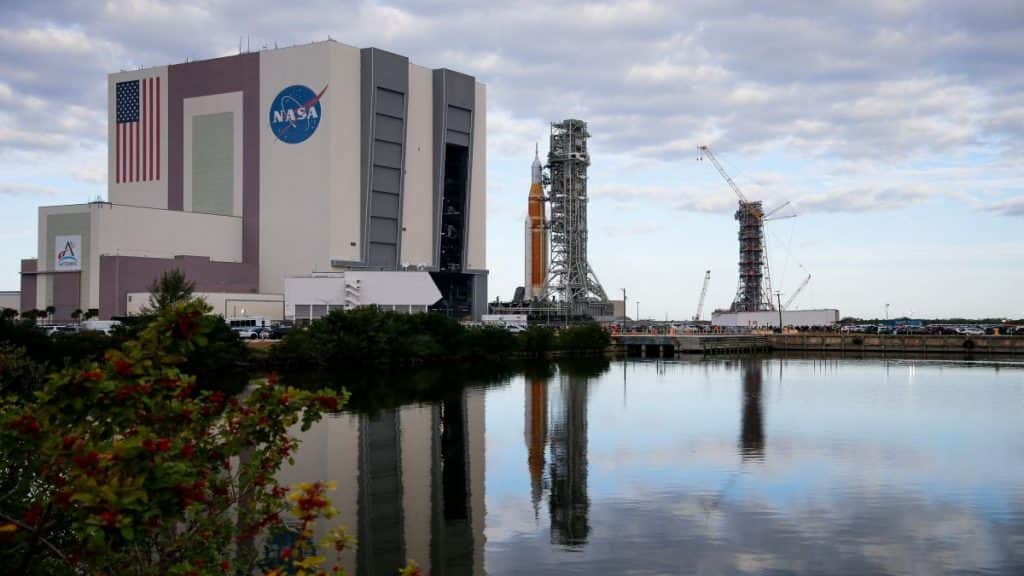
NASA's next-generation moon rocket exits the vehicle assembly building at Kennedy Space Centre. Reuters
So, what exactly happens in the Artemis II mission?
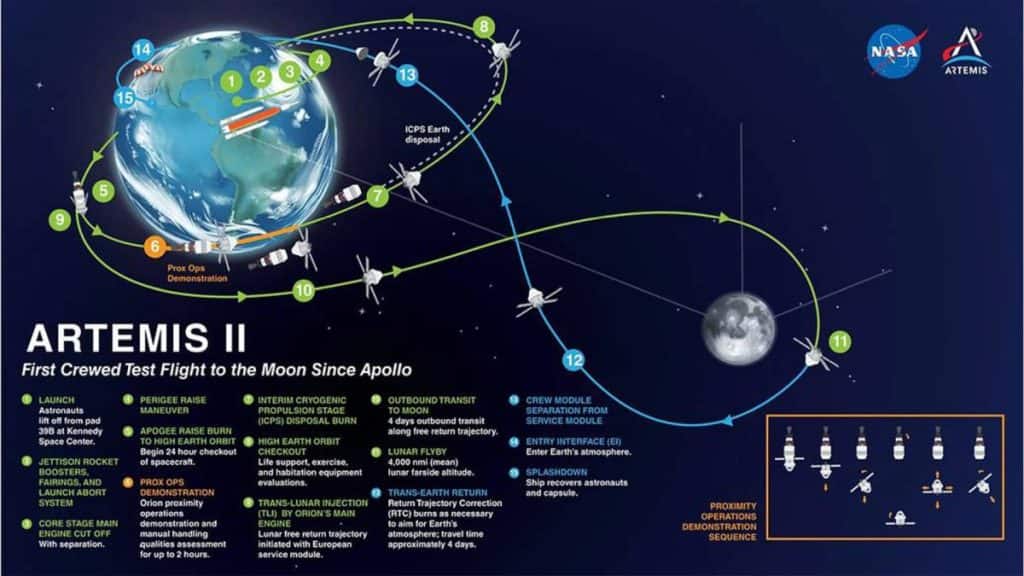
The Artemis II is a 10-day mission carrying four astronauts to the vicinity of the moon. It’s important to note here that this flight isn’t a lunar lander. Artemis II will see the astronauts loop around the moon, returning on the tenth day, making a splashdown in the Pacific Ocean, just off the coast of San Diego.
While in space, the astronauts will carry out a number of experiments to test life support, navigation and communication systems to confirm everything operates as it should in deep space. Many of these tests will be completed while the capsule is still in the Earth’s orbit, so that the astronauts are closer to home in the event of anything going wrong.
Image Courtesy: Nasa
The capsule will then enter Earth's high orbit where the crew will manually pilot Orion, the capsule, before control is handed back to controllers at Nasa’s Johnson Space Centre in Houston, Texas.
The astronauts will then spend four days circling the moon, travelling approximately 4,600 miles beyond its far side before returning to Earth.
Who are the astronauts for Artemis II?
Now, that we have understood what’s the mission, let’s take a closer look at who will be on board.
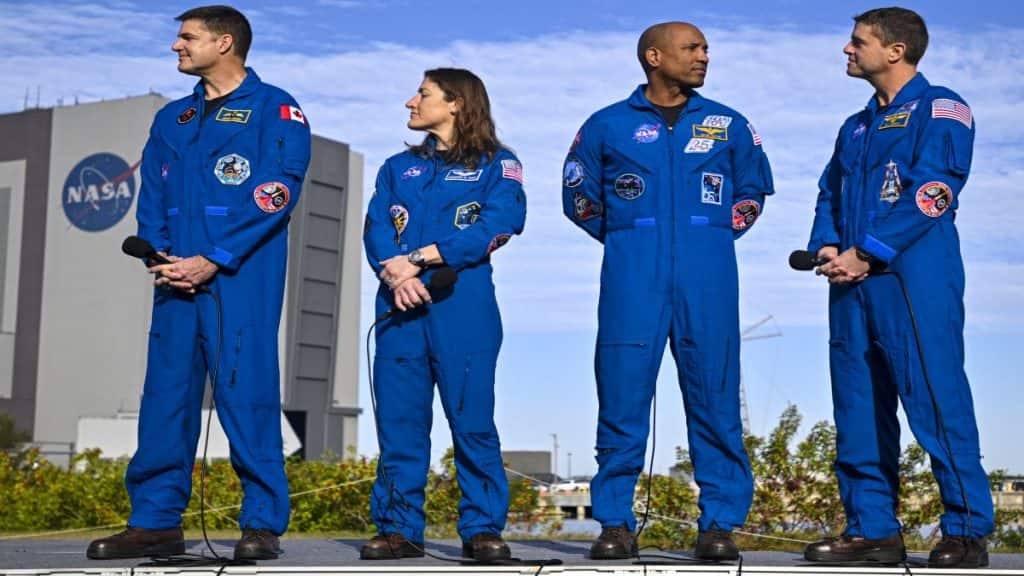
Artemis II’s crew consists of three American astronauts — Nasa astronauts Reid Wiseman, Victor Glover and Christina Koch — and Canadian Space Agency’s Jeremy Hansen.
(From left to right) Canadian Space Agency astronaut, Nasa Artemis II Mission Specialist Jeremy Hansen, Nasa astronaut and Artemis II Mission Specialist Christina Koch, Nasa astronaut and Artemis II pilot Victor Glover and Nasa astronaut and Artemis II Commander Reid Wiseman stand tall during the rollout of Nasa's moon rocket, the Space Launch System (SLS) rocket with the Orion crew capsule, to the launch pad at the Kennedy Space Centre in Cape Canaveral, Florida, US. AFP
Weisman will be the commander, being the longest-serving astronaut among the crew. He previously served as a flight engineer on the International Space Station from May to November in 2014. Glover, who is the pilot of this mission, became a Nasa astronaut in 2013 and previously served as pilot of the Space X Crew-1 Dragon spacecraft which flew to the International Space Station in November 2020.
Next comes Koch, who is the mission specialist. An astronaut since 2013, she spent nearly all of 2019 working on the International Space Station, raking up a total of 328 consecutive days in space, where she also participated in the first all-female spacewalks. Prior to being an astronaut, she was a scientific field engineer in the Antarctic and Arctic. Last but not the least is Hansen who has been an astronaut since 2011 and has participated in international training missions as well as working at Nasa’s Mission Control Centre in Houston, Texas.
Why is Artemis II significant?
While Artemis II isn’t a moon landing, it is yet significant for Nasa. First and foremost, Artemis II would see the crew fly deeper into space than any human ever before — about 4 lakh km from Earth.
Additionally, this mission is a stepping stone towards getting astronauts back on the Moon, establishing a sustained presence there, and then using it as a gateway for Mars missions in the future.
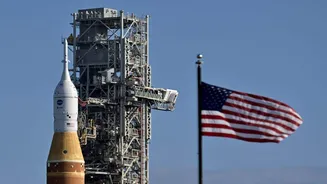
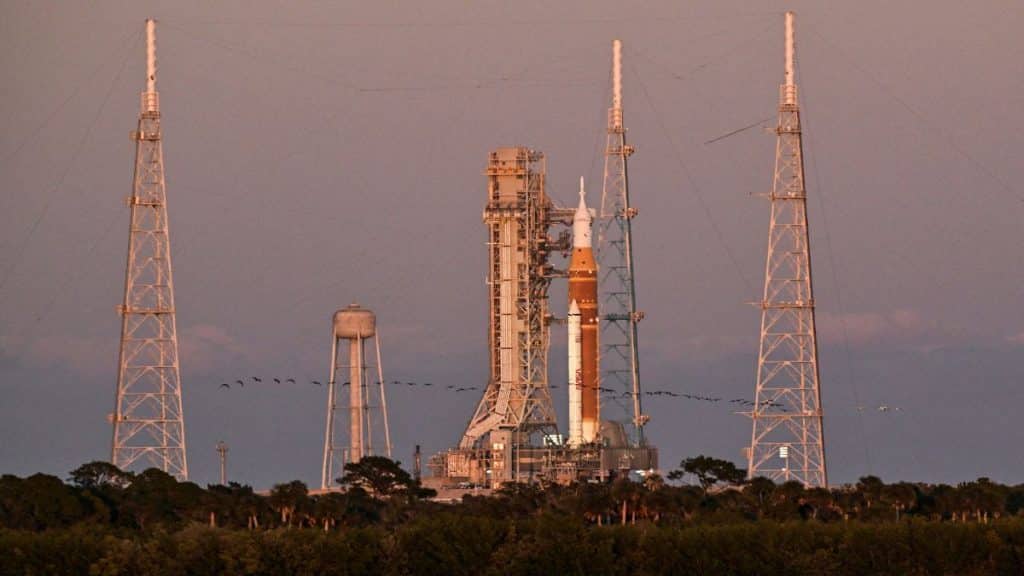
A flock of birds flies by the Space Launch System (SLS), with the Orion crew capsule, at launch complex 39B at Kennedy Space Centre in Cape Canaveral, Florida, US. Reuters
As John Pernet-Fisher, a research fellow at the University of Manchester told Euronews, “This is a massive milestone for Nasa and the Artemis programme because this is going to be the first time that a crew of humans will see the far side of the Moon, and is such an important milestone in Nasa’s eventual goal of getting two feet, human feet, back on the lunar surface.”
“It’s also exciting because it’s a huge technological achievement. The huge new rocket and the spacecraft that they’re riding in, and they’re also going to be the fastest moving humans that have ever existed on re-entry when they come back into the Earth’s atmosphere. We expect them to be going about 25,000 mph,” he added.
Beyond just space exploration, it indicates a renewed human ambition to explore beyond Earth.
What next for Artemis II?
Nasa has now announced that it will target March as the earliest possible launch opportunity for the flight test. Moving off a February launch window also means the Artemis II astronauts will be released from quarantine, which they entered in Houston on January 21. As a result, they will not travel to Nasa Kennedy Space Centre in Florida. Crew will enter quarantine again about two weeks out from the next targeted launch opportunity.
With inputs from agencies