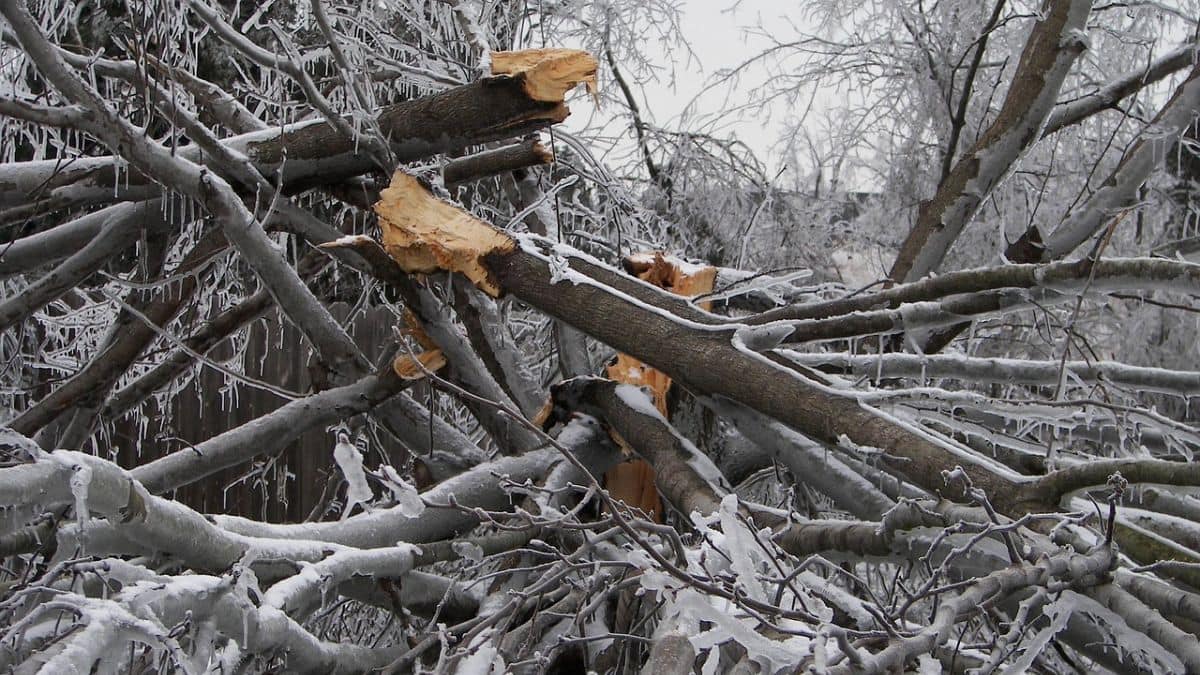

"EXPLODING TREES are possible in the Midwest and Northern Plains on Friday and Saturday, as temperatures are forecasted to fall 20 degrees BELOW zero!" claimed “degreed meteorologist” Max Velocity in a post on X.
EXPLODING TREES are possible in the Midwest and Northern Plains on Friday and Saturday, as temperatures are forecasted to fall 20 degrees BELOW zero! pic.twitter.com/nqnoqsbHNU
— Max Velocity (@MaxVelocityWX) January 21, 2026
However, naturalists have different perspectives on the same. They decline the idea of serious consequences and call it far less dramatic than it sounds. So, can trees actually 'explode' during winter weather? What are the repercussions? We deep dive.
Fierce winter weather in the US
The majority of the United States is set to shake as a massive winter storm is expected to hit this week. Forecasters have warned that the cold front may ramp up in the southwest on Thursday (January 22). Transportation officials, including airport authorities in several major cities, are cautioning travellers to prepare for delays amid crippling cold weather,
"With the extreme cold temperatures, expect prolonged snow and ice impacts which may include hazardous travel conditions, power outages, tree damage, snow-covered roads, and reduced visibility," warned the National Weather Service (NWS), as quoted by the media publication.
Several state governors, including those of Texas, North Carolina, and South Carolina, have already declared states of emergency. In a statement, Texas Governor Greg Abbott asserted, "Based on current forecasts, the State of Texas is acting to ensure Texans have the resources they need before severe winter weather impacts communities across Texas," according to a media report.
A dangerous January cold has gripped states like Minnesota and Wisconsin, prompting the National Weather Service to issue an extreme cold warning. AccuWeather senior meteorologist Tom Kines told The New York Post, "This Arctic air — an Arctic blast — is coming. It’s going to get worse before it gets better. Dangerously cold." Adding, "Better stay inside or risk hypothermia. Layer up and only go out if you have to."
Stark warning of exploding trees
As parts of the US brace for a bone-chilling cold front, several viral social media posts have sounded the alarm of 'exploding trees.' Meteorologists also cautioned something similar but refrained from using the word 'exploding'.
National Weather Service meteorologist Jake Beitlich said, "There can be vertical cracks in the bark when the sap and everything that’s in the tree drops below freezing quickly.”
"Those cracks can lead to popping sounds. But explode is more of an attention-grabber than a threat or real hazard," Beitlich added as quoted by the Minnesota Star Tribune.
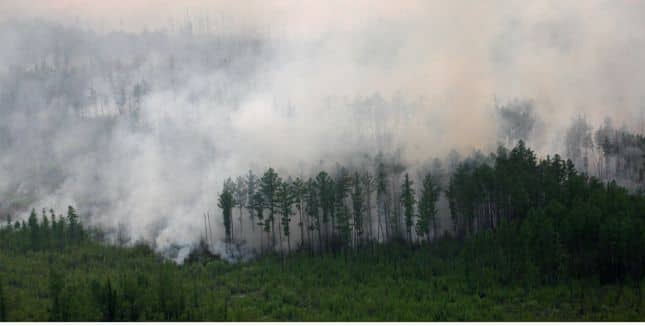
Ahead of hazardous winter conditions, some eye-popping claims are getting attention online, including the risk of 'exploding trees.' Reuters
However, the National Forest Foundation decoded how trees can actually explode due to extreme cold weather. According to the Foundation, "Tree bark provides enough insulation and protection against freezing and cracking during the cold. But, when the temperature drops, the sap inside a tree can begin to freeze."
Adding, "Sap contains water, so it expands when frozen, putting pressure on the bark, which can break and create an explosion.”
Popular Science reported, citing a news article, “Meteorologists warn that temperatures falling 20 degrees below zero could cause trees to split suddenly, posing risks to people, homes, vehicles, and power lines across North Dakota, South Dakota, Minnesota, Wisconsin, Iowa, and Michigan.
Even a social media weather buff, Rebecca An, highlighted that although rare, in these extremely frigid conditions, trees can “split or explode.”
A physics associate professor at West Texas A&M University, Christopher Baird, explained that a tree bursting often sounds like a gunshot.
On a university website, Baird said, “The crackling sound or gunshot pop you hear in the forest in the winter is the sound of trees freezing and bursting,”
“A tree has hundreds to tens of thousands of these fluid channels. If one bursts, the tree has plenty of other ones to rely on. Furthermore, each channel is small, so that an individual channel bursting does not do so much damage.”
A forest health specialist with the Wisconsin Department of Natural Resources, Bill McNee, confirmed that while rare, tree explosions can occur.
McNee said, as quoted by the Milwaukee Journal Sentinel, “I've never seen the damage of it, but from what I have seen and what I read online is that it is rare for there just to be so much pressure that is suddenly released inside this tree that it almost does explode.”
What science says about trees exploding
Although people online sometimes warn about 'exploding trees,' the phenomenon is rare, usually harmless, and far less dramatic than it sounds. For centuries, naturalists and Indigenous cultures have noted that trees can crack loudly during extreme cold, but there’s little evidence of serious danger to people.
Scottish botanist John Claudius Loudon wrote in his Encyclopaedia of Gardening, “In the great frost in 1683, the trunks of oak, ash, walnut, and other trees, were miserably split and cleft, so that they might be seen through, and the cracks often attended with dreadful noises like the explosion of fire-arms," Popular Science reported.
While the cracking can damage trees, most survive and continue growing once warmer weather returns. According to naturalists, 'exploding trees' aren’t a real threat, though the extreme cold that causes them can be.
With inputs from agencies