





What is the story about?
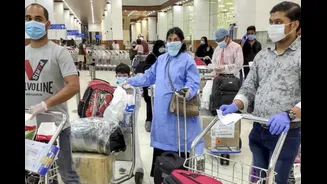
In the wake of the spiralling ebola virus outbreak in Africa, aviation authorities on Friday said they have stepped up health surveillance and precautionary measures at Kochi airport in Kerala, aiming to strengthen passenger monitoring for the early detection of symptoms.
At a meeting convened jointly by Cochin International Airport Limited (CIAL) and the Airport Health Organisation (APHO), authorities decided to activate enhanced surveillance protocols at the airport.
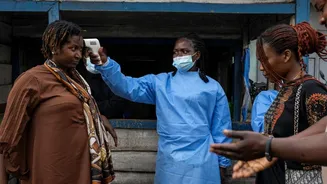
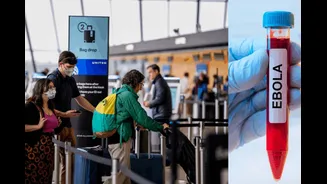
In a statement, the authorities said the protocol includes round-the-clock monitoring, thermal screening, verification of 21-day travel histories, and the submission of self-declaration forms by international passengers. They added that isolation wards are currently available at Ernakulam General Hospital, Government Hospital Kalamassery, and District Hospital Aluva.
The development comes a day after the Ministry of Health issued an advisory on ebola for passengers arriving from or transiting through affected countries. Travellers have been advised to report to airport health authorities and seek medical care within 21 days if they develop symptoms such as fever, vomiting, diarrhoea, or bleeding. They were also advised to approach authorities if they have been in contact with an infected individual.
The advisory was released a day after Union Health Secretary Punya Salila Srivastava chaired a high-level meeting with health secretaries of all states and union territories to review preparedness and response measures against ebola.
ALSO READ — Covid, hantavirus, ebola… post-outbreak rush can’t protect people: Virologist on pandemic scare
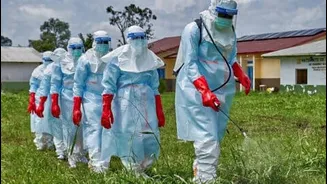
As per the latest information, at least 575 suspected cases, 51 confirmed cases, and 148 suspected deaths have been reported in the Democratic Republic of Congo (DRC) and Uganda.
The World Health Organization (WHO) has declared the ebola outbreak a public health emergency but stressed that it does not have the potential to cause a pandemic. Ebola is not airborne like Sars‑CoV‑2, the virus that causes Covid‑19, and spreads through close contact with bodily fluids such as blood, sweat, saliva, vomit, and faeces of an infected person or animal.
The outbreak in the DRC and Uganda is being driven by the less common Bundibugyo species of the virus. There is no vaccine or curative treatment for the virus, and treatment remains entirely supportive and symptomatic.
At a meeting convened jointly by Cochin International Airport Limited (CIAL) and the Airport Health Organisation (APHO), authorities decided to activate enhanced surveillance protocols at the airport.
In a statement, the authorities said the protocol includes round-the-clock monitoring, thermal screening, verification of 21-day travel histories, and the submission of self-declaration forms by international passengers. They added that isolation wards are currently available at Ernakulam General Hospital, Government Hospital Kalamassery, and District Hospital Aluva.
The development comes a day after the Ministry of Health issued an advisory on ebola for passengers arriving from or transiting through affected countries. Travellers have been advised to report to airport health authorities and seek medical care within 21 days if they develop symptoms such as fever, vomiting, diarrhoea, or bleeding. They were also advised to approach authorities if they have been in contact with an infected individual.
The advisory was released a day after Union Health Secretary Punya Salila Srivastava chaired a high-level meeting with health secretaries of all states and union territories to review preparedness and response measures against ebola.
ALSO READ — Covid, hantavirus, ebola… post-outbreak rush can’t protect people: Virologist on pandemic scare
As per the latest information, at least 575 suspected cases, 51 confirmed cases, and 148 suspected deaths have been reported in the Democratic Republic of Congo (DRC) and Uganda.
The World Health Organization (WHO) has declared the ebola outbreak a public health emergency but stressed that it does not have the potential to cause a pandemic. Ebola is not airborne like Sars‑CoV‑2, the virus that causes Covid‑19, and spreads through close contact with bodily fluids such as blood, sweat, saliva, vomit, and faeces of an infected person or animal.
The outbreak in the DRC and Uganda is being driven by the less common Bundibugyo species of the virus. There is no vaccine or curative treatment for the virus, and treatment remains entirely supportive and symptomatic.