




What is the story about?
With every dawn, an anxious plea,
"Please take us back to serenity."
The skies, dark with shadowed fear,
Ask, "When will this war just disappear?"
This question looms large everywhere: When is the Iran war going to end? Secretary of State Marco Rubio stated on March 27, 2026, that he expects the war to end "in a matter of weeks", noting that operations are "on or ahead of schedule". However, Reuters reported the same day that despite the heavy damage suffered by Iran, US intelligence sources can only confirm the destruction of about one-third of its original missile arsenal, as many are stored in deep underground "missile cities". Thus, current battlefield realities suggest that a quick end is highly unlikely.
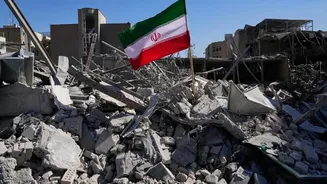
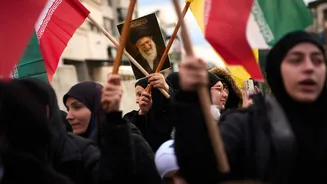
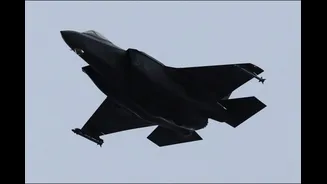
The war is now in its fifth week and is characterised by a high-intensity, sustained joint US-Israeli campaign targeting Iranian military, nuclear, and energy infrastructure. The attacks by the US and Israel have severely degraded Iranian capabilities but have not yet caused a total regime collapse. Following the killing of Supreme Leader Ali Khamenei at the war's start, a new, more hardline leadership under his son Mojtaba Khamenei continues to launch retaliatory missile and drone barrages targeting Israeli territory, US bases, and Gulf energy facilities.
The war, which began on February 28, 2026, has expanded through both horizontal escalation (geographical spread) and vertical escalation (increased intensity and choice of targets). Within the first 24 hours, Iran launched strikes against Israel as well as against Jordan, Syria, Iraq, and five Gulf Cooperation Council (GCC) states, claiming that these neighbours aided the US-Israel war effort by hosting US bases, thus accusing them of complicity. Iran's strategy was to inflict enough costs on neighbours to force them to pressure the US to end the conflict.
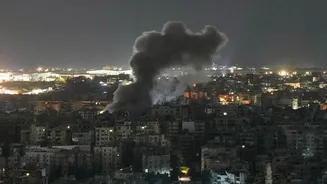
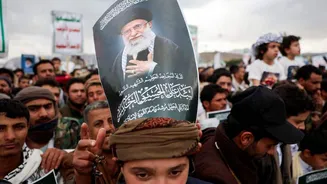
What started as a joint US-Israeli operation against Iran has evolved into a regional conflict affecting multiple nations and the global economy. Israel expanded its operations into Lebanon to target Hezbollah, while strikes by Iran and Hezbollah have been reported as far as Cyprus (targeting a British military base) and Azerbaijan. In late March 2026, Yemen's Houthi movement launched its first direct missile and drone military strikes in Israel and has vowed to continue these operations.
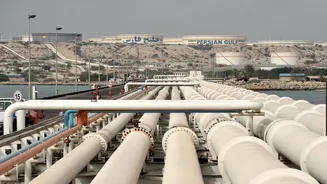
The war has shifted from military-on-military engagements to hitting critical infrastructure. Iran has targeted oil and gas facilities in Saudi Arabia, Qatar, and the UAE. The US and Israel have struck key Iranian sites, including Kharg Island, the hub for 90 per cent of Iran’s oil exports. Retaliatory strikes have hit major international airports in Dubai, Doha, Abu Dhabi, and Kuwait. Iran has effectively closed the Strait of Hormuz, a vital chokepoint for 20 per cent of the world's oil, by mining the waters and attacking tankers.
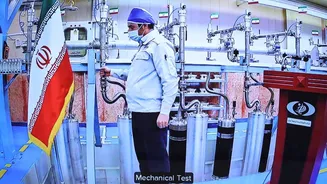
In a potentially dangerous development, the US and Israel have conducted multiple waves of strikes against
Iran's nuclear facilities in Yazd, Arak, Tehran, Isfahan, Natanz and Bushehr. Iran has also launched retaliatory missile strikes targeting areas near Israel's nuclear infrastructure, specifically the southern cities of Dimona and Arad. The strikes on nuclear facilities have raised significant alarms, although the IAEA confirmed that there were no confirmed reports of radioactive material release or off-site radiation increases.
The conflict's repercussions are felt globally in many ways. Brent crude oil prices have spiked over 40-50 per cent, rising from $72 to above $105 per barrel. Asia is the most exposed, as it receives 80-90 per cent of the oil passing through the Strait of Hormuz. A fertiliser crisis has also been caused as the Middle East exports roughly 25-30 per cent of the world’s fertiliser. Blockades and damage to facilities (e.g., Qatar’s urea plants) have caused prices to jump by nearly 25 per cent in a single week. Higher transport and fertiliser costs are expected to drive up grocery prices worldwide.
The Trump administration has proposed a 15-point ceasefire plan that includes the dismantling of nuclear facilities and permanent limits on Iran's missile range. However, the US peace proposal was described by Iran as "maximalist and unreasonable", leading to its rejection. Iran has countered with its own conditions, including the end of hostilities, reparations and sovereignty over the Strait of Hormuz, which are unpalatable to Washington and Jerusalem.
Another factor that makes it difficult to end the war is that the strategic objectives of Israel and the US are different. While initially promoting regime change and encouraging popular uprisings, US rhetoric has shifted toward limiting Iran’s ability to rebuild its military and nuclear infrastructure. The primary US goal now is to degrade Iran's missile capabilities, launch platforms, and nuclear programme rather than the replacement of the government. The US is aiming to avoid a "forever war", opting to weaken the current leadership through military pressure rather than attempting a total, and costly, regime overthrow. Although the US has not officially abandoned the idea of regime change, the current strategy emphasises limiting Iranian power to ensure it cannot pose a major threat to regional stability or US interests.
However, Israel's primary focus is the permanent elimination of existential threats and the removal of the current Iranian political structure. Israel is prioritised on "disabling" and decapitating the Iranian leadership. Prime Minister Benjamin Netanyahu has explicitly stated that a core goal is creating conditions for the Iranian people to overthrow the Ayatollah regime. Netanyahu has made it clear that the war will not end with a simple truce. Instead, Israel is seeking a decisive outcome that includes ensuring Iran can no longer enrich uranium, eliminating Iran's ability to manufacture and launch long-range missiles and creating conditions where the "current regime" no longer holds power or is significantly incapacitated.
Thus, while Netanyahu has expressed optimism for a fast conclusion, his definition of an "end" requires the total removal of what he considers existential threats, which may take longer than the diplomatic timelines currently being discussed by the US. While both nations target nuclear sites, Israel views the complete and permanent elimination of the larger existential threat as its top strategic priority.
Whereas the US primarily aims for "maximum pressure" to achieve deterrence through a new nuclear deal and dismantling missile capabilities, Israel seeks not just the long-term elimination of Iran's nuclear and missile programmes but also a regime change. Netanyahu's overarching objective is to remove the Islamic Republic’s leadership and replace it with a more favourable or moderate government. However, the Iranian regime is built for survival, and the removal of the current leadership could result in an even more repressive government or widespread chaos.
While the initial predictions of the Trump regime were of a short, sharp campaign, the Iranian regime has offered stiff resistance, making a quick victory difficult. Despite reports of damage to Iranian infrastructure, the conflict has not led to a quick resolution and is instead evolving into a prolonged crisis. Iran continues to conduct asymmetric warfare, including drone and missile strikes against Israel and the GCC countries. With air power alone failing to achieve a decisive outcome, the Pentagon is reportedly preparing for potential ground operations in Iran, as the first contingent of US Marines has arrived in the region.
Summing up, the rapid, decisive victory initially envisioned by US-Israeli planners has not materialised, leading to a "strategic quagmire" where military superiority has not yet translated into lasting political outcomes. The combination of Iran's defiance, the failure of diplomatic backchannels, and the continued, expanding kinetic military campaign makes an imminent resolution unlikely, pointing toward a prolonged, high-intensity, long-term "war of attrition" similar to the situation in Ukraine.
(The writer is a retired Indian diplomat and had previously served as ambassador in Kuwait and Morocco and as Consul General in New York. Views expressed in the above piece are personal and solely those of the author. They do not necessarily reflect Firstpost’s views.)
"Please take us back to serenity."
The skies, dark with shadowed fear,
Ask, "When will this war just disappear?"
This question looms large everywhere: When is the Iran war going to end? Secretary of State Marco Rubio stated on March 27, 2026, that he expects the war to end "in a matter of weeks", noting that operations are "on or ahead of schedule". However, Reuters reported the same day that despite the heavy damage suffered by Iran, US intelligence sources can only confirm the destruction of about one-third of its original missile arsenal, as many are stored in deep underground "missile cities". Thus, current battlefield realities suggest that a quick end is highly unlikely.
The war is now in its fifth week and is characterised by a high-intensity, sustained joint US-Israeli campaign targeting Iranian military, nuclear, and energy infrastructure. The attacks by the US and Israel have severely degraded Iranian capabilities but have not yet caused a total regime collapse. Following the killing of Supreme Leader Ali Khamenei at the war's start, a new, more hardline leadership under his son Mojtaba Khamenei continues to launch retaliatory missile and drone barrages targeting Israeli territory, US bases, and Gulf energy facilities.
The war, which began on February 28, 2026, has expanded through both horizontal escalation (geographical spread) and vertical escalation (increased intensity and choice of targets). Within the first 24 hours, Iran launched strikes against Israel as well as against Jordan, Syria, Iraq, and five Gulf Cooperation Council (GCC) states, claiming that these neighbours aided the US-Israel war effort by hosting US bases, thus accusing them of complicity. Iran's strategy was to inflict enough costs on neighbours to force them to pressure the US to end the conflict.
What started as a joint US-Israeli operation against Iran has evolved into a regional conflict affecting multiple nations and the global economy. Israel expanded its operations into Lebanon to target Hezbollah, while strikes by Iran and Hezbollah have been reported as far as Cyprus (targeting a British military base) and Azerbaijan. In late March 2026, Yemen's Houthi movement launched its first direct missile and drone military strikes in Israel and has vowed to continue these operations.
The war has shifted from military-on-military engagements to hitting critical infrastructure. Iran has targeted oil and gas facilities in Saudi Arabia, Qatar, and the UAE. The US and Israel have struck key Iranian sites, including Kharg Island, the hub for 90 per cent of Iran’s oil exports. Retaliatory strikes have hit major international airports in Dubai, Doha, Abu Dhabi, and Kuwait. Iran has effectively closed the Strait of Hormuz, a vital chokepoint for 20 per cent of the world's oil, by mining the waters and attacking tankers.
In a potentially dangerous development, the US and Israel have conducted multiple waves of strikes against
Iran's nuclear facilities in Yazd, Arak, Tehran, Isfahan, Natanz and Bushehr. Iran has also launched retaliatory missile strikes targeting areas near Israel's nuclear infrastructure, specifically the southern cities of Dimona and Arad. The strikes on nuclear facilities have raised significant alarms, although the IAEA confirmed that there were no confirmed reports of radioactive material release or off-site radiation increases.
The conflict's repercussions are felt globally in many ways. Brent crude oil prices have spiked over 40-50 per cent, rising from $72 to above $105 per barrel. Asia is the most exposed, as it receives 80-90 per cent of the oil passing through the Strait of Hormuz. A fertiliser crisis has also been caused as the Middle East exports roughly 25-30 per cent of the world’s fertiliser. Blockades and damage to facilities (e.g., Qatar’s urea plants) have caused prices to jump by nearly 25 per cent in a single week. Higher transport and fertiliser costs are expected to drive up grocery prices worldwide.
The Trump administration has proposed a 15-point ceasefire plan that includes the dismantling of nuclear facilities and permanent limits on Iran's missile range. However, the US peace proposal was described by Iran as "maximalist and unreasonable", leading to its rejection. Iran has countered with its own conditions, including the end of hostilities, reparations and sovereignty over the Strait of Hormuz, which are unpalatable to Washington and Jerusalem.
Another factor that makes it difficult to end the war is that the strategic objectives of Israel and the US are different. While initially promoting regime change and encouraging popular uprisings, US rhetoric has shifted toward limiting Iran’s ability to rebuild its military and nuclear infrastructure. The primary US goal now is to degrade Iran's missile capabilities, launch platforms, and nuclear programme rather than the replacement of the government. The US is aiming to avoid a "forever war", opting to weaken the current leadership through military pressure rather than attempting a total, and costly, regime overthrow. Although the US has not officially abandoned the idea of regime change, the current strategy emphasises limiting Iranian power to ensure it cannot pose a major threat to regional stability or US interests.
However, Israel's primary focus is the permanent elimination of existential threats and the removal of the current Iranian political structure. Israel is prioritised on "disabling" and decapitating the Iranian leadership. Prime Minister Benjamin Netanyahu has explicitly stated that a core goal is creating conditions for the Iranian people to overthrow the Ayatollah regime. Netanyahu has made it clear that the war will not end with a simple truce. Instead, Israel is seeking a decisive outcome that includes ensuring Iran can no longer enrich uranium, eliminating Iran's ability to manufacture and launch long-range missiles and creating conditions where the "current regime" no longer holds power or is significantly incapacitated.
Thus, while Netanyahu has expressed optimism for a fast conclusion, his definition of an "end" requires the total removal of what he considers existential threats, which may take longer than the diplomatic timelines currently being discussed by the US. While both nations target nuclear sites, Israel views the complete and permanent elimination of the larger existential threat as its top strategic priority.
Whereas the US primarily aims for "maximum pressure" to achieve deterrence through a new nuclear deal and dismantling missile capabilities, Israel seeks not just the long-term elimination of Iran's nuclear and missile programmes but also a regime change. Netanyahu's overarching objective is to remove the Islamic Republic’s leadership and replace it with a more favourable or moderate government. However, the Iranian regime is built for survival, and the removal of the current leadership could result in an even more repressive government or widespread chaos.
While the initial predictions of the Trump regime were of a short, sharp campaign, the Iranian regime has offered stiff resistance, making a quick victory difficult. Despite reports of damage to Iranian infrastructure, the conflict has not led to a quick resolution and is instead evolving into a prolonged crisis. Iran continues to conduct asymmetric warfare, including drone and missile strikes against Israel and the GCC countries. With air power alone failing to achieve a decisive outcome, the Pentagon is reportedly preparing for potential ground operations in Iran, as the first contingent of US Marines has arrived in the region.
Summing up, the rapid, decisive victory initially envisioned by US-Israeli planners has not materialised, leading to a "strategic quagmire" where military superiority has not yet translated into lasting political outcomes. The combination of Iran's defiance, the failure of diplomatic backchannels, and the continued, expanding kinetic military campaign makes an imminent resolution unlikely, pointing toward a prolonged, high-intensity, long-term "war of attrition" similar to the situation in Ukraine.
(The writer is a retired Indian diplomat and had previously served as ambassador in Kuwait and Morocco and as Consul General in New York. Views expressed in the above piece are personal and solely those of the author. They do not necessarily reflect Firstpost’s views.)