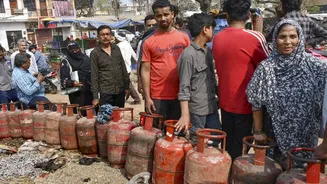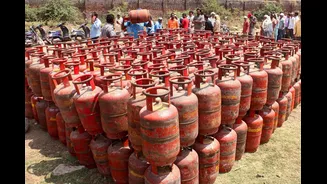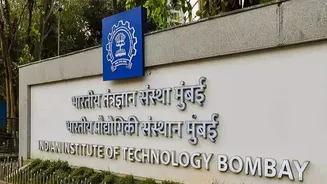







While rumours of a Liquefied Petroleum Gas (LPG) shortage are gaining traction, a quiet experiment at the Indian Institute of Technology (IIT) Bombay is offering a practical solution. The institute is turning its fallen leaves into cooking gas, a potential breakthrough amid supply uncertainties.
We take a look.
How does IIT Bombay's 'waste to fuel' invention work?
In 2014, Professor Sanjay Mahajani from the Chemical Engineering Department at IIT Bombay suggested biomass gasification as a way to convert campus waste into cooking fuel.
Initial trials proved difficult because Indian biomass produced clinkers that clogged and damaged conventional systems and generated smoke for 30 minutes or more.
However, the team continued their work, and by 2016, a patented gasifier achieved a 100-fold reduction in clinker formation.
As energy costs rise globally, a solution developed at IIT Bombay over the past decade is proving its worth. The fuel? Fallen leaves from campus.
In 2014, Prof. Sanjay Mahajani from the Department of Chemical Engineering proposed biomass gasification to convert campus waste into… pic.twitter.com/LrNdJceg0p
— IIT Bombay (@iitbombay) March 27, 2026
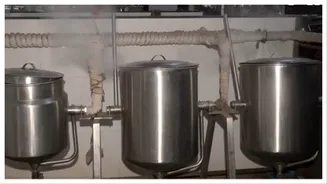
The biomass gasification process involves collecting, shredding, and converting dry leaves into pellets. These pellets are then heated in a low-oxygen chamber, where pyrolysis and gasification take place, releasing a fuel-rich gas mixture. The gas burns cleanly and produces a steady flame suitable for cooking.
In 2017, Prof Sandeep Kumar from the Department of Energy Science and Engineering joined the experiment to develop an innovative burner and obtain a patent for the technology.
Currently, the staff canteen at the Indian Institute of Technology Bombay operates on 30–40 per cent less LPG, achieving 60 per cent thermal efficiency and emissions below 20 ppm (parts per million), according to its social media handle.
What did Prof Sanjay Mahajani say?
Developed after nearly a decade of research led by Prof Mahajani since 2014, the patented technology comes at a time when global supply disruptions have raised concerns over cooking gas availability in India.
#WATCH | Mumbai, Maharashtra: The Indian Institute of Technology (IIT) Bombay has developed an indigenous technology to combat the rising prices and potential shortages of LPG (cooking gas). Through its patented biomass gasification technology, the institute has successfully… pic.twitter.com/rVVIFDrKGV
— ANI (@ANI) March 31, 2026
Speaking to the news agency ANI, Mahajani said his research focuses on gasification and energy conversion, and that the idea for the innovation emerged from the institute’s environment.
"These dried leaves and twigs, if we simply burn them--they do, in fact, yield energy. However, the situation here is that IIT Bombay has extensive green cover; consequently, a large number of leaves and twigs fall onto the pathways and grounds... So, we reasoned that since this waste material inherently contains energy, why not harness it for our own internal applications?," said Mahajani.
Adding, "Given the extensive cooking activities and various thermal applications within the IIT campus, we decided to explore using this waste as a fuel source for those needs."
Explaining the process, Prof. Mahajani said, "It was not quite that simple; it required a significant amount of research. Gasification involves first converting these leaves into pellets-essentially compressing them, and then feeding these pellets into the gasification unit that we have designed."
Referring to the initial challenges, he added, "There was excessive smoke, operational inefficiencies, and frequent blockages."
#WATCH | Mumbai, Maharashtra: IIT Bombay Professor Sanjay Mahajani says, "I am a faculty member here in the Department of Chemical Engineering at IIT Bombay. My research focuses on gasification and energy conversion. These dried leaves and twigs—if we simply burn them—they do, in… pic.twitter.com/YUjVrVpUXr
— ANI (@ANI) March 31, 2026
Apart from technical hurdles, according to the professor, the bigger challenge was human. He pointed out that for the kitchen staff, this was an unfamiliar system, and they also rejected it outright, at times.
"It was a tough task to convince the cooks. At one point, they were not convinced that this would work." However, the team cooperated with staff, actively took their feedback, and made continuous improvements.
"We persisted, and the management supported us because they knew this would help in the long run," Prof Mahajani furthered.
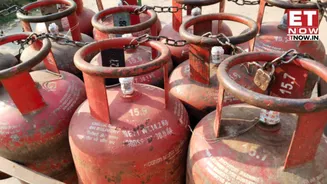
"Now, with this gasifier, we are replacing one LPG cylinder every day. If we install another such system, LPG may not be needed at all - but that would require changes in cooking utensils," he noted.
Can it help replace LPG? Is India ready for a shift?
This innovation is not yet a complete replacement for LPG, but it offers a partial, sustainable alternative to cooking fuel. By converting dry leaves into combustible gas, the system may help reduce dependence on imported LPG.
This could also help control rising fuel costs, especially for large hostels, institutions, and community kitchens.
Scientists believe the technology can be scaled up for use in universities, industrial townships, community kitchens, and even rural areas.
India appears ready to explore innovative, science-driven energy alternatives. From fallen leaves to a working kitchen flame, IIT Bombay's innovation demonstrates a path toward a more sustainable energy future.
With inputs from agencies