









What is the story about?
India’s most basic food, milk, rarely makes headlines. However, this month it did and became the centre of a nationwide food safety row, raising uncomfortable questions about how safe the packaged milk we usually buy is to consume.
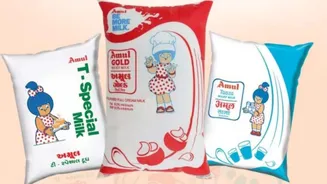
India’s most trusted brands, Amul, Mother Dairy, and Country Delight, are under the scanner after an independent testing platform, Trustified, released a video showing that milk samples from these brands failed to meet quality parameters.
Testing of milk samples from the above brand was conducted to assess Total Plate Count (TPC) and coliform, a type of bacteria. The results were shocking. It showed that some milk pouches had coliform levels up to 98 times higher than the Food Safety and Standards Authority of India's (FSSAI) prescribed limits.
So, why is this bacterium so harmful? How has the dairy brand reacted? We take a look.
Coliform bacteria refer to a group of bacteria that is commonly present in soil, water, plants, and the intestines of animals and humans.
They are rod-shaped, gram-negative, non-spore-forming bacteria that may be either motile or non-motile, according to ScienceDirect. These bacteria ferment sugars, producing acid and gas when incubated at 35°C-37°C.
Coliforms typically do not cause serious illness. However, high levels can result in symptoms such as fever, gastroenteritis, diarrhoea, abdominal cramps, and headaches.
Consuming in large quantities can pose risks to individuals with weakened immune systems, particularly young children and the elderly.
According to many experts, detecting coliform bacteria does not necessarily indicate human contamination.
In India, it is often associated with cow dung during hand milking, especially in settings where hygiene practices are inadequate. Therefore, milk is traditionally advised to be boiled before consumption.
If the cold chain (a temperature-controlled supply chain) is broken during transportation, at retail stores, or at home, any remaining bacteria can multiply rapidly. Therefore, pasteurised milk should not be consumed without boiling it first.
At the heart of the online storm is a viral video by Trustified. Their blind tests revealed that Amul Taaza and Gold pouch milk contained coliforms.
Coliforms were 980 CFU/ml in Amul Taaza, while 25CFU/ml in Amul Gold, which was way above the FSSAI-mandated safe limits, reported the Siasat Daily.
Mother Dairy cow milk failed in TPC recording 2,40,000 CFU/ml, which, according to Trustified, is nearly eight times higher than the prescribed limit (FSSAI) of 30,000 CFU/ml.
In Country Delight cow milk, marketed aggressively as “fresh milk straight from the farmlands to your homes,” the total plate count (TPC) was recorded at 60,000 CFU/ml, double the prescribed safety limit of 30,000 CFU/ml, the news outlet reported.
The concern goes beyond milk, as curd has also come under scrutiny.
In January this year, the same platform tested Amul Dahi, particularly its Masti Dahi variant, and found coliform bacteria levels 2,100 times above the permissible limit, along with yeast and mould levels 60 times higher than the permissible limit, pointing to significant shortcomings in food safety standards.
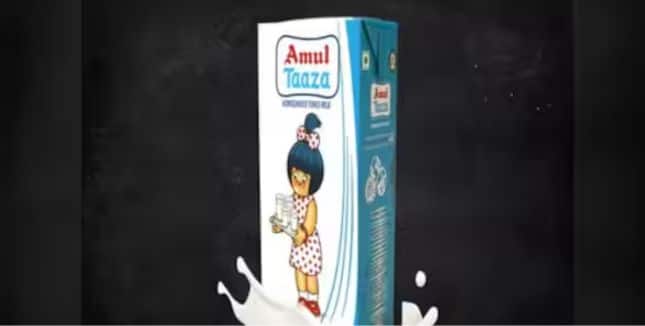
While tetra pack milk and dahi sold in cups passed quality checks.
Meanwhile, Amul has vehemently dismissed these reports as fear-mongering. It maintained that its products meet all safety standards. The company pointed to the possible disruptions in the cold chain at the retail or distribution level, rather than to any lapse in the manufacturing process.
However, these are not isolated incidents. According to a CNBC-TV18 report, over the past month, police and food safety authorities in parts of Gujarat, Rajasthan, Madhya Pradesh, and Chhattisgarh have cracked down on illegal dairy units allegedly involved in producing adulterated milk.
In a recent raid in Gujarat, officials said that 300 litres of pure milk were diluted with water, milk powder, caustic soda, oil, detergent, and urea to manufacture nearly 1,800 litres of adulterated milk daily, the report noted.
The magnitude of the issue has forced the regulator to step in. The FSSAI has directed a nationwide crackdown to curb the adulteration and mislabelling of dairy products.
In response to questions in Parliament, the government stated that food safety authorities conduct targeted enforcement campaigns across states. These efforts are backed by 246 accredited food testing laboratories, 24 referral laboratories, and more than 300 mobile “Food Safety on Wheels” units, according to the media outlet.
Dr Sharad Malhotra, senior consultant and director of Gastroenterology at Aakash Healthcare, requested that people refrain from consuming pouch milk unless it is boiled.
Malhotra told Moneycontrol, "Consuming contaminated milk without boiling can lead to the development of gastrointestinal symptoms, such as abdominal pain, diarrhoea, vomiting, bloating, or even food poisoning."

Adding, "Susceptibility is stronger in children, elderly persons, pregnant women, and people with low immunity. So, continuous exposure to contaminated food can also affect gut health."
"The regulatory authorities may need to review hygiene audits along the entire supply chain, that is, from farm to retail shelf."
The doctor further noted that, even if the bacteria present in the milk are not immediately harmful, milk will have a shorter shelf life under such conditions.
"A large number of bacteria present in the milk is an indication that the storage conditions during transportation, storage, and even on the shelves require an overhaul. Regular testing and refrigeration at all stages, from production to delivery at the doorstep, is a must to adhere to the safety parameters," Malhotra furthered.
With inputs from agencies
India’s most trusted brands, Amul, Mother Dairy, and Country Delight, are under the scanner after an independent testing platform, Trustified, released a video showing that milk samples from these brands failed to meet quality parameters.
Testing of milk samples from the above brand was conducted to assess Total Plate Count (TPC) and coliform, a type of bacteria. The results were shocking. It showed that some milk pouches had coliform levels up to 98 times higher than the Food Safety and Standards Authority of India's (FSSAI) prescribed limits.
So, why is this bacterium so harmful? How has the dairy brand reacted? We take a look.
What is Coliform bacteria?
Coliform bacteria refer to a group of bacteria that is commonly present in soil, water, plants, and the intestines of animals and humans.
They are rod-shaped, gram-negative, non-spore-forming bacteria that may be either motile or non-motile, according to ScienceDirect. These bacteria ferment sugars, producing acid and gas when incubated at 35°C-37°C.
Coliforms typically do not cause serious illness. However, high levels can result in symptoms such as fever, gastroenteritis, diarrhoea, abdominal cramps, and headaches.
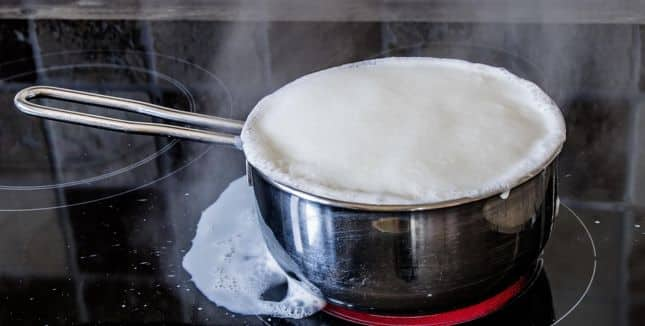
The test showed that some milk pouches had coliform levels up to 98 times higher than FSSAI’s prescribed limits. Representational image/Pixabay
Consuming in large quantities can pose risks to individuals with weakened immune systems, particularly young children and the elderly.
According to many experts, detecting coliform bacteria does not necessarily indicate human contamination.
In India, it is often associated with cow dung during hand milking, especially in settings where hygiene practices are inadequate. Therefore, milk is traditionally advised to be boiled before consumption.
If the cold chain (a temperature-controlled supply chain) is broken during transportation, at retail stores, or at home, any remaining bacteria can multiply rapidly. Therefore, pasteurised milk should not be consumed without boiling it first.
Why are dairy giants under the scanner?
At the heart of the online storm is a viral video by Trustified. Their blind tests revealed that Amul Taaza and Gold pouch milk contained coliforms.
Coliforms were 980 CFU/ml in Amul Taaza, while 25CFU/ml in Amul Gold, which was way above the FSSAI-mandated safe limits, reported the Siasat Daily.
Mother Dairy cow milk failed in TPC recording 2,40,000 CFU/ml, which, according to Trustified, is nearly eight times higher than the prescribed limit (FSSAI) of 30,000 CFU/ml.
In Country Delight cow milk, marketed aggressively as “fresh milk straight from the farmlands to your homes,” the total plate count (TPC) was recorded at 60,000 CFU/ml, double the prescribed safety limit of 30,000 CFU/ml, the news outlet reported.
Coliforms were 980 CFU/ml in Amul Taaza, while 25CFU/ml in Amul Gold, which was way above the FSSAI-mandated safe limits. Representational image/PTI
The concern goes beyond milk, as curd has also come under scrutiny.
In January this year, the same platform tested Amul Dahi, particularly its Masti Dahi variant, and found coliform bacteria levels 2,100 times above the permissible limit, along with yeast and mould levels 60 times higher than the permissible limit, pointing to significant shortcomings in food safety standards.
While tetra pack milk and dahi sold in cups passed quality checks.
Meanwhile, Amul has vehemently dismissed these reports as fear-mongering. It maintained that its products meet all safety standards. The company pointed to the possible disruptions in the cold chain at the retail or distribution level, rather than to any lapse in the manufacturing process.
How officials busted illegal dairy units in past?
However, these are not isolated incidents. According to a CNBC-TV18 report, over the past month, police and food safety authorities in parts of Gujarat, Rajasthan, Madhya Pradesh, and Chhattisgarh have cracked down on illegal dairy units allegedly involved in producing adulterated milk.
In a recent raid in Gujarat, officials said that 300 litres of pure milk were diluted with water, milk powder, caustic soda, oil, detergent, and urea to manufacture nearly 1,800 litres of adulterated milk daily, the report noted.
The magnitude of the issue has forced the regulator to step in. The FSSAI has directed a nationwide crackdown to curb the adulteration and mislabelling of dairy products.
In response to questions in Parliament, the government stated that food safety authorities conduct targeted enforcement campaigns across states. These efforts are backed by 246 accredited food testing laboratories, 24 referral laboratories, and more than 300 mobile “Food Safety on Wheels” units, according to the media outlet.
What did the expert say?
Dr Sharad Malhotra, senior consultant and director of Gastroenterology at Aakash Healthcare, requested that people refrain from consuming pouch milk unless it is boiled.
Malhotra told Moneycontrol, "Consuming contaminated milk without boiling can lead to the development of gastrointestinal symptoms, such as abdominal pain, diarrhoea, vomiting, bloating, or even food poisoning."
Experts requested that people refrain from consuming pouch milk unless it is boiled. Representational image/Pixabay
Adding, "Susceptibility is stronger in children, elderly persons, pregnant women, and people with low immunity. So, continuous exposure to contaminated food can also affect gut health."
"The regulatory authorities may need to review hygiene audits along the entire supply chain, that is, from farm to retail shelf."
The doctor further noted that, even if the bacteria present in the milk are not immediately harmful, milk will have a shorter shelf life under such conditions.
"A large number of bacteria present in the milk is an indication that the storage conditions during transportation, storage, and even on the shelves require an overhaul. Regular testing and refrigeration at all stages, from production to delivery at the doorstep, is a must to adhere to the safety parameters," Malhotra furthered.
With inputs from agencies