
The court did not indicate when it would take up the matter again. As per its usual practice, the Supreme Court does not announce in advance which rulings it will deliver on a given day, nor did it set a fresh hearing date.
Legal challenge under emergency powers law
At the centre of the case is whether President Donald Trump exceeded his authority under the International Emergency Economic Powers Act (IEEPA) by declaring a national emergency to impose country-specific import tariffs. The challenge has been filed by importers, who argue that the tariffs were imposed without clear congressional authorisation.
No ruling despite multiple decisions
While the court issued three rulings on Tuesday, it did not decide on the closely watched tariff case, Reuters reported. The court had similarly held back a decision on the matter last week.
Justices earlier expressed scepticism
Arguments heard during the November 5, 2025 hearing indicated that the justices were sceptical about Trump’s authority to impose tariffs under the 1977 law, which grants the president special powers during national emergencies.
Delay likely to stretch into February
The deferral means it will be at least another month before the legality of Trump’s signature economic policy is resolved. Bloomberg reported that the Supreme Court is preparing to enter a four-week recess, and based on its usual procedures, the next potential date for a ruling could be February 20.
High stakes for Trump administration
The court’s expedited handling of the case earlier had raised expectations of an imminent decision. A ruling against Trump would represent his biggest legal setback since returning to the White House, according to Bloomberg.
What are the ‘Liberation Day’ tariffs?
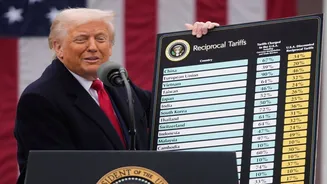
The case involves Trump’s April 2 ‘Liberation Day’ tariffs, which imposed duties ranging from 10 to 50 percent on most imports. Additional levies were placed on Canada, Mexico and China, with Trump citing fentanyl trafficking as the justification.
Potential financial and geopolitical impact
A decision striking down the tariffs could result in more than $130 billion in refunds and may also weaken Trump’s ongoing threat to impose further tariffs on European countries if they oppose US plans related to Greenland, Bloomberg reported.