
Bessent said the shift came after Trump levied a 25 per cent tariff on Indian goods, along with an additional 25 per cent penalty tariff for buying Russian crude oil. Some in the White House, including special adviser Peter Navarro, have accused India of bankrolling Russia’s operations in Ukraine.
Trump had made a similar claim last year. “I understand that India is no longer going to be buying oil from Russia. That’s what I heard, I don’t know if that’s right or not. That is a good step. We will see what happens,” he said.
The latest remarks come as India and the United States continue negotiating a trade deal, with officials in Washington and New Delhi reportedly frustrated by slow progress.
But what exactly did Bessent claim — and do the facts support it?
What Bessent claimed
“India started buying Russian oil after the conflict began,” Bessent said in an interview with Fox News. “But President Trump put a 25 per cent tariff on them, and India has geared down and has stopped buying Russian oil.”
He was responding to a proposal by Trump ally Senator Lindsey Graham, whose bill would allow the United States to impose a 500 per cent tariff on countries buying Russian oil.
“On the 500 per cent tariff on the buyers of Russian oil, that is a proposal that Senator Graham has in front of the Senate,” Bessent said. “We don’t believe that President Trump needs that authority — that he can do it under IEPA — but the Senate wants to give him that authority.”
Bessent also criticised European nations. “We have Europe buying Russian oil still, four years later,” he said. “They are financing the war against themselves.”
India’s crude import landscape
India’s dependence on imported crude oil is structurally entrenched. The country meets around 88 per cent of its oil needs through foreign purchases. For decades, West Asia formed the backbone of India’s energy security, but the Ukraine war triggered a profound realignment in sourcing patterns.
Western sanctions and restrictions on Russian oil opened a window for New Delhi, which began importing heavily discounted Russian crude in 2022.
The shift was dramatic. Before the war, Russian oil accounted for barely two per cent of India’s crude imports. By 2023, shipments had climbed to roughly 1.66 million barrels per day, up from fewer than 700,000 barrels per day in 2022. By May 2025, imports reached 1.96 million barrels per day, and in June they surged further to between 2 and 2.2 million barrels per day — the highest levels in two years.
India is among the world’s largest oil consumers, requiring about five million barrels per day to meet domestic demand. It imports close to 90 per cent of its crude oil, placing it among the top global importers.
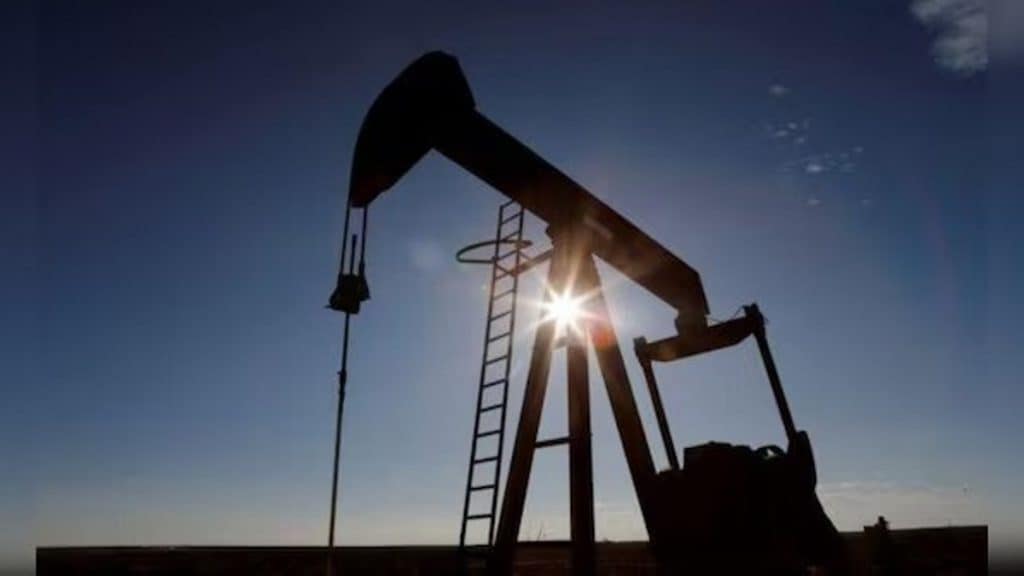
India today gets around 35 per cent of its oil from Russia – around two million barrels of oil per day.
Before the Ukraine conflict began in 2022, India sourced most of its oil from Iraq (24 per cent), Saudi Arabia (16 per cent), the United States (10 per cent) and Russia (two per cent). Since then, the supply map has been transformed.
Since 2022, India has imported nearly $144 billion (Rs 13.20 trillion) worth of crude oil from Russia. New Delhi is now Moscow’s second-largest crude buyer after Beijing, according to data from the Centre for Research on Energy and Clean Air (CREA).
This surge has largely been driven by steep discounts offered by Russia in 2022 and 2023. Although these discounts narrowed in 2024, India has continued purchasing Russian crude in significant volumes.
At present, Russia supplies around 35 per cent of India’s oil — roughly two million barrels per day. Other major suppliers include Iraq, Saudi Arabia, the UAE and the United States, alongside smaller volumes from Kuwait, West Africa and Mexico.
Russian crude remains cheaper than global benchmarks, trading about $10 to $15 (Rs 916.80 to Rs 1,375.20) per barrel below Brent, which is priced at roughly $63 (Rs 5,775.84) per barrel. E
India’s oil imports hit November high, December low
In November 2025, India’s Russian oil imports rose to a six-month high in both volume and value. The United States accounted for around 13 per cent of India’s oil that month.
India imported 7.7 million tonnes of oil from Russia in November 2025, comprising 35.1 per cent of its oil imports for the month. This was nearly seven per cent higher than the same month a year earlier and the highest level since May 2025. India imported $3.7 billion (Rs 339.22 billion) worth of Russian crude in November.
However, in December, Russia’s oil exports to India fell to a three-year low. “India’s imports of Russian crude fell by 595,000 barrels per day month-on-month in December, dropping to 1.24 million barrels per day — the lowest level since December 2022,” according to Kpler.

Rosneft's Russian-flagged crude oil tanker Vladimir Monomakh transits the Bosphorus in Istanbul, Turkey. (Representational image, Credit: Reuters)
Data from Bloomberg showed Russia shipped 3.16 million barrels per day in the period from 18 December to 18 January. That figure was 700,000 barrels per day higher than the pre-Christmas peak but 260,000 barrels per day lower than the period to 11 January.
According to Rystad Energy, India’s crude imports from Russia have fallen by around 300,000 barrels per day since November.
What do experts say?
State-owned Indian firms such as Indian Oil and Bharat Petroleum Corporation “have continued to buy Russian crude for future delivery, through non-sanctioned suppliers,” said Muyu Xu, senior crude oil analyst at tanker-tracking firm Kpler, quoted by CNBC.
“Despite declining aggregate imports, PSU refinery intake of Russian crude has remained resilient, highlighting a redistribution rather than a collapse in demand,” added Rystad Energy’s Pankaj Srivastava.
India has consistently maintained that its oil imports are driven by the need to secure predictable and affordable energy for domestic consumers. New Delhi has said it will act in the national interest and has pushed back against Western criticism, pointing to Europe’s own continued trade with Russia.
MEA spokesperson Randhir Jaiswal previously said, “We take decisions based on the price at which oil is available in the international market and depending on the global situation at that time.”
“India will continue to buy Russian oil. It is our decision to buy what suits our needs… where we buy our oil from, we will have to take a call on it,” Finance Minister Nirmala Sitharaman said last year.
With inputs from agencies