







What is the story about?
Pakistan’s restive southwestern province of Balochistan became the epicentre of deadly violence after a wave of coordinated militant attacks triggered one of the most intense security operations the region has seen in years.
Over nearly 40 hours, gun and bomb assaults spanning multiple districts left scores of civilians and security personnel dead, while Pakistani forces claimed to have killed at least 145 militants.
The latest bloodshed has drawn attention back to Balochistan’s decades-old insurgency and at the same time, Islamabad’s repeated allegations of foreign involvement — particularly against India — have once again triggered sharp diplomatic pushback.
The latest crisis began with a series of near-simultaneous attacks across a wide geographical swathe of Balochistan, including Quetta, Gwadar, Mastung, Noshki, Dalbandin, Kharan, Panjgur, Tump and Pasni.
Militants struck police stations, security checkpoints, training facilities, banks, markets and government offices, while also attempting to breach sensitive installations linked to Pakistan’s security forces.
In several locations, attackers reportedly moved through urban areas, briefly blocking roads and targeting infrastructure before security forces responded with large-scale counter-operations involving the army, police and counterterrorism units.
Balochistan Chief Minister Sarfraz Bugti on Sunday said the province witnessed almost 40 hours of continuous fighting as security personnel pursued militants across different locations.
According to provincial authorities, 17 members of Pakistan’s law enforcement agencies and 31 civilians were killed in the attacks. Pakistan’s military said that 92 militants were killed on Saturday, adding to the 41 on Friday.
Bugti said intelligence agencies had received credible warnings before the attacks were launched. “We had intelligence reports that this kind of operation was being planned, and as a result of those, we started pre-operations a day before,” he said.
Details emerging from the attacks highlighted a troubling shift in militant tactics. Pakistan’s junior interior minister Talal Chaudhry said the attackers deliberately concealed their identities by blending into civilian populations before opening fire.
“In each case, the attackers came in dressed as civilians and indiscriminately targeted ordinary people working in shops,” Chaudhry said, adding that militants had used civilians as human shields during the assaults.
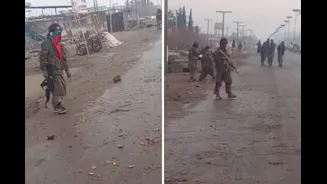
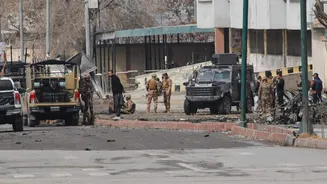
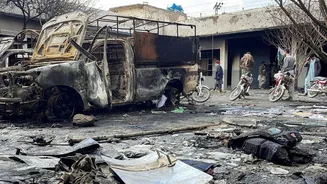
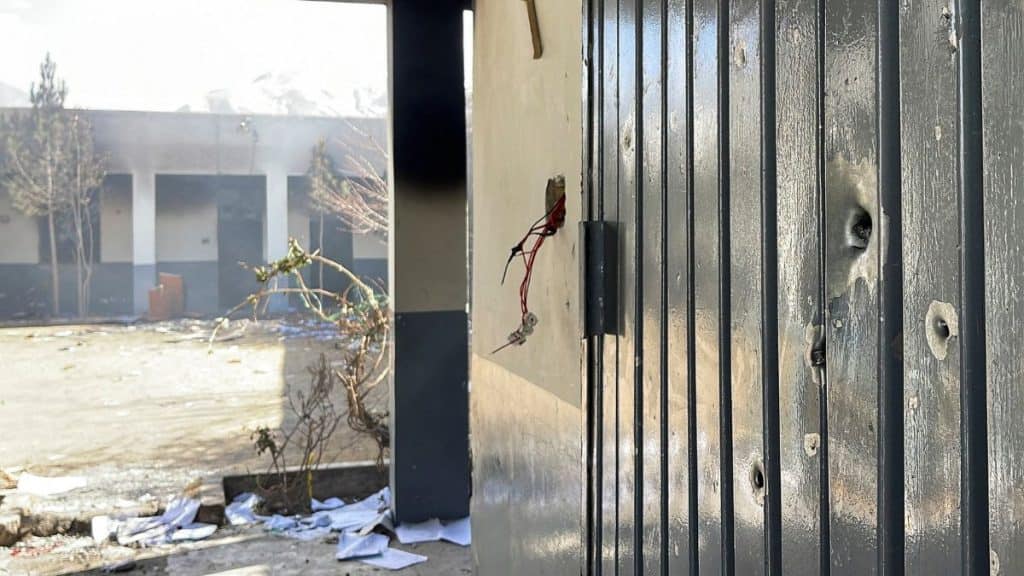
In Quetta, the provincial capital, the aftermath was visible across multiple neighbourhoods. Burnt-out vehicles stood outside police stations, doors and walls bore bullet marks, and streets were cordoned off with yellow tape as security forces tightened patrols.
Militants targeted police stations, checkpoints, the Police Training Centre and areas designated as Red Zones. A bank was torched, police vehicles were set on fire, and Safe City surveillance cameras were attacked.
“Our Safe City cameras in Quetta were also attacked. We will install CCTV cameras in eight cities to strengthen surveillance,” Bugti said.
In Gwadar, a coastal city central to Pakistan’s economic and strategic ambitions, militants reportedly killed five members of a labourer family from Khuzdar. The port city has long been a focal point for insurgent violence due to its role in China-backed infrastructure projects.
In Pasni, militants targeted a Maritime Security Agency naval camp. A suicide bomber rammed an explosive-laden vehicle into the main gate, killing one MSA soldier and injuring another, reported Karachi-based
Geo News.
Security forces responded, killing six militants during the assault. A separate attack on a Coast Guard post in the area was repelled, officials said.
In Mastung, Kalat and Pasni, attackers attempted to seize control of government buildings and security installations. Several people were injured in Mastung during gun and bomb attacks.
Militants also freed more than 30 prisoners from the Central Jail, further escalating concerns over the security situation.
Clashes were reported near the Deputy Commissioner’s headquarters and Police Lines in Kalat, while in Noshki, militants abducted Deputy Commissioner Hussain Hazara along with his family. A video later emerged showing the official in captivity before his release.
In Kharan, political and tribal leader Shahid Malazai and six of his guards were killed when militants attacked his residence. Three attackers were also killed in the ensuing exchange of fire.
Markets were shut in several towns amid fear and panic, and authorities imposed additional security measures to prevent further attacks.
Responsibility for the coordinated violence was claimed by the Islamabad-banned Baloch Liberation Army (BLA). The group said it had launched a province-wide operation named Herof, or “black storm,” targeting Pakistan’s security forces.
The BLA also claimed to have killed 84 members of Pakistan’s security forces and captured 18 others. Pakistani authorities rejected these claims, saying security forces had prevented militants from seizing control of any city or strategic installation.
The BLA is the most prominent among several ethnic Baloch insurgent groups that have operated in Balochistan for decades. It seeks independence for the province, which lies in Pakistan’s southwest and borders Afghanistan to the north and Iran to the west.
The group argues that Balochistan’s abundant natural resources — including gas, copper, gold and other minerals — are exploited by the federal government without fair benefit to the local population. It rejects federal authority over resource extraction and security, insisting that the province’s wealth belongs to its people.
Hundreds of Baloch activists, many of them women, have staged protests in Islamabad and across the province over alleged abuses by security forces — accusations the government denies.
The decades-old insurgency has continued to destabilise the region and raise security concerns around Pakistan’s plans to tap its untapped natural wealth.
For years, the Baloch insurgency was viewed as relatively low-level compared to Islamist militancy elsewhere in Pakistan. That assessment has changed markedly in recent years as attacks have become more frequent, coordinated and lethal.
In 2022, the BLA shocked Pakistan’s security establishment by launching assaults on army and navy bases.
In August 2024, militants carried out coordinated attacks across Balochistan, including highway ambushes in which passengers were pulled off buses and shot after identity checks.
In March 2025, militants sabotaged railway tracks and opened fire on the Jaffar Express passenger train, briefly taking hostages and triggering a major security operation, according to officials and local media.
The group has also deployed women suicide bombers, including in an attack targeting Chinese nationals in Karachi. It has repeatedly struck civilian targets, migrant labourers from other provinces and low-income communities — a development that Pakistani officials say represents a sharp escalation in tactics.
Balochistan’s mountainous border areas have long served as sanctuaries not only for Baloch insurgents but also for Islamist militants.
Last year, the BLA was at the centre of tit-for-tat military strikes between Iran and Pakistan, as both countries accused each other of hosting militant bases. The exchanges brought the two neighbours close to armed confrontation before tensions eased.
Pakistan has repeatedly accused India and Afghanistan of backing Baloch militants — allegations both countries deny. The BLA is also designated a foreign terrorist organisation by the United States.
A central focus of the BLA’s campaign has been Chinese interests in Pakistan. The group has accused Beijing of assisting Islamabad in exploiting Balochistan’s resources and has
repeatedly targeted projects linked to the China-Pakistan Economic Corridor (CPEC).
Balochistan is a critical component of China’s $65 billion CPEC initiative, a flagship element of President Xi Jinping’s Belt and Road vision. The province hosts key infrastructure, mining and port projects, including the deep-water port of Gwadar on the Arabian Sea.
Militants have killed Chinese citizens working in the region and attacked Chinese diplomatic and cultural sites, including Beijing’s consulate and language centre in Karachi.
Balochistan is also home to major mining projects such as Reko Diq, operated by Barrick Gold, which is believed to be one of the world’s largest gold and copper deposits. China separately operates a gold and copper mine in the province.
Balochistan’s proximity to the Strait of Hormuz — a vital global oil shipping lane — also adds to its growing strategic importance.
Despite its natural wealth, Balochistan remains Pakistan’s poorest province, with limited development and long-standing grievances over political representation, resource sharing and alleged abuses by security forces.
In the wake of the latest violence, Pakistan’s military revived its long-standing claim of external involvement.
In a statement issued on Saturday, the military said the attacks were carried out by “Indian-sponsored militants,” referring to them as cadres of “Fitna al-Hindustan,” which it translated as “India’s incitement.”
This framing has become a consistent feature of Pakistan’s national security narrative, linking major attacks to foreign adversaries and portraying the military as a guardian of territorial integrity rather than a party to an internal conflict rooted in local grievances.
Officials have previously used similar language when accusing “neighbouring countries” of attempting to undermine Pakistan’s key economic projects.
On Sunday, responding to media queries, Ministry of External Affairs spokesperson Randhir Jaiswal said, “We categorically reject the baseless allegations made by Pakistan, which are nothing but its usual tactics to deflect attention from its own internal failings.”
He added that Islamabad should focus on domestic issues rather than externalising blame.
“Instead of parroting frivolous claims each time there is a violent incident, it would do better to focus on addressing long-standing demands of its people in the region. Its record of suppression, brutality and violation of human rights is well known,” Jaiswal said.
Meanwhile, the United States condemned the attacks, with US Charge d’Affaires Natalie Baker describing them as acts of terrorist violence and expressing solidarity with Pakistan.
“We will carry out intelligence-based operations against terrorists, and we will drag them out of their hideouts,” Bugti said.
With inputs from agencies
Over nearly 40 hours, gun and bomb assaults spanning multiple districts left scores of civilians and security personnel dead, while Pakistani forces claimed to have killed at least 145 militants.
The latest bloodshed has drawn attention back to Balochistan’s decades-old insurgency and at the same time, Islamabad’s repeated allegations of foreign involvement — particularly against India — have once again triggered sharp diplomatic pushback.
What happened in the 40 hours in Balochistan?
The latest crisis began with a series of near-simultaneous attacks across a wide geographical swathe of Balochistan, including Quetta, Gwadar, Mastung, Noshki, Dalbandin, Kharan, Panjgur, Tump and Pasni.
Militants struck police stations, security checkpoints, training facilities, banks, markets and government offices, while also attempting to breach sensitive installations linked to Pakistan’s security forces.
In several locations, attackers reportedly moved through urban areas, briefly blocking roads and targeting infrastructure before security forces responded with large-scale counter-operations involving the army, police and counterterrorism units.
Balochistan Chief Minister Sarfraz Bugti on Sunday said the province witnessed almost 40 hours of continuous fighting as security personnel pursued militants across different locations.
According to provincial authorities, 17 members of Pakistan’s law enforcement agencies and 31 civilians were killed in the attacks. Pakistan’s military said that 92 militants were killed on Saturday, adding to the 41 on Friday.
Bugti said intelligence agencies had received credible warnings before the attacks were launched. “We had intelligence reports that this kind of operation was being planned, and as a result of those, we started pre-operations a day before,” he said.
Details emerging from the attacks highlighted a troubling shift in militant tactics. Pakistan’s junior interior minister Talal Chaudhry said the attackers deliberately concealed their identities by blending into civilian populations before opening fire.
“In each case, the attackers came in dressed as civilians and indiscriminately targeted ordinary people working in shops,” Chaudhry said, adding that militants had used civilians as human shields during the assaults.
In Quetta, the provincial capital, the aftermath was visible across multiple neighbourhoods. Burnt-out vehicles stood outside police stations, doors and walls bore bullet marks, and streets were cordoned off with yellow tape as security forces tightened patrols.
A view of a bullet riddle door at a police station, following militant attacks, in Quetta, Pakistan, February 1, 2026. File Image/Reuters
Militants targeted police stations, checkpoints, the Police Training Centre and areas designated as Red Zones. A bank was torched, police vehicles were set on fire, and Safe City surveillance cameras were attacked.
“Our Safe City cameras in Quetta were also attacked. We will install CCTV cameras in eight cities to strengthen surveillance,” Bugti said.
In Gwadar, a coastal city central to Pakistan’s economic and strategic ambitions, militants reportedly killed five members of a labourer family from Khuzdar. The port city has long been a focal point for insurgent violence due to its role in China-backed infrastructure projects.
In Pasni, militants targeted a Maritime Security Agency naval camp. A suicide bomber rammed an explosive-laden vehicle into the main gate, killing one MSA soldier and injuring another, reported Karachi-based
Security forces responded, killing six militants during the assault. A separate attack on a Coast Guard post in the area was repelled, officials said.
In Mastung, Kalat and Pasni, attackers attempted to seize control of government buildings and security installations. Several people were injured in Mastung during gun and bomb attacks.
Militants also freed more than 30 prisoners from the Central Jail, further escalating concerns over the security situation.
Clashes were reported near the Deputy Commissioner’s headquarters and Police Lines in Kalat, while in Noshki, militants abducted Deputy Commissioner Hussain Hazara along with his family. A video later emerged showing the official in captivity before his release.
In Kharan, political and tribal leader Shahid Malazai and six of his guards were killed when militants attacked his residence. Three attackers were also killed in the ensuing exchange of fire.
Markets were shut in several towns amid fear and panic, and authorities imposed additional security measures to prevent further attacks.
Who is the Baloch Liberation Army and what does it want?
Responsibility for the coordinated violence was claimed by the Islamabad-banned Baloch Liberation Army (BLA). The group said it had launched a province-wide operation named Herof, or “black storm,” targeting Pakistan’s security forces.
The BLA also claimed to have killed 84 members of Pakistan’s security forces and captured 18 others. Pakistani authorities rejected these claims, saying security forces had prevented militants from seizing control of any city or strategic installation.
The BLA is the most prominent among several ethnic Baloch insurgent groups that have operated in Balochistan for decades. It seeks independence for the province, which lies in Pakistan’s southwest and borders Afghanistan to the north and Iran to the west.
The group argues that Balochistan’s abundant natural resources — including gas, copper, gold and other minerals — are exploited by the federal government without fair benefit to the local population. It rejects federal authority over resource extraction and security, insisting that the province’s wealth belongs to its people.
Hundreds of Baloch activists, many of them women, have staged protests in Islamabad and across the province over alleged abuses by security forces — accusations the government denies.
The decades-old insurgency has continued to destabilise the region and raise security concerns around Pakistan’s plans to tap its untapped natural wealth.
How has the BLA changed tactics in recent years?
For years, the Baloch insurgency was viewed as relatively low-level compared to Islamist militancy elsewhere in Pakistan. That assessment has changed markedly in recent years as attacks have become more frequent, coordinated and lethal.
In 2022, the BLA shocked Pakistan’s security establishment by launching assaults on army and navy bases.
In August 2024, militants carried out coordinated attacks across Balochistan, including highway ambushes in which passengers were pulled off buses and shot after identity checks.
In March 2025, militants sabotaged railway tracks and opened fire on the Jaffar Express passenger train, briefly taking hostages and triggering a major security operation, according to officials and local media.
The group has also deployed women suicide bombers, including in an attack targeting Chinese nationals in Karachi. It has repeatedly struck civilian targets, migrant labourers from other provinces and low-income communities — a development that Pakistani officials say represents a sharp escalation in tactics.
Balochistan’s mountainous border areas have long served as sanctuaries not only for Baloch insurgents but also for Islamist militants.
Last year, the BLA was at the centre of tit-for-tat military strikes between Iran and Pakistan, as both countries accused each other of hosting militant bases. The exchanges brought the two neighbours close to armed confrontation before tensions eased.
Pakistan has repeatedly accused India and Afghanistan of backing Baloch militants — allegations both countries deny. The BLA is also designated a foreign terrorist organisation by the United States.
Why is Balochistan crucial for Pakistan?
A central focus of the BLA’s campaign has been Chinese interests in Pakistan. The group has accused Beijing of assisting Islamabad in exploiting Balochistan’s resources and has
Balochistan is a critical component of China’s $65 billion CPEC initiative, a flagship element of President Xi Jinping’s Belt and Road vision. The province hosts key infrastructure, mining and port projects, including the deep-water port of Gwadar on the Arabian Sea.
Militants have killed Chinese citizens working in the region and attacked Chinese diplomatic and cultural sites, including Beijing’s consulate and language centre in Karachi.
Balochistan is also home to major mining projects such as Reko Diq, operated by Barrick Gold, which is believed to be one of the world’s largest gold and copper deposits. China separately operates a gold and copper mine in the province.
Balochistan’s proximity to the Strait of Hormuz — a vital global oil shipping lane — also adds to its growing strategic importance.
Despite its natural wealth, Balochistan remains Pakistan’s poorest province, with limited development and long-standing grievances over political representation, resource sharing and alleged abuses by security forces.
Who has Islamabad blamed for the violence?
In the wake of the latest violence, Pakistan’s military revived its long-standing claim of external involvement.
In a statement issued on Saturday, the military said the attacks were carried out by “Indian-sponsored militants,” referring to them as cadres of “Fitna al-Hindustan,” which it translated as “India’s incitement.”
This framing has become a consistent feature of Pakistan’s national security narrative, linking major attacks to foreign adversaries and portraying the military as a guardian of territorial integrity rather than a party to an internal conflict rooted in local grievances.
Officials have previously used similar language when accusing “neighbouring countries” of attempting to undermine Pakistan’s key economic projects.
How has New Delhi responded?
On Sunday, responding to media queries, Ministry of External Affairs spokesperson Randhir Jaiswal said, “We categorically reject the baseless allegations made by Pakistan, which are nothing but its usual tactics to deflect attention from its own internal failings.”
He added that Islamabad should focus on domestic issues rather than externalising blame.
“Instead of parroting frivolous claims each time there is a violent incident, it would do better to focus on addressing long-standing demands of its people in the region. Its record of suppression, brutality and violation of human rights is well known,” Jaiswal said.
Meanwhile, the United States condemned the attacks, with US Charge d’Affaires Natalie Baker describing them as acts of terrorist violence and expressing solidarity with Pakistan.
“We will carry out intelligence-based operations against terrorists, and we will drag them out of their hideouts,” Bugti said.
With inputs from agencies