




What is the story about?
The encounter left me shaken. I had never seen anything like it in the Oval Office. As I found myself thrust into the Trump orbit, I once again was having flashbacks to my earlier career as a prosecutor against the mob. The silent circle of assent. The boss in complete control.
— James Comey, former FBI director, A Higher Loyalty: Truth, Lies and Leadership (2018)
In his tell-all book, James Comey, fired by Donald Trump in May 2017 for mishandling the Hillary Clinton email probe, recalls the White House encounter with the president and his then-chief of staff, Reince Priebus, on February 14, the same year.
According to a New York Times report, the real reason for Comey’s sacking was his refusal to shut down the FBI’s investigation into former NSA Michael Flynn.
“I need loyalty,” Trump told Comey in an earlier conversation at the White House in January.
“To my mind, the demand was like Sammy The Bull’s [Gravano, the Gambino Family underboss who ratted against his boss, John Gotti, to the FBI] Cosa Nostra induction ceremony—with Trump in the role of the family boss, asking me if I have what it takes to be a ‘made man’,” Comey writes.
Trump has often been compared to the late Gotti, the Teflon Don, who mostly escaped conviction as witnesses turned hostile due to intimidation.
Brash, reckless, intimidating and retributive—both “Dons” share similar traits and disregard for the law.
Mark Pomerantz, one of the prosecutors in the tax fraud case against Trump, compares him to Gotti in his book The People vs Donald Trump: An Inside Account (2023).
“He [Trump] demanded absolute loyalty and would go after anyone who crossed him. He seemed always to stay one step ahead of the law. In my career as a lawyer, I had encountered only one other person who touched all of these bases: John Gotti, the head of the Gambino organised crime family,” Pomerantz writes.
And a vengeful Trump went after Comey in his second term. Comey was indicted in September on charges of making a false statement to Congress and obstructing a congressional proceeding. However, the case was dismissed in November.
The New Don of Europe
During his third presidential campaign, Trump made it clear he would be on “Mission Retribution” if re-elected.
Democrats and Trump critics feared Trump would shatter conventions, abuse power, target rivals, break laws and have scant regard for the world’s oldest democracy.
Those fears have come true—but now, Trump’s Mafia boss-like tactics, resembling those of a ruthless enforcer under the guise of ‘America First’ policy, guide his foreign policy.
Even in the first term, Trump jolted the world by withdrawing from the Trans-Pacific Partnership and the Paris Agreement.
The biggest shocker was in 2019 when it was reported that Trump considered withdrawing from Nato several times in private in 2018. In July 2018, he told his top security officials that the alliance was a liability. In December 2024, he said he might quit Nato due to low defence expenditure by US allies.
Consequently, Congress approved a measure that prevents a president from unilaterally withdrawing the US from NATO without congressional approval.
However, Trump had his way in pressuring Nato allies in June to commit to spending five per cent of their GDP on defence over the next 10 years—3.5 per cent on procurement, paying personnel and operation costs and 1.5 per cent on Ukraine aid, cyber security and transport infrastructure refurbishment.
Now, the Pentagon has given a 2027 deadline to Nato allies to either take over the majority of the bloc’s conventional defence capabilities or the US might not participate in some defence coordination mechanisms.
Trump has also threatened to disrupt transatlantic ties by publicly siding with Russia, berating European allies and questioning their democracies.
Trump’s sudden anti-Europe stance started in February.
First, vice-president JD Vance blasted European democracies at the Munich Security Conference by saying that the continent faced the biggest danger “from within”, not from Russia and China. He alleged that America’s European allies, including the UK and Germany, ignored voter concerns on migration, suppressed free speech and retreated from “some of its most fundamental values”.
German defence minister Boris Pistorius said that “comparing conditions in parts of Europe with those in authoritarian regimes is not acceptable”. EU’s foreign policy chief Kaja Kallas said that Vance was “trying to pick a fight” with Europe.
Second, Trump and Vance publicly hammered Volodymyr Zelenskyy for 10 minutes in front of the media at the White House. Trump, like a typical mob boss, and Vance treated the Ukrainian president like a minion whom they could browbeat into accepting a peace deal tilted heavily towards Russia. “You are gambling with World War III,” Trump shouted.
The meeting rang alarm bells across Europe.
“Today, it became clear that the free world needs a new leader. It’s up to us, Europeans, to take this challenge,” Kallas said.
Third, Trump’s 2025 National Security Strategy (NSS) makes a U-turn from those of his first term and Joe Biden’s, which declared China as a long-term threat and Russia an immediate one.
The NSS aims to realign ties with America’s European allies by opposing “elite-driven, anti-democratic restrictions on core liberties in Europe”.
Don Trump wants to take charge of Europe and prevent its “civilizational erasure” and “censorship of free speech and suppression of political opposition”.
According to the NSS, the EU and other transnational bodies “undermine political liberty and sovereignty”. Europe’s migration policies “are transforming the continent and creating strife”.
“Should present trends continue, the continent will be unrecognizable in 20 years or less. As such, it is far from obvious whether certain European countries will have economies and militaries strong enough to remain reliable allies.”
Trump is on ‘Mission Europe’.
“We want Europe to remain European, to regain its civilizational self-confidence and to abandon its failed focus on regulatory suffocation.”
The US will support only “genuine democracy, freedom of expression and unapologetic celebrations of European nations’ individual character and history”.
In a boost to Europe’s far-right parties, like Germany’s AfD and France’s National Rally, the US wants Europe “to promote the growing influence of patriotic European parties”.
In his typical overbearing and brazenly mob-style way, Trump announced a European policy with the following priorities.
The first one is a shocker.
• Re-establishing conditions of stability within Europe and strategic stability with Russia.
Trump seeks to control Europe’s Russia foreign policy. “Managing European relations with Russia will require significant US diplomatic engagement—both to re-establish conditions of strategic stability across the Eurasian land mass and to mitigate the risk of conflict between Russia and European states.
Though Trump is right when he says that Europe has “unrealistic expectations” from the Ukraine War and Nato allies contribute less to defence, he wrongly assumes that European nations are subverting democracy and the desire of their populations to end the war.
• Enabling Europe to stand on its own feet and operate as a group of aligned sovereign nations, including by taking primary responsibility for its own defence. Trump is right here. The US is not responsible for Europe’s safety. A prime example is the West’s foolish involvement in the Ukraine War.
• Ending the perception and preventing the reality of Nato as a perpetually expanding alliance. Trump is right again. Nato’s eastward expansion policy is one of the major reasons Vladimir Putin says triggered the Russian invasion.
The NSS rattled Europe, already reeling under Trump’s increasing interference and denunciation of the European allies.
“Allies do not threaten to interfere in the democratic life or the domestic political choices of these allies,” European Council president António Costa said. “They respect them.”
European Commission president Ursula von der Leyen asked Trump, without naming him, not to “interfere” in Europe.
“It is not on us, when it comes to elections, to decide who the leader of the country will be—but on the people of this country. Nobody else is supposed to interfere without any question,” she said in an interview at the POLITICO 28 gala event in Brussels.
Fourth, in the most bile-spewing criticism of Europe, Trump, in an interview with POLITICO on December 8, slammed the continent as a “decaying” group of countries with “weak” leaders who don’t want to end the war.
“I think they’re weak. But I also think that they want to be so politically correct. I think they don’t know what to do. Europe doesn’t know what to do.”
In other words, only Trump knows what a “weak” Europe should do—he’s the continent’s guiding light.
In a brazen show of support to Europe’s far-right and authoritarian leaders, Trump said, “I’ve endorsed people, but I’ve endorsed people that a lot of Europeans don’t like. I’ve endorsed Viktor Orbán [Hungary’s far-right prime minister].”
Trump’s Europe policy and virulent denunciation of US allies on the continent cause nightmares, but all they can do is to criticise the American president—they don’t dare to take him head-on.
Trump has all the cards and Europe knows it. Europe looks up to the US, the number one economy and military, to lead in crises. If Nato’s Article 5 is triggered for the second time, the bloc expects the US to lead with its superior firepower and global reach.
That’s why POLITICO ranked Trump No.1 in its POLITICO 28: Class of 2026 list, an annual forecast of the most powerful individuals who are expected to shape Europe in the year ahead.
POLITICO also published a column whose headline and strap sound incredulous but are true: “The Most Influential Man in Europe Thinks Europe Is Full of Losers: The most important European policymaker for the first time in a decade is not a European and, increasingly, doesn’t even much like the place anymore”.
Don Secures the Neighbourhood
Secure the neighbourhood first to dominate the world.
Thirty American airstrikes on alleged drug boats using MQ-9 Reaper drones, AC-130J gunships and possibly F-35s in the Caribbean Sea and the Pacific Ocean.
105 so-called drug smugglers eliminated.
Trump began striking boats in the region on September 2 by alleging that the occupants were narco-terrorists smuggling drugs, especially cocaine, to the US. Without providing an iota of evidence, the Pentagon said the targeted “unlawful combatants” were members of the Venezuelan gang Tren de Aragua (TdA) and the Colombian guerrilla group National Liberation Army.
Soon, what began as targeted strikes turned into an “invade Venezuela” campaign.
In the largest American naval deployment in the Caribbean Sea since the 1962 Cuban missile crisis, the world’s largest and most advanced and lethal aircraft carrier, the USS Gerald R. Ford, was deployed in the Caribbean Sea. The aircraft carrier houses the F/A-18E/F Super Hornets, E-2D Advanced Hawkeyes, EA-18G Growlers and SH-60 Seahawk multi-mission helicopters.
Around a dozen warships, nuclear submarine USS Newport News and 4,500 Marines and sailors have already been deployed. Besides, AH-6 Little Bird and MH-60M Black Hawk attack copters, used for special operations, are on alert. And 10,000 troops are in the US territory of Puerto Rico. The B-1 (having the second-largest payload in the world) and the nuclear-capable B-52 long-range strategic bombers flew near Venezuelan airspace thrice in two weeks. Besides, 10 F-35Bs and two to three MQ-9 Reaper drones are deployed in Puerto Rico.
It was clear from Day 1 that Trump wanted Venezuelan oil and Nicolás Maduro out—just like George W Bush in Iraq in 2003.
In the first month of his return, Trump vowed to seize the Panama Canal, control Greenland and rename the Gulf of Mexico as the Gulf of America.
No one could fathom why Trump suddenly focused on the Western Hemisphere until the NSS was made public.
The NSS takes Trump’s ‘America First’ to a new level by rejecting the decades-old concept of US global domination and focusing on regional dominance.
It’s the ‘Donroe Doctrine’—the White House Don’s style.
A twist on the Monroe Doctrine, proclaimed by President James Monroe in 1823, which opposed European colonialism in the Western Hemisphere and kept the US out of European wars and existing colonies. Monroe sought to assert US leadership in the Americas, and his doctrine became a cornerstone of American foreign policy.
The Donroe Doctrine is the “Trump Corollary” to the Monroe Doctrine—area of operation is the same, the Western Hemisphere, but the competitor is different, China.
“After years of neglect, the United States will reassert and enforce the Monroe Doctrine to restore American pre-eminence in the Western Hemisphere, and to protect our homeland and our access to key geographies throughout the region.”
Under the Donroe Doctrine, the US will “deny non-Hemispheric competitors [China] the ability to position forces or other threatening capabilities or to own or control strategically vital assets, in our Hemisphere”.
According to the NSS, “This is a common sense and potent restoration of American power and priorities consistent with American security interests.”
Trump’s focus on the Western Hemisphere isn’t a policy but a diktat with a two-pronged strategy.
Read between the lines, and it’s evident how Trump wants to enforce his diktat in the region.
First, enlist—either you are with Trump or in his crosshairs.
On the face of it, Trump wants to enlist Western Hemisphere nations to cooperate with the US against “narco-terrorists, cartels and other transnational criminal organisations”.
The real aim is to bar competing nations, like China, from “ownership of key assets” in the region and ensure America’s “continued access to key strategic locations”.
“We will reward and encourage the region’s governments, political parties and movements broadly aligned with our principles and strategy.”
Second, expand.
An American expansion specifically calls for the ‘America First’ policy in the region and keeping adversaries [China] out.
Trump wants the nations to select only the US “as their partner of first choice”, and “(through various means) discourage their collaboration with others”.
“Non-Hemispheric competitors have made major inroads into our Hemisphere—both to disadvantage us economically in the present, and in ways that may harm us strategically in the future.”
To make the US “preeminent in the Western Hemisphere” and keep China out, Trump has made American aid “contingent on winding down adversarial outside influence—from control of military installations, ports, and key infrastructure to the purchase of strategic assets broadly defined”.
Trump will use the “My way or the highway” policy to entrench American influence and keep adversaries out in the Western Hemisphere—either you are with us or with the enemy.
“The choice all countries should face is whether they want to live in an American-led world of sovereign countries and free economies or in a parallel one in which they are influenced by countries on the other side of the world.”
The US will simultaneously apply “pressure” and “offer incentives to partner countries to protect our Hemisphere”.
Basically, military dominance and coercion are at the core of Donroe Doctrine.
The US “must reconsider our military presence in the Western Hemisphere”.
“The US will readjust its global military presence to address urgent threats in our Hemisphere, especially the missions identified in this strategy, and away from theatres whose relative import to American national security has declined in recent decades or years,” per the NSS.
Narco-terrorism is a mere excuse, as evidenced by the boat strikes, to reassert American military and economic dominance in the Hemisphere.
According to the US Drug Enforcement Administration’s March report, titled ‘DEA 2025 National Drug Threat Assessment’, 84 per cent of the cocaine seized in the US is of Colombian origin, not Venezuelan. The report doesn’t even mention Venezuela—it cites Ecuador, Central America and Mexico as the major trafficking hubs.
The top three cocaine producers are Colombia, Peru and Bolivia, accounting for 99 per cent of the world’s cocaine production, per the United Nations Office on Drugs and Crime (UNODC). Similarly, UNODC’s 2025 World Drug Report found that only five per cent of Colombian drugs are trafficked through Venezuela.
However, like a Mafia boss, who rewards allies and targets enemies, Trump has singled out Venezuela, Colombia and Brazil and backed his right-wing Latin American allies.
The drug boat strikes haven’t been authorised by Congress—unlike the Iraq War—but the Don has always had his way by breaking the law.
Citing a classified DoJ finding, the administration contends that it can strike the boats without judicial review.
Per the DoJ’s Office of Legal Counsel, Trump, given extraordinary powers, can order lethal strikes against members of drug cartels designated as enemy combatants threatening the US, who under earlier administrations had due rights, without legal review.
Using the DoJ finding, the Pentagon has argued that America is in an “armed conflict” with the cartels and Trump has designated them as “unlawful combatants”.
The US designated TdA as a foreign terrorist organisation on February 20 and Cartel de los Soles, an informal Venezuelan criminal organisation, as a specially designated global terrorist on July 25.
Trump has alleged, again without evidence, that Maduro controls TdA and Cartel de los Soles. However, neither of them is mentioned in the DEA and the UNODC reports.
An Office of the Director of National Intelligence memo in April concluded that Maduro “probably does not have a policy of cooperating with TdA and is not directing TdA movement to and operations in the United States”.
On top of that, Trump recently declared through an executive order that “fentanyl is a weapon of mass destruction” (WMD)—eerily similar to Bush’s fake WMD intel used to invade Iraq. “We’re formally classifying fentanyl as a weapon of mass destruction, which is what it is,” he said.
However, neither Venezuela nor any other South American nation produces fentanyl. The synthetic opioid is basically produced in Mexico and China.
The executive order gives more powers to the Pentagon and the CIA to use drones and warplanes against the cartels—similar to the tactics deployed in Afghanistan, West Asia and Africa in the Global War on Terrorism.
The war on drugs isn’t restricted to striking boats—Trump has made it obvious that targeting Venezuela is about oil.
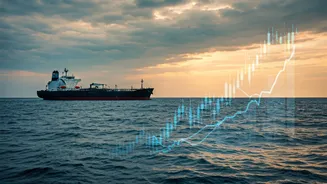
In what Venezuela termed “an act of international piracy”, the FBI, Homeland Security, Coast Guard and the military seized a sanctioned oil tanker, Skipper, transporting from Venezuela and Iran off the coast of Venezuela earlier this month.
The US is adding more ships operating in Venezuela to the Treasury Department’s “Specially Designated Nationals” list.
After a few days, Trump ratcheted up pressure on Venezuela by ordering a “total and complete blockade” of sanctioned oil vessels coming to and leaving from Venezuela.
Threatening Venezuela with the massive US naval presence, like a mob boss warning a rival crime family, Trump said that the country should “return to the United States of America all of the Oil, Land, and other Assets that they previously stole from us”.
And one week later, the Coast Guard seized another oil tanker that wasn’t even sanctioned off the coast of Venezuela.
The US has also targeted Colombia, whose President Gustavo Petro has refused to give into Trump’s pressure tactics and slammed the boat strikes. The US retaliated by stopping aid, striking a boat from Colombia, accused Petro of being a drug trafficker and sanctioned him.
In Brazil’s case, Trump slapped 50 per cent tariffs to stop the criminal prosecution of his ally and former President Jair Bolsonaro.
On the other hand, Trump is extending favours and supporting Latin American nations, including ones that are major drug trafficking hubs and transit nations from where drugs are smuggled to the US and Europe.
One such nation is Ecuador, located between Colombia and Peru, Ecuador is a major cocaine trafficking hub and transit nation from where drugs are smuggled to the US and Europe.
According to President Daniel Noboa, 70 per cent of the world’s cocaine now flows through Ecuadorean ports.
Trump’s silence on Ecuador isn’t shocking. Noboa is a Trump ally and believes in his strongman tactics. The leaders met at Trump’s Mar-a-Lago resort in March before Noboa’s re-election. The details of the meeting were never made public. Ecuador is also interested in hosting an American military base.
Argentina, battling an economic crisis, got a $20 billion US bailout after President Javier Milei campaigned with the slogan “Make Argentina Great Again” and backed Trump’s 2020 election “Big Lie”.
After Milei’s party won the midterm elections, Trump said, “We’re getting a real strong handle on South America,” and the leaders announced a trade deal opening up Argentina’s critical minerals to the US.
Similarly, El Salvador was rewarded with the US removing its travel warning for the country after President Nayib Bukele became the only Latin American leader to take more than 200 Venezuelan deportees into his nation’s maximum security prison.
Trump also allowed the return of Salvadorian MS-13 gang leaders, like César Humberto López-Larios, who faced terrorism charges in the US, to El Salvador despite the US finding evidence of a secret pact between Bukele and the gang for votes.
Honduras is the most shocking example of how Trump, like a Mafia boss, prefers loyalty to law.
The pardoning of former two-term Honduran President Juan Orlando Hernández, a central figure in funnelling more than 400 tonnes of cocaine into the US in 18 years, exposes Trump’s hegemonic intentions in the Western Hemisphere under the façade of combating drug trafficking.
In 2019, the US accused him of accepting a $1m bribe from notorious drug lord Joaquín “El Chapo” Guzmán during his first presidential campaign and protecting the drug routes through Honduras. His brother, Juan Antonio “Tony” Hernández was arrested in Miami in 2018 for smuggling cocaine into the US, convicted in 2019 and sentenced to life imprisonment.
After Hernández left office in 2022, he was arrested and extradited to the US on drug-trafficking charges.
However, Hernández’s luck bounced back after he penned a clemency letter to Trump addressing him as “Your Excellency” on October 28.
“I have found strength from you, Sir, your resilience to get back in that great office notwithstanding the persecution and prosecution you faced,” he writes alleging that his case “advanced only because the Biden-Harris DOJ pursued a political agenda to empower its ideological allies in Honduras”.
Exactly one month later, Trump pardoned Hernández in a Truth Social post and alleged that his conviction was a “Biden set-up”.
(The writer is a freelance journalist with more than two decades of experience and comments primarily on foreign affairs. He tweets as @FightTheBigots. Views expressed in the above piece are personal and solely those of the writer. They do not necessarily reflect Firstpost’s views.)