





What is the story about?
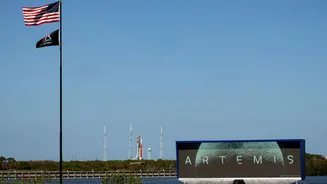
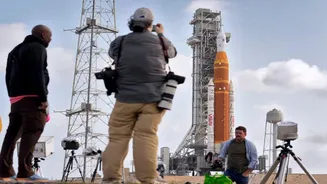
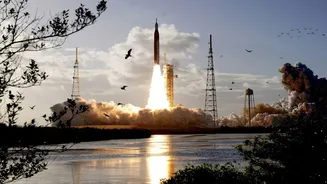
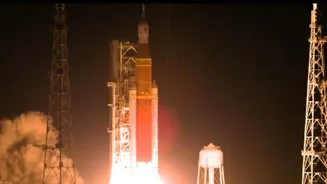
With Artemis II, Nasa has been preparing to send humans around the Moon for the first time in over half a century. And now, just a day after the crew flew for the mission, Nasa has shed more light offering a detailed glimpse into how that voyage will unfold.
Unlike the Apollo missions that culminated in lunar landings, Artemis II is designed as a proving ground, a mission where every manoeuvre, every system and every human response will be tested in deep space. The agency has now revealed that this mission will follow a complex 10-day trajectory.
At the heart of the mission is the Orion capsule, which carries astronauts on a journey that is far from a straight line. According to Nasa, the spacecraft will first orbit Earth twice, allowing the crew to test onboard systems, including life-support and navigation, in real-time conditions.
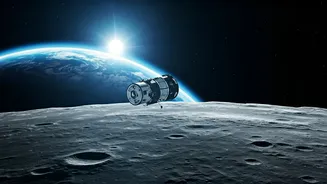
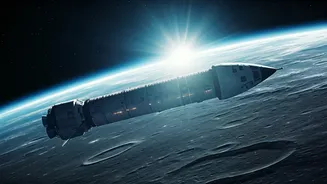
Only after these initial checks will Orion perform a critical engine burn, committing to a path towards the Moon. From there, the trajectory takes on a distinctive figure-eight shape, looping the spacecraft out towards the far side of the Moon before bringing it back to Earth.
The entire journey is expected to last around 10 days, with astronauts travelling thousands of kilometres beyond the Moon before beginning their return. While the mission will not involve a lunar landing, it mirrors the path taken by Apollo 8, which marked humanity’s first crewed voyage to lunar orbit.
On board Artemis II will be a four-member crew: Reid Wiseman, Victor Glover and Christina Koch from the United States, along with Jeremy Hansen representing Canada.
Artemis II is part of Nasa’s broader Artemis programme, an ambitious effort to return humans to the Moon and eventually establish a sustained presence there. The long-term vision includes building infrastructure that could support scientific research, economic activity and even future missions to Mars.
However, the road to Artemis II has not been without setbacks. The programme has faced repeated delays and rising costs, drawing scrutiny from policymakers and space experts alike. Timelines have shifted as Nasa works to ensure the reliability of its next-generation rocket systems and spacecraft.
The mission also sits within a broader geopolitical and commercial context. The United States is racing to return astronauts to the Moon amid growing competition from China, which has announced plans to send its own crewed mission to the lunar surface by 2030.
At the same time, Nasa is relying on private companies to develop key components, including a lunar lander. Firms led by Elon Musk and Jeff Bezos are working on competing designs, highlighting the increasing role of commercial players in space exploration.
Despite these challenges, Artemis II remains a crucial milestone. By verifying that both rocket and spacecraft systems function as intended with a crew onboard, the mission aims to clear the path for a future lunar landing, currently targeted for later this decade.
Unlike the Apollo missions that culminated in lunar landings, Artemis II is designed as a proving ground, a mission where every manoeuvre, every system and every human response will be tested in deep space. The agency has now revealed that this mission will follow a complex 10-day trajectory.
Artemis II pathway for 10 days
At the heart of the mission is the Orion capsule, which carries astronauts on a journey that is far from a straight line. According to Nasa, the spacecraft will first orbit Earth twice, allowing the crew to test onboard systems, including life-support and navigation, in real-time conditions.
It’s not a straight shot to the far side of the Moon! 🌕
Over approximately 10 days, the Artemis II astronauts will orbit Earth twice before looping around the far side of the Moon in a figure eight and returning home. pic.twitter.com/udjejhxgVx
— NASA (@NASA) April 2, 2026
Only after these initial checks will Orion perform a critical engine burn, committing to a path towards the Moon. From there, the trajectory takes on a distinctive figure-eight shape, looping the spacecraft out towards the far side of the Moon before bringing it back to Earth.
The entire journey is expected to last around 10 days, with astronauts travelling thousands of kilometres beyond the Moon before beginning their return. While the mission will not involve a lunar landing, it mirrors the path taken by Apollo 8, which marked humanity’s first crewed voyage to lunar orbit.
On board Artemis II will be a four-member crew: Reid Wiseman, Victor Glover and Christina Koch from the United States, along with Jeremy Hansen representing Canada.
Artemis II: The delays and history
Artemis II is part of Nasa’s broader Artemis programme, an ambitious effort to return humans to the Moon and eventually establish a sustained presence there. The long-term vision includes building infrastructure that could support scientific research, economic activity and even future missions to Mars.
However, the road to Artemis II has not been without setbacks. The programme has faced repeated delays and rising costs, drawing scrutiny from policymakers and space experts alike. Timelines have shifted as Nasa works to ensure the reliability of its next-generation rocket systems and spacecraft.
The mission also sits within a broader geopolitical and commercial context. The United States is racing to return astronauts to the Moon amid growing competition from China, which has announced plans to send its own crewed mission to the lunar surface by 2030.
At the same time, Nasa is relying on private companies to develop key components, including a lunar lander. Firms led by Elon Musk and Jeff Bezos are working on competing designs, highlighting the increasing role of commercial players in space exploration.
Despite these challenges, Artemis II remains a crucial milestone. By verifying that both rocket and spacecraft systems function as intended with a crew onboard, the mission aims to clear the path for a future lunar landing, currently targeted for later this decade.