
In return, the US agreed to lift sanctions on Belarusian potash, a key ingredient used in fertilisers. The former Soviet state is among the world’s leading producers of potash.
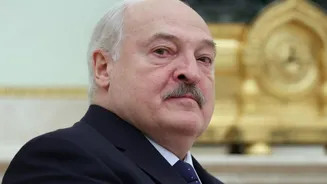
This marks Lukashenko’s largest prisoner release since Trump’s administration began engaging with the long-time authoritarian leader earlier this year. Western governments had previously shunned him over his suppression of dissent and support for Russia’s war in Ukraine.
High-profile opposition figures freed
Bialiatski, co-winner of the 2022 Nobel Peace Prize, is a prominent human rights campaigner who spent years advocating for political prisoners before being jailed himself in July 2021. Also released were Kalesnikava, a leading figure in the mass protests against Lukashenko in 2020, and Viktar Babaryka, who was arrested that year while preparing to challenge the president in the election.
US strategy on Russia influence
US officials told Reuters that engagement with Lukashenko is aimed at reducing his dependence on Russian President Vladimir Putin. The approach has been viewed with deep scepticism by the Belarusian opposition.
Trump’s envoy, John Coale, earlier told reporters in Minsk that, acting on the president’s instructions, the United States would lift sanctions on Belarusian potash.
The US and the European Union imposed wide-ranging sanctions on Belarus following a violent crackdown on protesters after the disputed 2020 election, which led to most opposition figures being jailed or forced into exile. Sanctions were tightened further after Lukashenko allowed Belarus to be used as a staging ground for Russia’s invasion of Ukraine in 2022.
Signs of a diplomatic thaw
The lifting of potash sanctions signals a thaw between Washington and the isolated Belarusian leadership. Coale met Lukashenko in Minsk on Friday and Saturday. A close ally of Russia, Lukashenko has ruled the country of 9.5 million for more than three decades and has faced sustained Western sanctions over human rights abuses and his backing of Moscow’s actions in Ukraine.