




What is the story about?
US President Donald Trump on Tuesday warned that Washington would respond if Yemen's Houthi rebels follow through on their threat to impose a maritime blockade on Saudi Arabia.
His remarks came a day after the Iran-backed group announced plans to target Saudi shipping and energy exports.
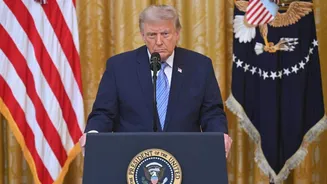
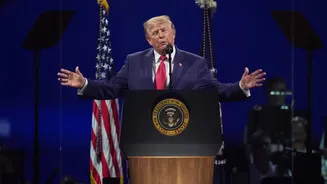
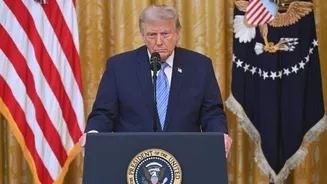
Speaking in the Oval Office during a meeting with Lebanese President Joseph Aoun, Trump said the United States was prepared to act if the Houthis disrupted shipping in the Red Sea.
"So far, it hasn't happened, might happen, but we take care of things," Trump said.
"If something like that happens, we take care of it. We've done that with the Houthis before, and we haven't heard from them in a while since we did what we did originally," he added.
Trump also pointed to the US military campaign against the Houthis earlier this year, saying it had effectively curbed the group's attacks.
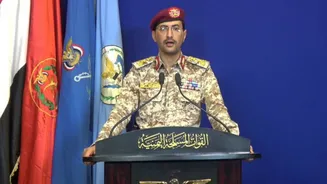
On Monday, the Houthis announced what they described as a maritime embargo against Saudi Arabia, saying the move was based on the principle of "an eye for an eye" and would take effect immediately.
If enforced, the blockade could jeopardise the ceasefire reached between the United States and the Houthis in May 2025. The truce, brokered by Oman, halted Houthi attacks on American vessels but did not cover Israeli-linked shipping.
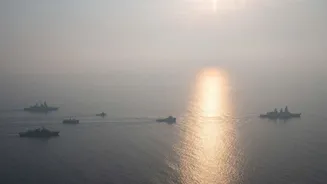
Between March and May 2025, the United States carried out an extensive military campaign against the Houthis in response to repeated attacks on commercial vessels in the Red Sea and Gulf of Aden.
According to the Pentagon, US forces struck more than 1,000 Houthi targets, killing fighters and senior commanders, including missile and drone officials.
Trump said the operation lasted around 45 days and had largely succeeded in deterring further attacks on US ships.
"We've had no problem with the Houthis for a long period of time, including during this conflict," Trump said.
The Houthi blockade threat followed an airstrike on Sanaa airport in northern Yemen, which is controlled by the group.
Yemen's internationally recognised government, backed by Saudi Arabia, claimed responsibility for the strike. However, the Houthis accused Saudi Arabia of carrying it out, alleging the attack was intended to stop an Iranian aircraft from landing, according to media reports.
Following the airport strike, the Houthis launched an attack targeting Saudi Arabia's Abha airport, further escalating tensions in the region.
His remarks came a day after the Iran-backed group announced plans to target Saudi shipping and energy exports.
Trump vows action against Houthi blockade
Speaking in the Oval Office during a meeting with Lebanese President Joseph Aoun, Trump said the United States was prepared to act if the Houthis disrupted shipping in the Red Sea.
"So far, it hasn't happened, might happen, but we take care of things," Trump said.
"If something like that happens, we take care of it. We've done that with the Houthis before, and we haven't heard from them in a while since we did what we did originally," he added.
Trump also pointed to the US military campaign against the Houthis earlier this year, saying it had effectively curbed the group's attacks.
Houthis announce maritime embargo
On Monday, the Houthis announced what they described as a maritime embargo against Saudi Arabia, saying the move was based on the principle of "an eye for an eye" and would take effect immediately.
If enforced, the blockade could jeopardise the ceasefire reached between the United States and the Houthis in May 2025. The truce, brokered by Oman, halted Houthi attacks on American vessels but did not cover Israeli-linked shipping.
US campaign targeted over 1,000 Houthi sites
Between March and May 2025, the United States carried out an extensive military campaign against the Houthis in response to repeated attacks on commercial vessels in the Red Sea and Gulf of Aden.
According to the Pentagon, US forces struck more than 1,000 Houthi targets, killing fighters and senior commanders, including missile and drone officials.
Trump said the operation lasted around 45 days and had largely succeeded in deterring further attacks on US ships.
"We've had no problem with the Houthis for a long period of time, including during this conflict," Trump said.
Airport strike fuels new tensions
The Houthi blockade threat followed an airstrike on Sanaa airport in northern Yemen, which is controlled by the group.
Yemen's internationally recognised government, backed by Saudi Arabia, claimed responsibility for the strike. However, the Houthis accused Saudi Arabia of carrying it out, alleging the attack was intended to stop an Iranian aircraft from landing, according to media reports.
Following the airport strike, the Houthis launched an attack targeting Saudi Arabia's Abha airport, further escalating tensions in the region.