
Anthropic's Claude Cowork AI project has triggered widespread concern among investors, and a steep decline in IT and software stocks worldwide.
Recent reports reveal that the sell-off began even before US markets opened, with traders linking an update on Anthropic’s website to sharp declines in shares of Experian Plc, RELX Plc, and the London Stock Exchange Group Plc. Credit and marketing firms, along with data-heavy software companies, were hit particularly hard.
According to Bloomberg data, only 71 per cent of software companies in the S&P 500 have beaten revenue expectations this earnings season, compared with 85 per cent across the broader tech sector, a gap analysts say reflects investor unease about rapid AI disruption.
What are the Anthropic AI tools that triggered IT selloff
Last month, Anthropic rolled out Claude plug-ins for its Cowork project, positioning the update as a step toward a more adaptable, task-oriented AI colleague.
The company explained, "We’re adding support for plug-ins, which let you bundle any skills, connectors, slash commands, and sub-agents together to turn Claude into a specialist for your role, team, and company."
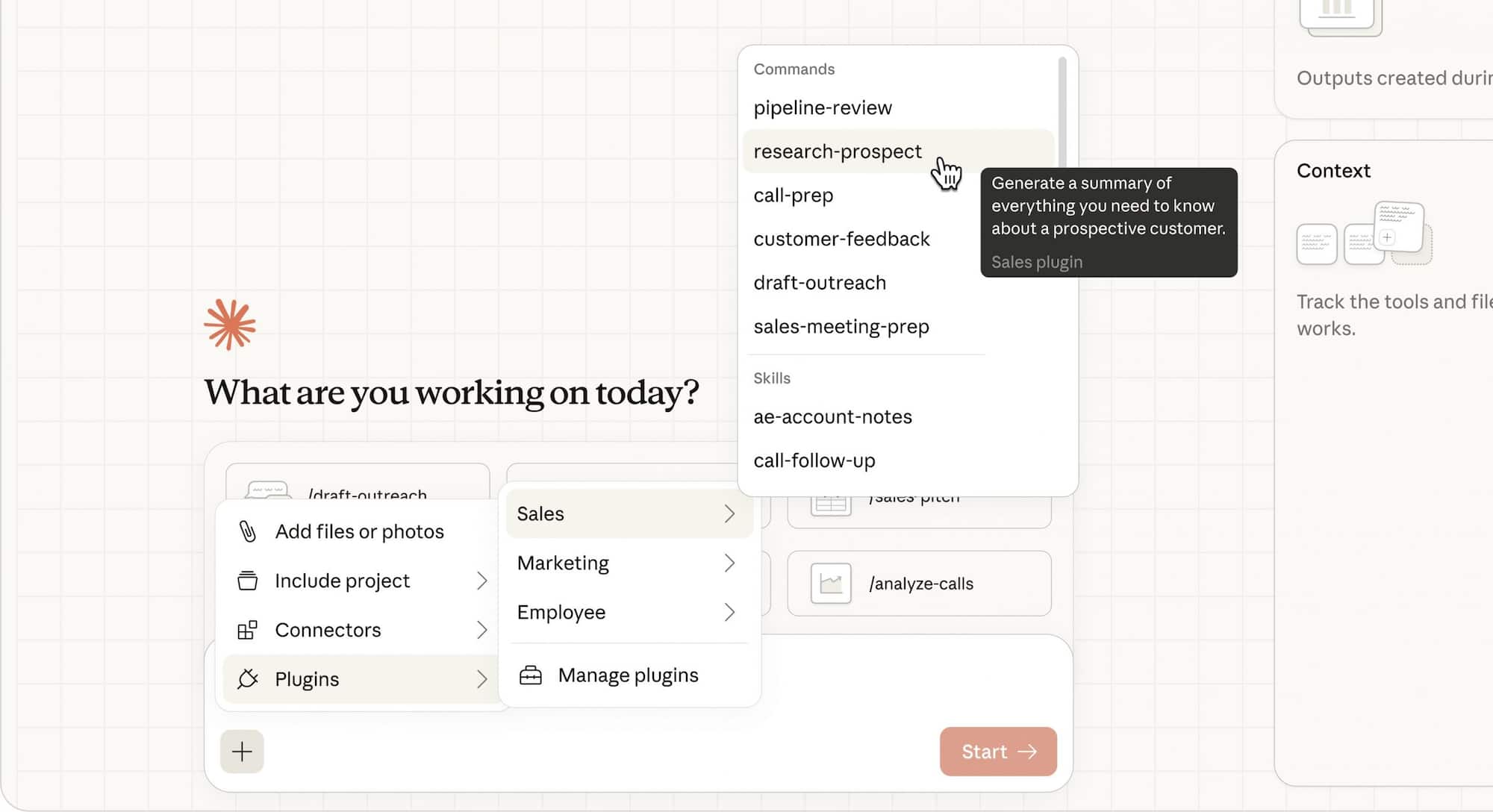
Anthropic Claude Cowork project plug-ins
In practice, these plug-ins allow Claude to manage workflows, retrieve data, and execute industry-specific tasks. Users can specify how work should be done, which tools and datasets to use, and even design custom workflows.
The primary AI tool been blamed for this sell-off is, Claude Cowork projects' plug-in that targets at legal sector. The company’s plugin documentation notes that it can review contracts, summarise legal briefs, and monitor compliance processes, though Anthropic stresses that all results must be verified by licensed lawyers.
But there are more tools. To showcase the system’s capabilities, Anthropic open-sourced 11 plug-ins on its website and GitHub. These span a wide range of professional functions:
- Productivity: Manage calendars, tasks, and daily routines
- Enterprise search: Retrieve data across company tools and documents
- Finance: Build models, track metrics, and analyse financial data
- Legal: Review documents, identify risks, and ensure compliance
- Marketing: Draft campaigns and manage content workflows
- Data: Visualise and interpret complex datasets
- Sales, Customer support, Product management, Biology research, and more
These capabilities, though impressive, have unsettled markets. By bundling such functions into one AI framework, Anthropic has effectively blurred the line between support software and autonomous work agents. Analysts warn that if adopted at scale, such tools could accelerate workforce automation in sectors previously thought to be AI-resistant.
The rise of the AI agents
Anthropic insists that its new plug-ins are designed to empower, not replace, humans, but markets appear unconvinced. The update has reignited long-standing fears about how quickly AI systems could automate high-value professional work, from finance and marketing to law and research.
The launch marks Anthropic’s latest step in a broader push toward AI agents, systems that can act independently across multiple domains.
The company’s rivals, including OpenAI and Google DeepMind, have been racing to integrate similar capabilities into their platforms, setting off a new wave of competition and, now, investor anxiety.
For Anthropic, these advancements signal innovation. For the market, they have come to represent uncertainty. The fear is not merely that AI tools like Claude could replace employees, but that they could fundamentally reshape how companies operate, rendering some existing software and service models obsolete.