







India is increasing its naval deployment in the Gulf of Oman to ensure the safe passage of its fuel shipments, even as it counts on Iran to allow Indian carriers through the strategically critical Strait of Hormuz, officials familiar with the matter told Hindustan Times (HT).
The move comes against the backdrop of rising tensions in West Asia following the US-Israel strikes on Iran, which have disrupted one of the world’s most vital oil routes.
More warships in key region
According to sources cited by HT, the additional deployment will raise the number of Indian warships operating east of the Strait of Hormuz to six or seven.
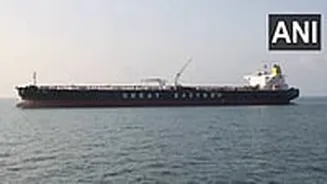
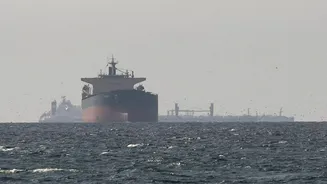
Earlier this week, an Indian naval vessel escorted an India-flagged oil tanker from the Gulf of Oman to the country’s western coast after it departed from Fujairah port in the UAE.
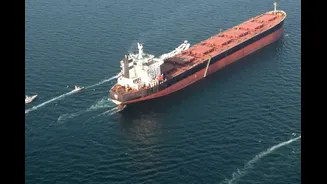
The Strait of Hormuz—through which nearly 20% of global crude oil flows—has effectively been shut due to the conflict, creating significant challenges for global energy supplies. As many as 22 India-flagged vessels are currently stranded west of the strait, as per the shipping ministry.
Fuel carriers navigate under watch
Despite the risks, some shipments have managed to pass through under naval protection. Three Indian warships are already stationed in the Gulf of Oman, keeping a close watch as fuel carriers make their way home.
Two India-flagged LPG carriers—Shivalik and Nanda Devi—recently docked at Indian ports carrying a combined 92,712 metric tonnes of LPG after successfully transiting the Strait of Hormuz last week.
#WATCH | Gujarat: LPG tanker Shivalik, which crossed the Strait of Hormuz, arrives at the Mundra Port. pic.twitter.com/3E1T1DY4ut
— ANI (@ANI) March 16, 2026
On Wednesday, the Indian-flagged tanker Jag Laadki also arrived at Mundra Port in Gujarat, carrying a major crude oil consignment.
Operation Sankalp in focus
India’s presence in the region is part of its ongoing maritime mission, Operation Sankalp, which was launched in 2019 following earlier security incidents in the Gulf.
The operation aims to reassure Indian-flagged vessels, safeguard sea-borne trade, and maintain stability in the region. However, the navy has not officially commented on its expanded role since the latest conflict began on February 28.