




What is the story about?
The Iran War resembles an argument between two long-dead naval theorists. One believed command of the seas determines the fate of wars. The other argued that weaker powers could frustrate stronger fleets not by conquering oceans but by denying access to them. Today’s confrontation between Iran and the US echoes that theoretical duel with unsettling clarity.
This war evokes a timeless naval contest: Alfred Thayer Mahan’s doctrine of sea control versus Julian Corbett’s art of sea denial. Will Iran’s asymmetric tactics prevail, or will American expeditionary power triumph?
For now the battlefield offers evidence for both theories. Iran has denied America total control of the Gulf; it has succeeded in making the region dangerous. The US and Israel possess overwhelming technological superiority; they are using it to assert control and bomb Iranian capabilities to dust.
In the Gulf the contest has always been less about conquest than geometry. America seeks area control: command of sea lanes, skies and bases that keep the region’s commerce flowing. Iran, by contrast, practices area denial: missiles, drones, mines and proxy militias designed to make controlling those same waters and airspaces prohibitively costly. Geography favours Tehran. Iran is vast, mountainous and strategically deep, with influence running through Iraqi militias and politics, giving it buffers that blunt pure aerial punishment.
Yet geography alone cannot guarantee success. Iran’s strategy can delay and complicate operations, but it cannot permanently shape the battlefield. If American and Israeli strikes substantially degrade Iran’s missile forces and nuclear infrastructure within a short period, it would amount to a notable victory for sea control and air power over denial tactics. Stretch the conflict beyond a few weeks, however, and the arithmetic shifts. Protracted wars sap public patience, empower Iran’s strategy of attrition and risk turning a show of American dominance into a political liability.
Iran’s military planning reflects brutal realism. It cannot defeat American forces directly. Instead, it seeks to raise the costs of intervention. Tehran’s arsenal therefore consists of thousands of missiles, large numbers of drones and naval assets designed not for fleet battles but for harassment and disruption.
Missiles are hidden in hardened tunnels carved into mountainsides. Drone factories produce swarms of inexpensive loitering munitions capable of overwhelming defences. Naval forces rely on fast attack craft, coastal missile batteries and naval mines positioned along the long Iranian shoreline. The aim is simple: turn the Gulf into a zone of uncertainty.
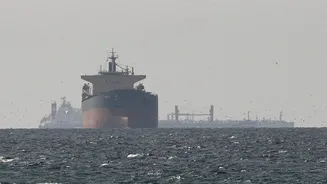
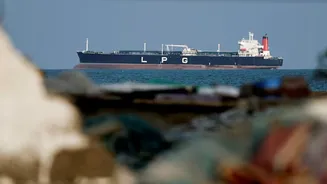
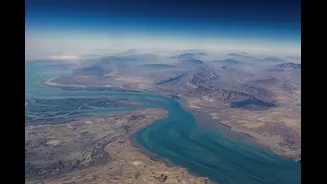
The grim payoff matrix is clear: no safe harbours in the Gulf. Even partial disruption of the Strait of Hormuz threatens a corridor carrying roughly 20 per cent of global oil flows, making every tanker a strategic target. Control at sea and denial from shore coexist uneasily—the defining equilibrium of this war.
Iran has already demonstrated its ability to create such disruption. Missile salvos and drone attacks have harassed regional infrastructure and commercial shipping. Iranian forces have partially closed the Strait of Hormuz entirely; this has had a domino effect of oil racing to about $85 a barrel and a massive ramp-up of insurance costs for shipping. This is a classic area denial advantage.
Yet area denial has structural limits. Denial tactics are designed to complicate the operations of stronger forces, not to defeat them outright. To impose lasting outcomes, a power must control the battlespace rather than merely threaten it. And here the advantage lies overwhelmingly with the United States and Israel.
The coalition’s campaign illustrates this imbalance with increasing clarity. Israeli aircraft and American naval aviation have repeatedly demonstrated the ability to strike deep inside Iran. Command centres, missile launchers and drone depots have been targeted with precision. Senior military figures have been killed in leadership strikes. Mobile launch platforms—the backbone of Iran’s denial strategy—are hunted relentlessly through surveillance networks of human intelligence, satellites and drones.
The pattern is stark. Iran launches missiles; the coalition destroys the launchers. Tehran threatens shipping lanes; American aircraft dismantle the factories producing the weapons that threaten them.
This contrast illustrates the difference between denial and control. Iran imposes temporary obstacles. The coalition systematically dismantles the machinery that creates those obstacles.
Area control extends beyond battlefield operations to the industrial base sustaining them. Drone factories, missile assembly plants and storage depots have all been targeted. The objective goes beyond merely intercepting attacks and aims to cripple Iran’s ability to generate them.
Modern warfare increasingly rewards this strategy. Precision weapons allow attackers to destroy infrastructure that once required large ground forces to capture. Industrial targets become as vulnerable as frontline units. Destroying a factory today may be more consequential than destroying a missile tomorrow.
For Iran the implications are troubling. Denial tactics depend heavily on volume. Missiles and drones must be produced in large numbers to overwhelm defensive systems and maintain pressure. If production facilities are repeatedly destroyed, Tehran’s ability to regenerate its arsenal steadily diminishes.
The war therefore resembles a sequential imperfect-information game. The United States secures air and sea dominance, yielding a partial payoff that allows Washington to claim operational success. Iran preserves some denial capacity around the Strait of Hormuz, retaining leverage over global energy markets. Both sides avoid the terminal outcome of total war.
This equilibrium benefits both actors in the short term. Iran demonstrates resilience and preserves its ability to threaten the Gulf. The United States and Israel degrade Iranian capabilities without committing to a costly invasion.
But equilibria in war rarely endure. Over time the cumulative effects of area control erode denial strategies. Every destroyed missile launcher, every demolished drone factory and every eliminated commander reduces Iran’s ability to sustain asymmetric pressure.
Moreover, Iran’s reliance on dispersed infrastructure creates logistical vulnerabilities. Factories require specialised components and skilled technicians. Command networks require communications hubs. Precision strikes against these nodes gradually hollow out the system.
None of this means the coalition’s strategy is risk-free. Air and sea power can weaken Iran but cannot fully politically control Iran without a longer commitment. Area control from the air does not automatically translate into political control on the ground.
Without some form of constabulary presence, the risk remains that Iran could eventually rebuild its arsenal. Worse still, a weakened Iranian state might fragment into competing factions and militias. In such a scenario, weapons stockpiles could spread across the region, empowering insurgent groups and criminal networks.
It will also make oil tough to tap. Energy markets would remain vulnerable. Even small militant groups armed with anti-ship missiles or drones could threaten Gulf shipping. Oil prices would remain volatile. The spectre of regrouping militant organisations would persist.
Time therefore becomes the decisive factor. A short campaign that cripples Iran’s missile infrastructure would allow Washington and Jerusalem to claim victory while restoring stability to Gulf shipping. A long war, however, risks empowering Iran’s strategy of attrition.
Iran’s leadership understands this dynamic well. The Islamic Republic has long relied on patience as a strategic weapon. Its leaders believe democratic societies eventually tire of distant wars and rising economic costs.
But patience alone cannot compensate for structural weakness. Area denial works only when the weaker power can continually regenerate the weapons that impose costs on the stronger one. If those weapons are destroyed faster than they can be replaced, the strategy collapses.
That appears to be the trajectory now unfolding in the Gulf. Each wave of air strikes dismantles another layer of Iran’s military-industrial network. Drone factories fall silent. Missile depots shrink. Command structures fragment.
Over time the balance shifts. Iran may still harass shipping and launch occasional attacks, but the scale of those operations diminishes. Denial becomes irritation rather than deterrence.
The old naval theorists might recognise the pattern. Denial can frustrate stronger powers and impose delays. But sustained sea and air control gradually compress the space in which denial can operate.
Iran can make the Gulf dangerous. It can delay operations and raise costs. Yet unless it can regenerate the tools of denial faster than they are destroyed, the expanding reach of American and Israeli area control will steadily close the geometry of the battlefield.
In the end sea power rarely wins through spectacular battles. It wins through accumulation—through the slow destruction of infrastructure, logistics and command. The Gulf’s waters may remain tense and contested. But the strategic arc of the conflict suggests that Iran’s denial strategy, ingenious though it is, cannot indefinitely withstand the grinding logic of sustained area control.
(The writer is a senior journalist with expertise in defence. Views expressed are personal and do not necessarily reflect those of Firstpost.)
This war evokes a timeless naval contest: Alfred Thayer Mahan’s doctrine of sea control versus Julian Corbett’s art of sea denial. Will Iran’s asymmetric tactics prevail, or will American expeditionary power triumph?
For now the battlefield offers evidence for both theories. Iran has denied America total control of the Gulf; it has succeeded in making the region dangerous. The US and Israel possess overwhelming technological superiority; they are using it to assert control and bomb Iranian capabilities to dust.
In the Gulf the contest has always been less about conquest than geometry. America seeks area control: command of sea lanes, skies and bases that keep the region’s commerce flowing. Iran, by contrast, practices area denial: missiles, drones, mines and proxy militias designed to make controlling those same waters and airspaces prohibitively costly. Geography favours Tehran. Iran is vast, mountainous and strategically deep, with influence running through Iraqi militias and politics, giving it buffers that blunt pure aerial punishment.
Yet geography alone cannot guarantee success. Iran’s strategy can delay and complicate operations, but it cannot permanently shape the battlefield. If American and Israeli strikes substantially degrade Iran’s missile forces and nuclear infrastructure within a short period, it would amount to a notable victory for sea control and air power over denial tactics. Stretch the conflict beyond a few weeks, however, and the arithmetic shifts. Protracted wars sap public patience, empower Iran’s strategy of attrition and risk turning a show of American dominance into a political liability.
Iran’s military planning reflects brutal realism. It cannot defeat American forces directly. Instead, it seeks to raise the costs of intervention. Tehran’s arsenal therefore consists of thousands of missiles, large numbers of drones and naval assets designed not for fleet battles but for harassment and disruption.
Missiles are hidden in hardened tunnels carved into mountainsides. Drone factories produce swarms of inexpensive loitering munitions capable of overwhelming defences. Naval forces rely on fast attack craft, coastal missile batteries and naval mines positioned along the long Iranian shoreline. The aim is simple: turn the Gulf into a zone of uncertainty.
The grim payoff matrix is clear: no safe harbours in the Gulf. Even partial disruption of the Strait of Hormuz threatens a corridor carrying roughly 20 per cent of global oil flows, making every tanker a strategic target. Control at sea and denial from shore coexist uneasily—the defining equilibrium of this war.
Iran has already demonstrated its ability to create such disruption. Missile salvos and drone attacks have harassed regional infrastructure and commercial shipping. Iranian forces have partially closed the Strait of Hormuz entirely; this has had a domino effect of oil racing to about $85 a barrel and a massive ramp-up of insurance costs for shipping. This is a classic area denial advantage.
Yet area denial has structural limits. Denial tactics are designed to complicate the operations of stronger forces, not to defeat them outright. To impose lasting outcomes, a power must control the battlespace rather than merely threaten it. And here the advantage lies overwhelmingly with the United States and Israel.
The coalition’s campaign illustrates this imbalance with increasing clarity. Israeli aircraft and American naval aviation have repeatedly demonstrated the ability to strike deep inside Iran. Command centres, missile launchers and drone depots have been targeted with precision. Senior military figures have been killed in leadership strikes. Mobile launch platforms—the backbone of Iran’s denial strategy—are hunted relentlessly through surveillance networks of human intelligence, satellites and drones.
The pattern is stark. Iran launches missiles; the coalition destroys the launchers. Tehran threatens shipping lanes; American aircraft dismantle the factories producing the weapons that threaten them.
This contrast illustrates the difference between denial and control. Iran imposes temporary obstacles. The coalition systematically dismantles the machinery that creates those obstacles.
Area control extends beyond battlefield operations to the industrial base sustaining them. Drone factories, missile assembly plants and storage depots have all been targeted. The objective goes beyond merely intercepting attacks and aims to cripple Iran’s ability to generate them.
Modern warfare increasingly rewards this strategy. Precision weapons allow attackers to destroy infrastructure that once required large ground forces to capture. Industrial targets become as vulnerable as frontline units. Destroying a factory today may be more consequential than destroying a missile tomorrow.
For Iran the implications are troubling. Denial tactics depend heavily on volume. Missiles and drones must be produced in large numbers to overwhelm defensive systems and maintain pressure. If production facilities are repeatedly destroyed, Tehran’s ability to regenerate its arsenal steadily diminishes.
The war therefore resembles a sequential imperfect-information game. The United States secures air and sea dominance, yielding a partial payoff that allows Washington to claim operational success. Iran preserves some denial capacity around the Strait of Hormuz, retaining leverage over global energy markets. Both sides avoid the terminal outcome of total war.
This equilibrium benefits both actors in the short term. Iran demonstrates resilience and preserves its ability to threaten the Gulf. The United States and Israel degrade Iranian capabilities without committing to a costly invasion.
But equilibria in war rarely endure. Over time the cumulative effects of area control erode denial strategies. Every destroyed missile launcher, every demolished drone factory and every eliminated commander reduces Iran’s ability to sustain asymmetric pressure.
Moreover, Iran’s reliance on dispersed infrastructure creates logistical vulnerabilities. Factories require specialised components and skilled technicians. Command networks require communications hubs. Precision strikes against these nodes gradually hollow out the system.
None of this means the coalition’s strategy is risk-free. Air and sea power can weaken Iran but cannot fully politically control Iran without a longer commitment. Area control from the air does not automatically translate into political control on the ground.
Without some form of constabulary presence, the risk remains that Iran could eventually rebuild its arsenal. Worse still, a weakened Iranian state might fragment into competing factions and militias. In such a scenario, weapons stockpiles could spread across the region, empowering insurgent groups and criminal networks.
It will also make oil tough to tap. Energy markets would remain vulnerable. Even small militant groups armed with anti-ship missiles or drones could threaten Gulf shipping. Oil prices would remain volatile. The spectre of regrouping militant organisations would persist.
Time therefore becomes the decisive factor. A short campaign that cripples Iran’s missile infrastructure would allow Washington and Jerusalem to claim victory while restoring stability to Gulf shipping. A long war, however, risks empowering Iran’s strategy of attrition.
Iran’s leadership understands this dynamic well. The Islamic Republic has long relied on patience as a strategic weapon. Its leaders believe democratic societies eventually tire of distant wars and rising economic costs.
But patience alone cannot compensate for structural weakness. Area denial works only when the weaker power can continually regenerate the weapons that impose costs on the stronger one. If those weapons are destroyed faster than they can be replaced, the strategy collapses.
That appears to be the trajectory now unfolding in the Gulf. Each wave of air strikes dismantles another layer of Iran’s military-industrial network. Drone factories fall silent. Missile depots shrink. Command structures fragment.
Over time the balance shifts. Iran may still harass shipping and launch occasional attacks, but the scale of those operations diminishes. Denial becomes irritation rather than deterrence.
The old naval theorists might recognise the pattern. Denial can frustrate stronger powers and impose delays. But sustained sea and air control gradually compress the space in which denial can operate.
Iran can make the Gulf dangerous. It can delay operations and raise costs. Yet unless it can regenerate the tools of denial faster than they are destroyed, the expanding reach of American and Israeli area control will steadily close the geometry of the battlefield.
In the end sea power rarely wins through spectacular battles. It wins through accumulation—through the slow destruction of infrastructure, logistics and command. The Gulf’s waters may remain tense and contested. But the strategic arc of the conflict suggests that Iran’s denial strategy, ingenious though it is, cannot indefinitely withstand the grinding logic of sustained area control.
(The writer is a senior journalist with expertise in defence. Views expressed are personal and do not necessarily reflect those of Firstpost.)