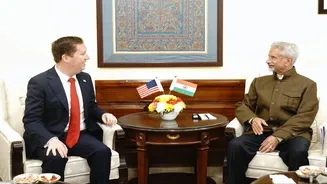

Earlier, on January 20, Gor said he would ensure that ‘senior officials of the US government regularly travel to India’. However, given Trump’s growing roguish behaviour, the importance of being Gor has diminished between his appointment in August last year and his assumption of charge on January 14. He made an unprecedented visit in November last year to deliver a letter from Trump for Prime Minister Narendra Modi.
The conversation recently on the sidelines of seminars in India has been none other than the slump in India-US ties meant to be “the defining relationship of the 21st century”. Two views predominate: that multi-alignment has worked well and has withstood Trump bullying. The corollary? Maybe it was time for India to resuscitate the Russia-India-China (RIC) framework. The other view is that India could have handled Trump better by massaging his ego.
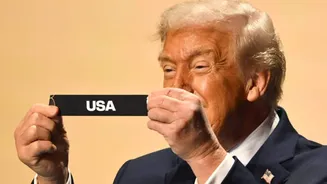
A look back at India-US relations reveals several milestones worth mentioning. The military foundation of the Comprehensive Global Strategic Partnership (CGSP) was laid by Lt Gen Claude Kickleighter of the US Pacific Command in 1991, later reinforced by four foundational agreements starting with Lemoa (Logistics Exchange Memorandum of Agreement) and culminating in last month’s renewal of the 10-year Defence Framework Agreement, a key component of CGSP. Its nearest equivalent is the Special Privileged Strategic Partnership with Russia. However, thanks to President Trump, the CGSP stands at its lowest level today.
On January 12, US Ambassador designate Ukraine-born Sergio Gor, 38, a bachelor, descended on Shanti Path, New Delhi, and made what former Foreign Secretary Shyam Saran described as a “noisy entry”: he drove in a convoy that included an armoured car with red and blue blinking lights. From the steps of the US Embassy, Gor made all the upbeat remarks about US-India relations. He announced India’s inclusion (as an afterthought) in Pax Silica, a US-led eight-nation cooperative on semiconductors, critical minerals and artificial intelligence.
The rhetoric was impressive, rekindling hopes of breathing life into a dying relationship. He also said Trump will visit ‘India soon’!
Gor was sworn in in the Oval Office by Vice President JD Vance on November 11 and was congratulated by Trump. He jumped the queue for Senate ratification and was cleared for the job after convincing senators that he would take India-US relations as high as the sky. He is reputed to enjoy high trust of and access to Trump. He is the first US ambassador to India who is also his president’s special envoy to South and Central Asia, though two Indian-origin career diplomats are already designated: Assistant Secretary of State for South and Central Asia Paul Kapoor and Ricky Gill, the White House advisor for the same region, who was reassigned recently.
Gor is confronted with twin challenges: reviving trust and injecting substance into the diminishing bilateral relations. The US has squandered trust in New Delhi by hurting and hitting India’s key interests. These are the SPSR (Special and Privileged Strategic Partnership) with Russia — acquisition of cheap oil, defence equipment and political and diplomatic support.
With Iran, with whom India has enjoyed good relations, though frictions have arisen due to US sanctions. India has stopped buying any Iranian gas or oil but has sought a waiver on Chabahar Port, which ends in April 2026. To wean India off Russia, the US has imposed punitive tariffs of 50 per cent, and another 500 per cent tariff on the purchase of Russian oil hangs like the sword of Damocles.
Work on the India-US trade deal started in February 2025 but lost momentum after Trump tariffs. Still, six rounds of talks have taken place without closure. Other ticklish issues are visas, deportation, and the growing hostility towards Indo-Americans in the US, which has given rise to anti-US sentiment in India. The release of the US National Security Strategy in December and NDS this month makes it clear that India no longer holds any of the global significance it enjoyed during Trump 1.0 or the Biden period. It figures just twice in NSS, whereas China appears 11 times; in NDS, the US seeks respectful relations with China.
What this will do to US intelligence and operational cooperation on India’s China challenge across LAC is unknown. Quad has lost its primacy, as was evident from the indefinite postponement of the summit in India last year. The focus of the Trump doctrine is the Western Hemisphere. While foundational agreements and institutional bindings remain, their salience has diluted, resulting in India being driven closer towards BRICS, SCO and even RIC, the optics of which are anathema to Trump.
The Chinese White Paper on Defence reveals that India patching up on the border and normalising ties with Beijing are a consequence of the widening gap in India-US relations. Trust is not a band-aid but is built over time through G-to-G, B-to-B and most of all P-to-P. When India was negotiating the Hawk Trainer Aircraft contract with the UK in 1985 and India-US relations were the pits, New Delhi inserted a clause that there were to be no US parts in it, as earlier the US had stopped supplying spare parts for the Sea Hawk helicopters for the Indian Navy.
Diplomats are attributing 90 per cent of India’s woes to Trump’s personal pique — New Delhi not endorsing his self-proclaimed role in brokering peace. One wonders if things would have been different had India thanked him for the US contribution to the ceasefire.
Under these circumstances, Gor’s task is cut out for him. His job is to get Trump to shed his pique with Modi. It is no secret they speak with each other frequently. While fundamental relations in defence, counterterrorism, space and technology will remain steady, the big picture is ruptured. Matching his role as special envoy for the region, which is India’s extended neighbourhood, will involve balancing US interests in the region with those of India’s. Transforming rhetoric into reality will be Gor’s defining challenge.
(The author is former GOC IPKF South Sri Lanka and founder member Defence Planning Staff, now Integrated Defence Staff, Ministry of Defence. Views expressed in the above piece are personal and solely those of the author. They do not necessarily reflect Firstpost’s views.)