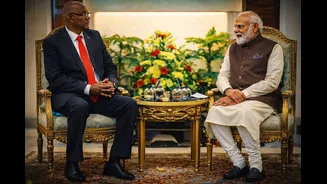
Commerce Minister Piyush Goyal said India and the European Union are committed to a “mutually beneficial and ambitious free trade agreement aimed at boosting prosperity for businesses and people on both sides.”
“Pleased to agree that sustained & constructive engagement between us & our teams over the past year has brought us closer to a fruitful outcome,” Goyal said in a post on X, replying to EU Trade Commissioner Maros Sefcovic.
He added, “The European Union remains a vital economic & strategic partner for India.”
Sefcovic, who is visiting India with a delegation of EU officials, described the engagement with India as unusually intensive.
“I’m confident to say we’re nearing the conclusion of our FTA negotiations. The cumulation of an intense past year likely my most frequent trade engagement reflecting its importance,” he said in a post on X, noting that this marked his tenth in-person meeting with Goyal.
'Mother of all deals'
The India-EU trade agreement, one of India’s longest-running trade discussions, has been under negotiation for nearly 18 years. Goyal has previously described the proposed deal as the “mother of all deals” for India.
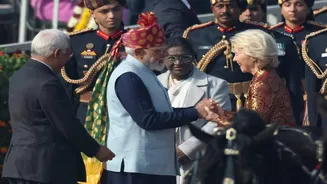
European Commission President Ursula von der Leyen arrived in India on January 24 for a four-day visit and is scheduled to hold summit talks with Prime Minister Narendra Modi and European Council President Antonio Costa on January 27.
The European Union remains India’s largest trading partner in goods, with bilateral trade estimated at around $136 billion in 2024-25, according to PTI.
While the closure of negotiations is expected to be announced on Tuesday, the agreement will come into force only after legal vetting and formal signing on a mutually agreed date. The pact will also require approval from the European Parliament and the Union Cabinet in India.
Analysts expect the deal to boost trade without posing major risks to domestic industry.
Think tank Global Trade Research Initiative (GTRI) noted that the India-EU economic relationship is marked by structural complementarity rather than rivalry.
“The two are not rivals but partners operating on different rungs of the value chain,” GTRI founder Ajay Srivastava told PTI, adding that this dynamic is likely to lower costs and expand trade rather than threaten Indian industry.
With inputs from agencies