








What is the story about?
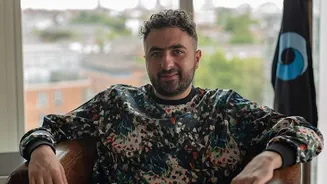
Artificial intelligence is set to transform healthcare more profoundly than almost any other sector, according to Microsoft AI CEO Mustafa Suleyman, who believes access to expert-level medical guidance will soon become inexpensive and widely available.
Speaking about the future of AI-powered healthcare, Suleyman argued that medicine represents the technology's biggest commercial opportunity, driven by its ability to deliver specialist knowledge at a fraction of today's cost. He suggested that advances in AI could dramatically reduce disparities in the quality of healthcare available to patients across different regions and income groups.
The executive, who co-founded DeepMind before joining Microsoft, said AI systems are increasingly being used as a first point of reference by people seeking medical information. According to Suleyman, health-related questions now account for a significant share of interactions with Microsoft's AI tools, reflecting growing public confidence in using conversational AI to understand symptoms, conditions and treatment options.
Suleyman believes one of healthcare's biggest challenges today is the uneven availability of expert medical judgement. Patients treated by leading specialists often receive significantly better care than those without access to such expertise, creating disparities even in developed countries.
Highlighting the scale of the problem, he said, "The quality difference between the top 10 per cent and the bottom 10 per cent, even in the United States, let alone the rest of the world, is unbelievable. The gulf is probably an order of magnitude."
He expects that gap to shrink as AI systems become capable of delivering highly sophisticated medical guidance to anyone with an internet connection.
According to Suleyman, "I think by far the most exciting new market is medicine." He added that widespread access to what he described as medical superintelligence would fundamentally change how people obtain health advice, predicting that such services would eventually cost around $20 a month.
Rather than replacing doctors, AI is increasingly being positioned as a tool that can assist people in understanding medical information, preparing for consultations and accessing reliable health guidance more easily.
Suleyman revealed that healthcare has already emerged as one of the most common reasons people interact with Microsoft's AI services.
"About 40% of our queries each week are health related. Millions of people a day are asking health related queries," he said, underlining the growing demand for AI-assisted medical information.
To improve reliability, Suleyman noted that Microsoft's AI systems rely on trusted medical sources when generating responses. "We ground the answers in citations from Harvard Medical, the most respected health institution," he said, emphasising the company's focus on evidence-based information.
His comments reflect a broader trend across the AI industry, where technology companies are investing heavily in healthcare applications ranging from clinical documentation and diagnostic support to patient education and personalised health assistants.
While regulatory oversight and clinical validation remain essential before AI can play a larger role in medical decision-making, Suleyman's vision points to a future in which expert knowledge becomes far more accessible than it is today. If AI continues to improve at its current pace, the biggest competitive advantage may not lie solely in building the most capable models, but in earning the confidence of clinicians, patients and healthcare providers who depend on them.
Speaking about the future of AI-powered healthcare, Suleyman argued that medicine represents the technology's biggest commercial opportunity, driven by its ability to deliver specialist knowledge at a fraction of today's cost. He suggested that advances in AI could dramatically reduce disparities in the quality of healthcare available to patients across different regions and income groups.
The executive, who co-founded DeepMind before joining Microsoft, said AI systems are increasingly being used as a first point of reference by people seeking medical information. According to Suleyman, health-related questions now account for a significant share of interactions with Microsoft's AI tools, reflecting growing public confidence in using conversational AI to understand symptoms, conditions and treatment options.
Mustafa Suleyman, CEO of Microsoft AI, says the biggest new market in AI is medicine, and the gap between the best and worst care is about to collapse to 20 bucks a month.
"I think by far the most exciting new market is medicine."
"The quality difference between the top 10% and… pic.twitter.com/HkbdM1UmKE
— Karl Mehta (@karlmehta) July 5, 2026
AI could narrow the healthcare quality gap
Suleyman believes one of healthcare's biggest challenges today is the uneven availability of expert medical judgement. Patients treated by leading specialists often receive significantly better care than those without access to such expertise, creating disparities even in developed countries.
Highlighting the scale of the problem, he said, "The quality difference between the top 10 per cent and the bottom 10 per cent, even in the United States, let alone the rest of the world, is unbelievable. The gulf is probably an order of magnitude."
He expects that gap to shrink as AI systems become capable of delivering highly sophisticated medical guidance to anyone with an internet connection.
According to Suleyman, "I think by far the most exciting new market is medicine." He added that widespread access to what he described as medical superintelligence would fundamentally change how people obtain health advice, predicting that such services would eventually cost around $20 a month.
Rather than replacing doctors, AI is increasingly being positioned as a tool that can assist people in understanding medical information, preparing for consultations and accessing reliable health guidance more easily.
Health has become one of AI's most common uses
Suleyman revealed that healthcare has already emerged as one of the most common reasons people interact with Microsoft's AI services.
"About 40% of our queries each week are health related. Millions of people a day are asking health related queries," he said, underlining the growing demand for AI-assisted medical information.
To improve reliability, Suleyman noted that Microsoft's AI systems rely on trusted medical sources when generating responses. "We ground the answers in citations from Harvard Medical, the most respected health institution," he said, emphasising the company's focus on evidence-based information.
His comments reflect a broader trend across the AI industry, where technology companies are investing heavily in healthcare applications ranging from clinical documentation and diagnostic support to patient education and personalised health assistants.
While regulatory oversight and clinical validation remain essential before AI can play a larger role in medical decision-making, Suleyman's vision points to a future in which expert knowledge becomes far more accessible than it is today. If AI continues to improve at its current pace, the biggest competitive advantage may not lie solely in building the most capable models, but in earning the confidence of clinicians, patients and healthcare providers who depend on them.