






What is the story about?
Since the energy crisis in the Strait of Hormuz began earlier this year, Oman has been walking a tightrope between Iran and the United States.
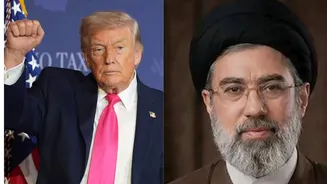
The Sultanate recently found itself on the receiving end of threats by US President Donald Trump after Iranian officials suggested that Muscat was involved in discussions regarding future arrangements for the Strait of Hormuz, including proposals related to transit fees for commercial vessels.
While Iran possesses the military tools capable of disrupting shipping, Oman controls some of the most strategically important waters capable of depleting the energy of numerous major economies in Asia.
But having said that, Muscat remains one of the few governments trusted by both Tehran and Washington.
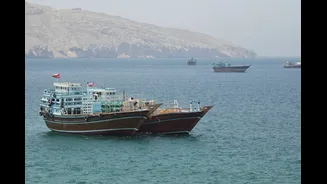
The narrow passage connects the Persian Gulf with the Gulf of Oman and the Arabian Sea, serving as the principal export route for energy producers across the Gulf region.
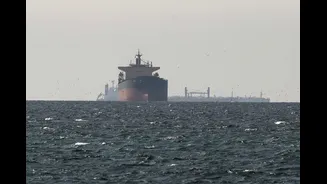
Historically, between 20 and 25 per cent of global seaborne petroleum exports and liquefied natural gas shipments have travelled through the strait, making it the world's most critical maritime energy corridor.
Any disruption to traffic through the waterway immediately reverberates across international markets.
Energy-importing nations, shipping companies, insurers and financial markets all monitor developments in the region closely because even temporary interruptions can trigger significant economic consequences.
The current crisis emerged after the joint US-Israeli air campaign against Iran on February 28, known as Operation Epic Fury. The subsequent confrontation led to a retaliatory blockade by Iran's Islamic Revolutionary Guard Corps (IRGC), sharply reducing maritime activity through the waterway.
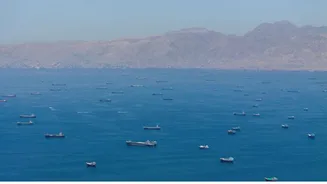
The consequences have been severe. More than 1,550 commercial vessels were reportedly stranded during the peak of the disruption, while shipping insurance premiums surged as risk calculations changed dramatically.
In some cases, insurance costs reportedly rose by as much as six times their previous levels.
The effects have been particularly concerning for major Asian economies. India, China, Japan and South Korea collectively consume a substantial share of the energy resources that pass through the Strait of Hormuz.
At first glance, the Strait of Hormuz may appear wide enough to allow unrestricted navigation. At its narrowest point, the passage measures roughly 39 kilometres across. In practice, however, the space available for large commercial vessels is far more limited.
Ships entering and leaving the Persian Gulf must follow a Traffic Separation Scheme (TSS), a structured navigation system designed to reduce the risk of collisions and ensure safe movement through congested waters.
The system consists of two narrow shipping lanes, each approximately two miles wide, separated by a buffer zone.
Much of the northern side of the strait near Iran's coastline contains shallow waters, rocky formations and military installations concentrated around islands such as Qeshm, Larak and Hormuz.
Because of these navigational constraints, the deepest and safest routes for commercial shipping run largely through waters adjacent to Oman's Musandam Peninsula.
Musandam occupies a unique geographic position. Although separated from mainland Oman, the exclave extends into the Strait of Hormuz and overlooks the southern side of the waterway.
As a result, Oman exercises sovereignty over some of the most important deep-water channels used by international shipping.
This creates a rare strategic reality. Iran may possess substantial military capabilities capable of disrupting maritime traffic, including anti-ship missiles, sea mines, drones and fast-attack vessels.
However, maintaining safe commercial navigation requires access to and management of waterways that fall under Omani jurisdiction.
Without Oman's cooperation in monitoring shipping routes, facilitating maritime safety and supporting navigation through the deepest channels, large-scale commercial transit would face enormous operational challenges.
Under the 1982 United Nations Convention on the Law of the Sea (UNCLOS), the strait is generally regarded as an international waterway through which ships and aircraft enjoy the right of transit passage.
These provisions are intended to guarantee continuous, expeditious and unobstructed movement through waterways that connect one part of the high seas to another.
For Oman, which is a signatory to UNCLOS, these obligations are relatively straightforward. Muscat supports freedom of navigation and cannot arbitrarily suspend commercial transit during peacetime.
This legal position helped preserve at least some movement through the strait even during the height of the current crisis.
On the other hand, Iran's legal interpretation differs significantly. Although Tehran signed UNCLOS in 1982 shortly after the Islamic Revolution, it never ratified the treaty.
Iranian officials therefore maintain that the country is not bound by certain transit-passage provisions contained within the convention.
Instead, Tehran argues that maritime navigation should be governed through customary international law, including concepts associated with innocent passage, which permit coastal states greater authority over vessels moving through territorial waters.
Iran has also argued that transit rights may be restricted when a country's sovereignty, territorial integrity or political independence is threatened.
Iranian officials have pointed to allegations that regional territories were used to support military operations against Tehran as justification for a more restrictive interpretation of maritime access.
Proposals linked to Iran plan for managing traffic through the Strait of Hormuz following any long-term settlement of the crisis. Iran established the Persian Gulf Strait Authority (PGSA) on May 5, creating a dedicated body tasked with overseeing aspects of navigation through the waterway.
According to reports, the authority has required ships to register with its offices by email to receive routing instructions and permission to pass through the strait.
The authority has also proposed charging fees connected to services offered to vessels.
Reports suggest those charges could amount to approximately one dollar per barrel, with payments made in Iranian currency through designated mechanisms.
But many have expressed concerns that the system could grant Tehran broad discretion over which ships are allowed passage. Questions have also been raised regarding proposals that could require vessels to establish rial-denominated accounts, potentially creating complications under existing sanctions regimes involving the IRGC.
A rival framework reportedly backed by France and the United Kingdom has also been presented to Oman. That proposal centres on preserving freedom of navigation principles and reportedly enjoys support from many Gulf states.
The controversy escalated after Iranian state media reported that Tehran had obtained an unofficial draft agreement aimed at restoring shipping through the Strait of Hormuz to pre-conflict levels within a month.
According to the report, Iran and Oman would jointly oversee traffic management in the waterway. The claim immediately drew reactions because it suggested a level of cooperation that could fundamentally alter perceptions of Oman's traditional neutrality.
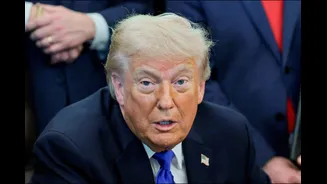
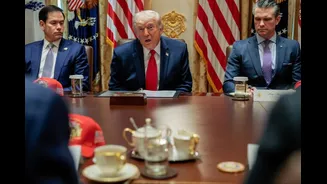
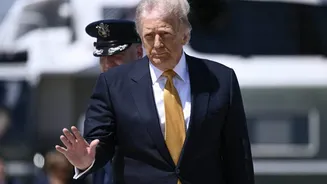
At a Wednesday cabinet meeting attended by media, Trump rejected the notion that any single state would exercise control over the strait.
"Nobody's going to control (the strait)," Trump said. "It's international waters and Oman will behave just like everybody else or we'll have to blow them up. They understand that, they'll be fine."
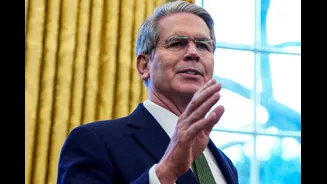
US Treasury Secretary Scott Bessent also delivered an even more specific warning directed at Muscat on Thursday. "The United States Government will not tolerate any effort to impose a tolling system in the Strait of Hormuz," US Treasury Secretary Scott Bessent said in a post on X.
"Oman, in particular, should know that the US Treasury will aggressively target any actors involved - directly or indirectly - in facilitating tolls for the Strait and any willing partners will be penalised," Bessent added.
Shortly afterward, the Treasury Department imposed sanctions on the Persian Gulf Strait Authority, adding the organisation to a list of entities viewed as threatening US national security interests.
Oman has been careful not to publicly endorse Iranian proposals regarding fees, tolls or joint management arrangements. Despite Iranian assertions that discussions were taking place, Muscat has largely maintained public silence regarding specific proposals.
Reports indicate that Omani officials moved swiftly behind the scenes to reassure Washington that the Sultanate had no intention of introducing or facilitating a tolling mechanism.
Such assurances were important because any perception of cooperation with a sanctions-targeted system could expose Omani financial institutions and businesses to secondary US sanctions.
These developments have put into the spotlight the difficult balancing act Oman faces. On one hand, the country shares the Strait of Hormuz with Iran and maintains relatively cordial relations with Tehran. On the other, Oman enjoys decades-long military, economic and diplomatic ties with the United States.
Iranian Foreign Minister Abbas Araghchi reinforced Tehran's view of the waterway during remarks delivered in India earlier this month. "The strait is located in the territorial waters of Iran and Oman," he said. "There is no international waters in between."
Araghchi also stated that Iran was coordinating with Oman regarding future management arrangements for the strait. For Muscat, responding to such statements requires extraordinary caution.
For decades, Muscat has pursued a foreign policy often described as maintaining friendly relations with all sides while avoiding entanglement in regional rivalries. This approach has enabled Oman to function as one of the most trusted intermediaries in West Asia
Long before the current conflict erupted, Omani officials were deeply involved in facilitating communication between Washington and Tehran. Foreign Minister Badr Albusaidi played a major role in efforts to advance negotiations concerning Iran's nuclear programme.
On February 27, just one day before the outbreak of war, Albusaidi met senior American officials in Washington, including US Vice President JD Vance.
Following those discussions, Albusaidi said the talks had produced "creative and constructive ideas and proposals", leading to unprecedented progress. Hours later, however, the diplomatic process was overtaken by military developments.
After Trump announced military action against Iran, arguing that Tehran posed a threat, Albusaidi publicly disputed the notion that Iran represented an imminent danger, maintaining that "significant progress" had been achieved during negotiations.
Despite the collapse of those talks, Oman's role as a communications channel has remained intact.
Whenever tensions escalate in the Gulf, Muscat frequently serves as a conduit through which messages can be exchanged without the publicity and political pressure associated with direct negotiations.
With inputs from agencies
The Sultanate recently found itself on the receiving end of threats by US President Donald Trump after Iranian officials suggested that Muscat was involved in discussions regarding future arrangements for the Strait of Hormuz, including proposals related to transit fees for commercial vessels.
While Iran possesses the military tools capable of disrupting shipping, Oman controls some of the most strategically important waters capable of depleting the energy of numerous major economies in Asia.
But having said that, Muscat remains one of the few governments trusted by both Tehran and Washington.
How is the Strait of Hormuz faring?
The narrow passage connects the Persian Gulf with the Gulf of Oman and the Arabian Sea, serving as the principal export route for energy producers across the Gulf region.
Historically, between 20 and 25 per cent of global seaborne petroleum exports and liquefied natural gas shipments have travelled through the strait, making it the world's most critical maritime energy corridor.
Any disruption to traffic through the waterway immediately reverberates across international markets.
Energy-importing nations, shipping companies, insurers and financial markets all monitor developments in the region closely because even temporary interruptions can trigger significant economic consequences.
The current crisis emerged after the joint US-Israeli air campaign against Iran on February 28, known as Operation Epic Fury. The subsequent confrontation led to a retaliatory blockade by Iran's Islamic Revolutionary Guard Corps (IRGC), sharply reducing maritime activity through the waterway.
The consequences have been severe. More than 1,550 commercial vessels were reportedly stranded during the peak of the disruption, while shipping insurance premiums surged as risk calculations changed dramatically.
In some cases, insurance costs reportedly rose by as much as six times their previous levels.
The effects have been particularly concerning for major Asian economies. India, China, Japan and South Korea collectively consume a substantial share of the energy resources that pass through the Strait of Hormuz.
How does geography give Oman influence?
At first glance, the Strait of Hormuz may appear wide enough to allow unrestricted navigation. At its narrowest point, the passage measures roughly 39 kilometres across. In practice, however, the space available for large commercial vessels is far more limited.
Ships entering and leaving the Persian Gulf must follow a Traffic Separation Scheme (TSS), a structured navigation system designed to reduce the risk of collisions and ensure safe movement through congested waters.
The system consists of two narrow shipping lanes, each approximately two miles wide, separated by a buffer zone.
Much of the northern side of the strait near Iran's coastline contains shallow waters, rocky formations and military installations concentrated around islands such as Qeshm, Larak and Hormuz.
Because of these navigational constraints, the deepest and safest routes for commercial shipping run largely through waters adjacent to Oman's Musandam Peninsula.
Musandam occupies a unique geographic position. Although separated from mainland Oman, the exclave extends into the Strait of Hormuz and overlooks the southern side of the waterway.
As a result, Oman exercises sovereignty over some of the most important deep-water channels used by international shipping.
This creates a rare strategic reality. Iran may possess substantial military capabilities capable of disrupting maritime traffic, including anti-ship missiles, sea mines, drones and fast-attack vessels.
However, maintaining safe commercial navigation requires access to and management of waterways that fall under Omani jurisdiction.
Without Oman's cooperation in monitoring shipping routes, facilitating maritime safety and supporting navigation through the deepest channels, large-scale commercial transit would face enormous operational challenges.
What does international law say about the Strait of Hormuz?
Under the 1982 United Nations Convention on the Law of the Sea (UNCLOS), the strait is generally regarded as an international waterway through which ships and aircraft enjoy the right of transit passage.
These provisions are intended to guarantee continuous, expeditious and unobstructed movement through waterways that connect one part of the high seas to another.
For Oman, which is a signatory to UNCLOS, these obligations are relatively straightforward. Muscat supports freedom of navigation and cannot arbitrarily suspend commercial transit during peacetime.
This legal position helped preserve at least some movement through the strait even during the height of the current crisis.
On the other hand, Iran's legal interpretation differs significantly. Although Tehran signed UNCLOS in 1982 shortly after the Islamic Revolution, it never ratified the treaty.
Iranian officials therefore maintain that the country is not bound by certain transit-passage provisions contained within the convention.
Instead, Tehran argues that maritime navigation should be governed through customary international law, including concepts associated with innocent passage, which permit coastal states greater authority over vessels moving through territorial waters.
Iran has also argued that transit rights may be restricted when a country's sovereignty, territorial integrity or political independence is threatened.
Iranian officials have pointed to allegations that regional territories were used to support military operations against Tehran as justification for a more restrictive interpretation of maritime access.
Why has the idea of a Hormuz toll created controversy?
Proposals linked to Iran plan for managing traffic through the Strait of Hormuz following any long-term settlement of the crisis. Iran established the Persian Gulf Strait Authority (PGSA) on May 5, creating a dedicated body tasked with overseeing aspects of navigation through the waterway.
According to reports, the authority has required ships to register with its offices by email to receive routing instructions and permission to pass through the strait.
The authority has also proposed charging fees connected to services offered to vessels.
Reports suggest those charges could amount to approximately one dollar per barrel, with payments made in Iranian currency through designated mechanisms.
But many have expressed concerns that the system could grant Tehran broad discretion over which ships are allowed passage. Questions have also been raised regarding proposals that could require vessels to establish rial-denominated accounts, potentially creating complications under existing sanctions regimes involving the IRGC.
A rival framework reportedly backed by France and the United Kingdom has also been presented to Oman. That proposal centres on preserving freedom of navigation principles and reportedly enjoys support from many Gulf states.
Why did the United States issue a direct warning to Oman?
The controversy escalated after Iranian state media reported that Tehran had obtained an unofficial draft agreement aimed at restoring shipping through the Strait of Hormuz to pre-conflict levels within a month.
According to the report, Iran and Oman would jointly oversee traffic management in the waterway. The claim immediately drew reactions because it suggested a level of cooperation that could fundamentally alter perceptions of Oman's traditional neutrality.
At a Wednesday cabinet meeting attended by media, Trump rejected the notion that any single state would exercise control over the strait.
"Nobody's going to control (the strait)," Trump said. "It's international waters and Oman will behave just like everybody else or we'll have to blow them up. They understand that, they'll be fine."
US Treasury Secretary Scott Bessent also delivered an even more specific warning directed at Muscat on Thursday. "The United States Government will not tolerate any effort to impose a tolling system in the Strait of Hormuz," US Treasury Secretary Scott Bessent said in a post on X.
"Oman, in particular, should know that the US Treasury will aggressively target any actors involved - directly or indirectly - in facilitating tolls for the Strait and any willing partners will be penalised," Bessent added.
Shortly afterward, the Treasury Department imposed sanctions on the Persian Gulf Strait Authority, adding the organisation to a list of entities viewed as threatening US national security interests.
How has Oman responded to the pressure?
Oman has been careful not to publicly endorse Iranian proposals regarding fees, tolls or joint management arrangements. Despite Iranian assertions that discussions were taking place, Muscat has largely maintained public silence regarding specific proposals.
Reports indicate that Omani officials moved swiftly behind the scenes to reassure Washington that the Sultanate had no intention of introducing or facilitating a tolling mechanism.
Such assurances were important because any perception of cooperation with a sanctions-targeted system could expose Omani financial institutions and businesses to secondary US sanctions.
These developments have put into the spotlight the difficult balancing act Oman faces. On one hand, the country shares the Strait of Hormuz with Iran and maintains relatively cordial relations with Tehran. On the other, Oman enjoys decades-long military, economic and diplomatic ties with the United States.
Iranian Foreign Minister Abbas Araghchi reinforced Tehran's view of the waterway during remarks delivered in India earlier this month. "The strait is located in the territorial waters of Iran and Oman," he said. "There is no international waters in between."
Araghchi also stated that Iran was coordinating with Oman regarding future management arrangements for the strait. For Muscat, responding to such statements requires extraordinary caution.
Why is Oman considered the Gulf's most important diplomatic bridge?
For decades, Muscat has pursued a foreign policy often described as maintaining friendly relations with all sides while avoiding entanglement in regional rivalries. This approach has enabled Oman to function as one of the most trusted intermediaries in West Asia
Long before the current conflict erupted, Omani officials were deeply involved in facilitating communication between Washington and Tehran. Foreign Minister Badr Albusaidi played a major role in efforts to advance negotiations concerning Iran's nuclear programme.
On February 27, just one day before the outbreak of war, Albusaidi met senior American officials in Washington, including US Vice President JD Vance.
Following those discussions, Albusaidi said the talks had produced "creative and constructive ideas and proposals", leading to unprecedented progress. Hours later, however, the diplomatic process was overtaken by military developments.
After Trump announced military action against Iran, arguing that Tehran posed a threat, Albusaidi publicly disputed the notion that Iran represented an imminent danger, maintaining that "significant progress" had been achieved during negotiations.
Despite the collapse of those talks, Oman's role as a communications channel has remained intact.
Whenever tensions escalate in the Gulf, Muscat frequently serves as a conduit through which messages can be exchanged without the publicity and political pressure associated with direct negotiations.
With inputs from agencies