




What is the story about?
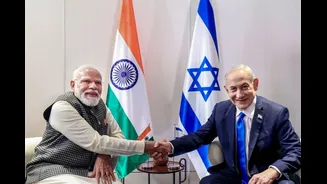
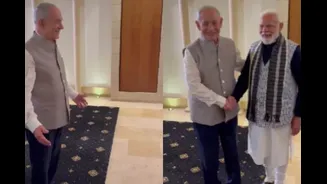
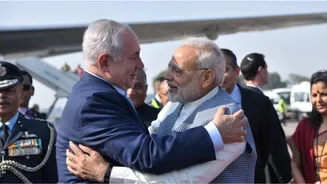
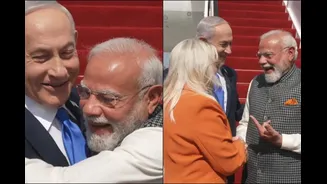
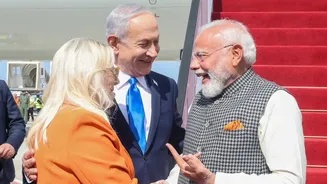
Prime Minister Narendra Modi’s two-day visit to Israel brought his bonhomie with Israeli Prime Minister Benjamin Netanyahu and the evolved ties between the two countries front and centre. India and Israel on Thursday (February 26) elevated their “time-tested” relationship to a special strategic partnership.
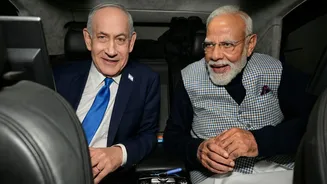
During his visit that began yesterday, the Indian leader also outlined a framework for deepening the relationship with Israel, spanning various sectors such as defence, technology, trade and counter-terrorism. This was Modi’s second trip to Israel since 2017.
How successful was it? We explore.
India and Israel have elevated their strategic partnership to ‘a special strategic partnership for peace, innovation & prosperity,’ as per a joint statement by the two sides.
Underlining that the relations between the two countries are rooted in deep trust, shared democratic values, and strong humanitarian principles,
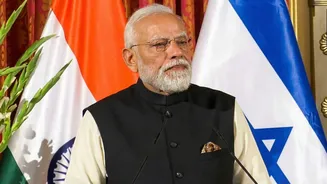
PM Modi announced, “We decided to give time-tested India-Israel ties the status of special strategic partnership.”
Following talks between the Indian leader and his Israeli counterpart, the two sides inked various agreements and memorandums of understanding (MoUs) to enhance cooperation in areas of trade, agriculture, energy, cyberspace and digital payment.
The countries reportedly signed 16 agreements and made 11 announcements, including signing an MoU on Cooperation in Artificial Intelligence (AI). They also agreed to enhance collaboration in AI for the welfare of their people.
India and Israel also pledged to expand their defence partnership through joint development and production of military hardware under the framework of the transfer of technologies.
Israeli PM Netanyahu announced that the two sides have decided to hold a government-to-government (G2G) meeting in India as soon as possible.
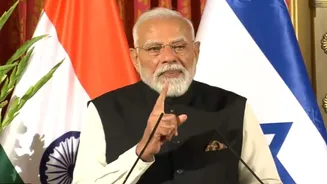
“We have decided to establish the Critical and Emerging Technologies Partnership. This will give new momentum to cooperation in areas such as AI, quantum, and critical minerals,” PM Modi said during his trip.
As per the joint statement, shared by the Prime Minister's Office (PMO), the leaders of the two countries emphasised that the initiative would “synergise the individual strengths of both countries in niche technologies, fostering a focused and futuristic partnership.”
India and Israel will also expand cooperation in civil nuclear energy and space. “India and Israel will work in the fields of civil nuclear energy and space,” Modi said, stressing that high-technology sectors were key pillars of the evolving relationship.
The two sides have also decided to deepen people-to-people cooperation.
Israel would allow 50,000 additional Indian workers into the country over the next five years, particularly in manufacturing sectors, the statement read.
India and Israel will also cooperate in the field of "horizon scanning", which helps "identify emerging global trends in areas like technology, economy and society, by leveraging data, AI and expert insights to support strategic planning and decision making," as per the joint statement.
The two sides also launched the India–Israel Financial Dialogue to boost closer financial cooperation. They also pushed for robust dialogue between their national cyber authorities and vowed to enhance cooperation in cybersecurity. The countries have signed a Letter of Intent for setting up an India-Israel Centre of Excellence in Cybersecurity in India.
PM Modi also strongly backed US President Donald Trump's Gaza peace initiative. “Humanity must never become a victim of conflict,” he said.
“The Gaza Peace Plan has opened a route to peace. India has supported such efforts. In future too, India will continue to cooperate and have dialogue with all nations," PM Modi said.
He pointed out that India’s interests are closely linked to stability in West Asia. “India and Israel stood shoulder-to-shoulder in opposing terrorism and its supporters, and we will continue to do so,” Modi declared. “India and Israel are completely clear that there is no place for terrorism in the world.”
India and Israel plan to conclude a “mutually beneficial” free trade agreement (FTA) soon.
At the joint press meet with his Israeli counterpart, PM Modi said: "We will work to conclude a mutually beneficial free trade agreement.”
The first round of negotiations for an FTA to boost trade and investment between the two countries reportedly ended on February 26.
Israel's ambassador to India, Reuven Azar, told NDTV that the deal could be finalised this year.
Total merchandise trade between India and Israel stood at $3.62 billion in the financial year (FY) 2024-2025.
According to trade experts, while bilateral trade with Israel is modest compared to India’s larger partners, it is more technology-intensive and investment-linked with Tel Aviv. “An FTA could help reduce tariff and non-tariff barriers, ease regulatory frictions and provide a framework for collaboration in emerging sectors such as AI and cybersecurity, where both countries have complementary capabilities,” Ajay Sahai, director general, Federation of Indian Exporters Organisation, told
Mint.
ALSO READ: Is India eyeing the Iron Beam as Modi visits Israel?
India and Israel have signed an MoU to introduce the Unified Payments Interface (UPI) in the West Asian country. Inked between India's NPCI International (NIPL) and Israel's MASAV the deal will enable cross-border remittances between the two countries via the UPI, as per MEA.
“An agreement has been reached for the use of UPI in Israel,” PM Modi announced.
The two sides will explore linking UPI with Israel’s fast payment system to bolster interoperability and strengthen economic ties.
This will help improve financial connectivity between the two nations and support trade and economic activity.
With inputs from agencies
During his visit that began yesterday, the Indian leader also outlined a framework for deepening the relationship with Israel, spanning various sectors such as defence, technology, trade and counter-terrorism. This was Modi’s second trip to Israel since 2017.
How successful was it? We explore.
Deals, MoUs & more
India and Israel have elevated their strategic partnership to ‘a special strategic partnership for peace, innovation & prosperity,’ as per a joint statement by the two sides.
Underlining that the relations between the two countries are rooted in deep trust, shared democratic values, and strong humanitarian principles,
Following talks between the Indian leader and his Israeli counterpart, the two sides inked various agreements and memorandums of understanding (MoUs) to enhance cooperation in areas of trade, agriculture, energy, cyberspace and digital payment.
The countries reportedly signed 16 agreements and made 11 announcements, including signing an MoU on Cooperation in Artificial Intelligence (AI). They also agreed to enhance collaboration in AI for the welfare of their people.
India and Israel also pledged to expand their defence partnership through joint development and production of military hardware under the framework of the transfer of technologies.
Israeli PM Netanyahu announced that the two sides have decided to hold a government-to-government (G2G) meeting in India as soon as possible.
“We have decided to establish the Critical and Emerging Technologies Partnership. This will give new momentum to cooperation in areas such as AI, quantum, and critical minerals,” PM Modi said during his trip.
As per the joint statement, shared by the Prime Minister's Office (PMO), the leaders of the two countries emphasised that the initiative would “synergise the individual strengths of both countries in niche technologies, fostering a focused and futuristic partnership.”
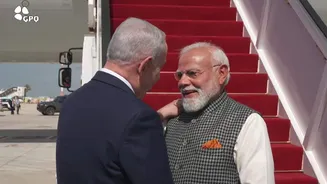
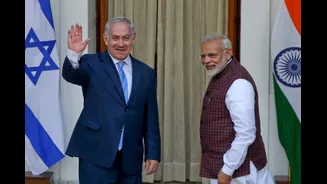
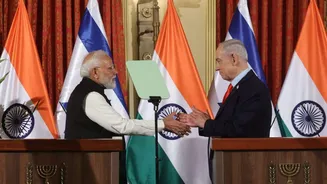
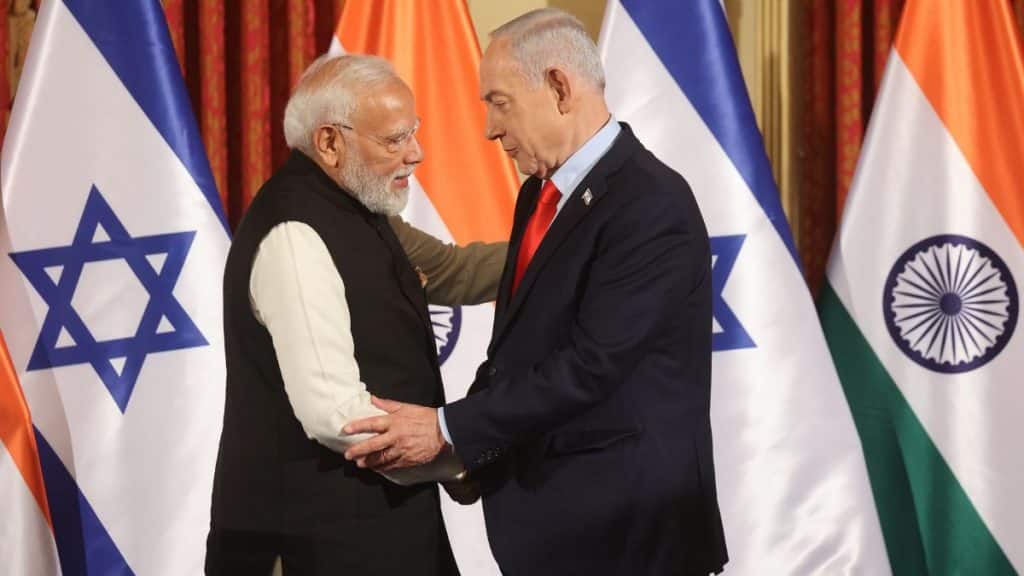
Israel's Prime Minister Benjamin Netanyahu, right, greets his Indian counterpart Narendra Modi during a press conference in Jerusalem, February 26, 2026. AP
India and Israel will also expand cooperation in civil nuclear energy and space. “India and Israel will work in the fields of civil nuclear energy and space,” Modi said, stressing that high-technology sectors were key pillars of the evolving relationship.
The two sides have also decided to deepen people-to-people cooperation.
Israel would allow 50,000 additional Indian workers into the country over the next five years, particularly in manufacturing sectors, the statement read.
India and Israel will also cooperate in the field of "horizon scanning", which helps "identify emerging global trends in areas like technology, economy and society, by leveraging data, AI and expert insights to support strategic planning and decision making," as per the joint statement.
The two sides also launched the India–Israel Financial Dialogue to boost closer financial cooperation. They also pushed for robust dialogue between their national cyber authorities and vowed to enhance cooperation in cybersecurity. The countries have signed a Letter of Intent for setting up an India-Israel Centre of Excellence in Cybersecurity in India.
PM Modi also strongly backed US President Donald Trump's Gaza peace initiative. “Humanity must never become a victim of conflict,” he said.
“The Gaza Peace Plan has opened a route to peace. India has supported such efforts. In future too, India will continue to cooperate and have dialogue with all nations," PM Modi said.
He pointed out that India’s interests are closely linked to stability in West Asia. “India and Israel stood shoulder-to-shoulder in opposing terrorism and its supporters, and we will continue to do so,” Modi declared. “India and Israel are completely clear that there is no place for terrorism in the world.”
FTA in the making
India and Israel plan to conclude a “mutually beneficial” free trade agreement (FTA) soon.
At the joint press meet with his Israeli counterpart, PM Modi said: "We will work to conclude a mutually beneficial free trade agreement.”
The first round of negotiations for an FTA to boost trade and investment between the two countries reportedly ended on February 26.
Israel's ambassador to India, Reuven Azar, told NDTV that the deal could be finalised this year.
Total merchandise trade between India and Israel stood at $3.62 billion in the financial year (FY) 2024-2025.
According to trade experts, while bilateral trade with Israel is modest compared to India’s larger partners, it is more technology-intensive and investment-linked with Tel Aviv. “An FTA could help reduce tariff and non-tariff barriers, ease regulatory frictions and provide a framework for collaboration in emerging sectors such as AI and cybersecurity, where both countries have complementary capabilities,” Ajay Sahai, director general, Federation of Indian Exporters Organisation, told
ALSO READ: Is India eyeing the Iron Beam as Modi visits Israel?
UPI connect
India and Israel have signed an MoU to introduce the Unified Payments Interface (UPI) in the West Asian country. Inked between India's NPCI International (NIPL) and Israel's MASAV the deal will enable cross-border remittances between the two countries via the UPI, as per MEA.
“An agreement has been reached for the use of UPI in Israel,” PM Modi announced.
#WATCH | Jerusalem | Addressing joint press briefing with Israel PM Benjamin Netanyahu, PM Modi says," We have decided to establish a critical and emerging technology partnership. I am happy that an agreement has been signed for the use of UPI in Israel. We will further our work… pic.twitter.com/WhRaR5nxjm
— ANI (@ANI) February 26, 2026
The two sides will explore linking UPI with Israel’s fast payment system to bolster interoperability and strengthen economic ties.
This will help improve financial connectivity between the two nations and support trade and economic activity.
With inputs from agencies