









What is the story about?
Over 50 years ago, India launched Project Tiger to rescue an animal teetering on the brink of extinction. Today, it is home to an estimated 3,682 wild tigers, roughly three-quarters of the global population, making it one of the world’s greatest conservation success stories.
But success has brought a new challenge.
Many of the country’s best tiger reserves are now nearing their ecological limits, forcing the animal to disperse beyond protected areas in search of new territories. Their journeys increasingly take them through highways, railway lines, farms and villages, raising a critical question for the next phase of conservation: Can India create enough space for its growing tiger population?
“The defining challenge of the next decade will not be simply producing more tigers. It will be creating ecological and social space for the tigers India already has,” says Supratim Dutta, project scientist, Wildlife Institute of India.
The 2022 India Tiger Estimation shows that several of the country’s best-known tiger landscapes are already feeling the pressure. Ranthambhore in Rajasthan has reached its carrying capacity, with an estimated density of 9.6 tigers per 100 square kilometres. The Nilgiri landscape, from Nagarahole and Bandipur to Mudumalai and BRT Hills, is considered to have reached, or is approaching, its limit.
Panna in Madhya Pradesh, whose tiger population was painstakingly rebuilt after local extinction, is also nearing carrying capacity. The Sundarbans, although ecologically distinct, is similarly thought to be close to the limit that its current prey base can support.
Yet conservationists caution against interpreting this to mean India has run out of space. Instead, the problem is one of uneven distribution. Dutta likens central India to “a house containing some overcrowded rooms and many nearly empty ones”.
Productive source populations around Panna, Bandhavgarh, Kanha-Pench and Tadoba-Chandrapur are producing dispersing tigers, but many adjoining forests in eastern Madhya Pradesh, Chhattisgarh, Jharkhand, Odisha and Telangana remain sparsely occupied. In many cases, prey populations, protection and habitat connectivity have yet to recover.
According to the national assessment, these prey-depleted but otherwise suitable forests could support hundreds more tigers if ecological restoration succeeds.
For tigers, dispersal is essential. Young adults leave their natal territories to establish their own, preventing inbreeding and maintaining healthy populations. But unlike migratory animals that follow established routes, dispersing tigers move alone and adapt to whatever landscapes they encounter.
That movement is often unpredictable. Siblings leaving the same reserve may choose entirely different routes. One may follow a river, another a patchwork of forests and farms, while a third may head towards a settlement. One documented male tiger in central India travelled a straight-line distance of 315 kilometres over 225 days, repeatedly crossing roads and surviving by using scattered forest fragments as stepping stones.
This is why conservationists say wildlife corridors are often misunderstood. “A corridor is better understood as a landscape of possibilities,” says Dutta, where a tiger can find cover, water, temporary refuge and eventually another suitable habitat. “It is not a thin straight line with a couple of kilometres on either side,” adds Anish Andheria, CEO and president of the Wildlife Conservation Trust. “It can stretch across several landscapes.”
Tigers may move through forests, scrublands and even agricultural fields, often under the cover of darkness, meaning conservation planning must focus on connected landscapes rather than narrow strips of forest.
That approach is particularly important in India. Unlike Africa’s vast savannahs or South Africa’s fenced reserves, India’s tiger reserves are embedded within densely populated landscapes. “India’s model depends on wild tigers moving through landscapes that continue to be occupied and used by people,” says Dutta.
Maintaining those connections is becoming increasingly difficult. As roads, railways, mining projects, cities and solar parks expand, habitats become fragmented, tiger populations more isolated and encounters with people more frequent. “We are developing at breakneck speed,” says Andheria. “Development can happen, but not at the cost of our natural ecosystems and wildlife.”
Dutta argues that the priority should be avoiding ecologically sensitive areas altogether, rather than relying on mitigation after projects are approved. Where infrastructure must pass through wildlife landscapes, however, scientifically designed crossings can make a significant difference.
The mitigation structures along National Highway 44 through the Pench landscape demonstrate what is possible. Monitoring documented 18 species of wild mammals using nine crossing structures.
Eleven individual tigers alone made 89 recorded crossings through six underpasses, alongside leopards, dholes, sloth bears and several ungulate species. The project has since become a model for integrating infrastructure with wildlife movement.
But infrastructure is only one part of the solution. Under the Centrally Sponsored Scheme of Integrated Development of Wildlife Habitats, funding is shared between the Centre and states in a 60:40 ratio. But Andheria says “funding is peanuts” compared to the scale of the challenge. Forest departments need better-equipped frontline staff, regular training and sustained funding to monitor dispersing tigers, respond to emergencies, mitigate conflict, prevent poaching, and protect habitats in and beyond reserve boundaries.
That investment is essential because, as Andheria puts it, “human-wildlife conflict is a symptom, not the problem”. The real issue is shrinking and fragmented habitats that force wildlife into closer contact with people. Addressing conflict therefore requires protecting habitats, maintaining connectivity and investing in coexistence measures rather than focusing solely on responding after encounters occur. “Protected areas produce tigers; connected and socially tolerant landscapes determine whether those tigers have a future,” says Dutta.
As India marks another International Tiger Day, its conservation success is undeniable. “But the success of the next decade should not be judged only by whether India crosses 4,000 or 5,000 tigers,” says Dutta. “A more meaningful test is whether a young tiger leaving a tiger reserve can reach another prey-rich forest without running through an urban island, snares, depleted habitat and hostile human settlements.”
For Andheria, protecting tiger landscapes is much more than conserving a single species. “The best areas for wildlife will provide the best ecosystem services for humans,” he says. These forests generate water, regulate temperature, prevent soil erosion, control floods, store carbon and support biodiversity — ecosystem services that millions of people depend on. In the long run, safeguarding space for tigers will also mean safeguarding the natural ecosystems that sustain human well-being.
India has shown the world that it can bring tigers back from the brink. The next challenge is ensuring those tigers have somewhere safe to go.
But success has brought a new challenge.
Many of the country’s best tiger reserves are now nearing their ecological limits, forcing the animal to disperse beyond protected areas in search of new territories. Their journeys increasingly take them through highways, railway lines, farms and villages, raising a critical question for the next phase of conservation: Can India create enough space for its growing tiger population?
“The defining challenge of the next decade will not be simply producing more tigers. It will be creating ecological and social space for the tigers India already has,” says Supratim Dutta, project scientist, Wildlife Institute of India.
Running out of room
The 2022 India Tiger Estimation shows that several of the country’s best-known tiger landscapes are already feeling the pressure. Ranthambhore in Rajasthan has reached its carrying capacity, with an estimated density of 9.6 tigers per 100 square kilometres. The Nilgiri landscape, from Nagarahole and Bandipur to Mudumalai and BRT Hills, is considered to have reached, or is approaching, its limit.
Panna in Madhya Pradesh, whose tiger population was painstakingly rebuilt after local extinction, is also nearing carrying capacity. The Sundarbans, although ecologically distinct, is similarly thought to be close to the limit that its current prey base can support.
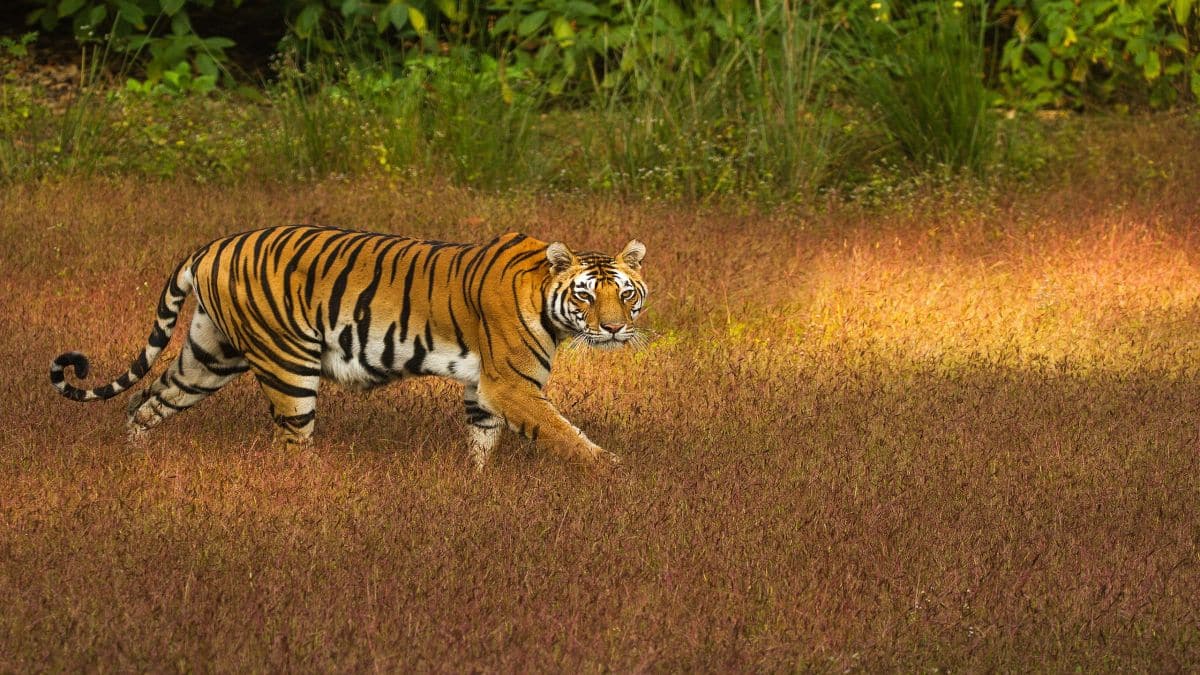
Many of India's best tiger reserves are now nearing their ecological limits. Image Courtesy: David V Raju via Wikimedia Commons
Yet conservationists caution against interpreting this to mean India has run out of space. Instead, the problem is one of uneven distribution. Dutta likens central India to “a house containing some overcrowded rooms and many nearly empty ones”.
Productive source populations around Panna, Bandhavgarh, Kanha-Pench and Tadoba-Chandrapur are producing dispersing tigers, but many adjoining forests in eastern Madhya Pradesh, Chhattisgarh, Jharkhand, Odisha and Telangana remain sparsely occupied. In many cases, prey populations, protection and habitat connectivity have yet to recover.
According to the national assessment, these prey-depleted but otherwise suitable forests could support hundreds more tigers if ecological restoration succeeds.
Why corridors matter
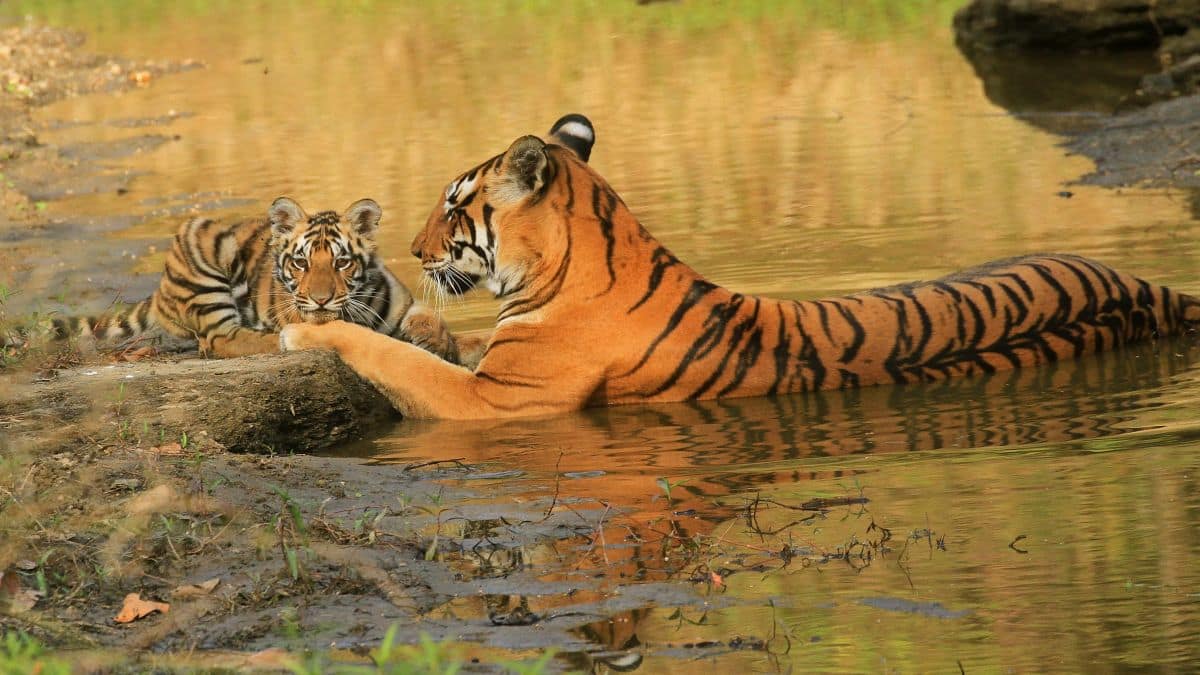
For tigers, dispersal is essential. Young adults leave their natal territories to establish their own, preventing inbreeding and maintaining healthy populations. But unlike migratory animals that follow established routes, dispersing tigers move alone and adapt to whatever landscapes they encounter.
That movement is often unpredictable. Siblings leaving the same reserve may choose entirely different routes. One may follow a river, another a patchwork of forests and farms, while a third may head towards a settlement. One documented male tiger in central India travelled a straight-line distance of 315 kilometres over 225 days, repeatedly crossing roads and surviving by using scattered forest fragments as stepping stones.
This is why conservationists say wildlife corridors are often misunderstood. “A corridor is better understood as a landscape of possibilities,” says Dutta, where a tiger can find cover, water, temporary refuge and eventually another suitable habitat. “It is not a thin straight line with a couple of kilometres on either side,” adds Anish Andheria, CEO and president of the Wildlife Conservation Trust. “It can stretch across several landscapes.”
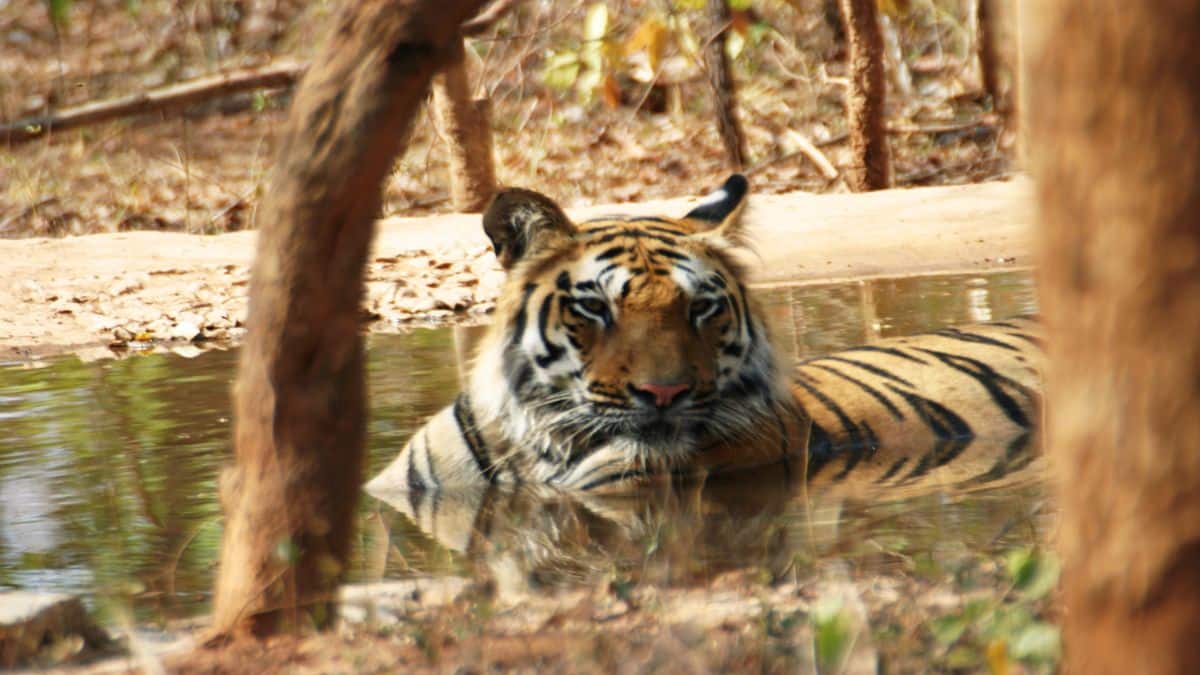
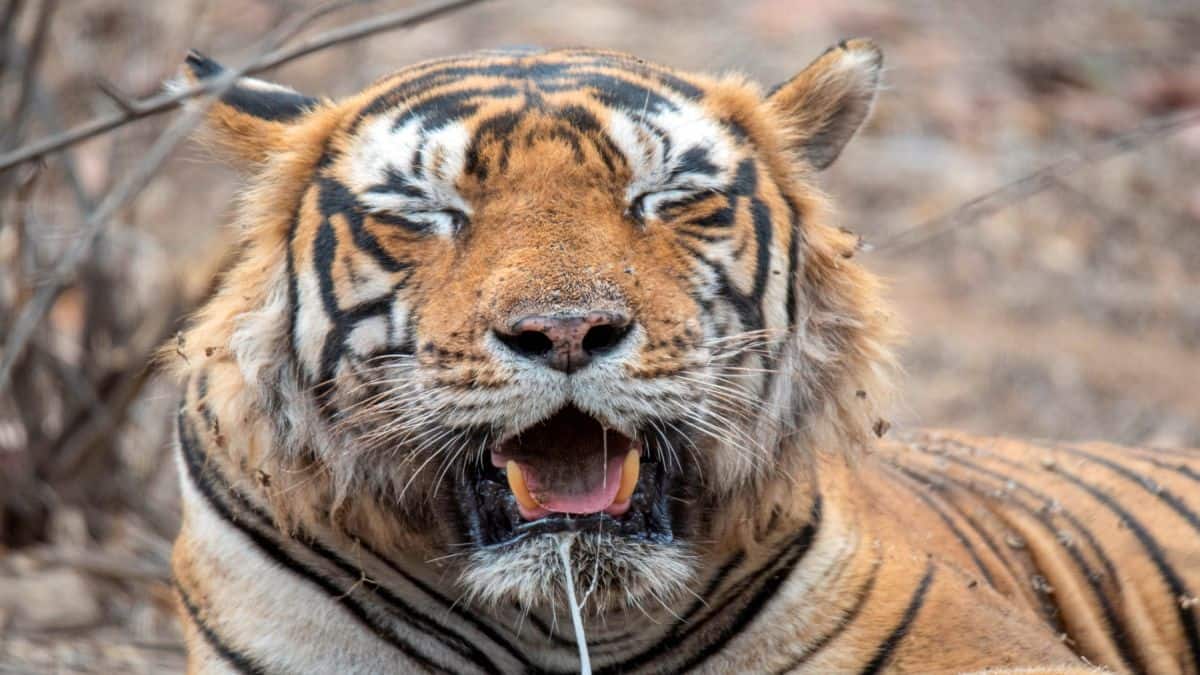
The presence of tigers limits human activity, protecting forests from degradation. Image Courtesy: FitIndia via Wikimedia Commons
Tigers may move through forests, scrublands and even agricultural fields, often under the cover of darkness, meaning conservation planning must focus on connected landscapes rather than narrow strips of forest.
That approach is particularly important in India. Unlike Africa’s vast savannahs or South Africa’s fenced reserves, India’s tiger reserves are embedded within densely populated landscapes. “India’s model depends on wild tigers moving through landscapes that continue to be occupied and used by people,” says Dutta.
Maintaining those connections is becoming increasingly difficult. As roads, railways, mining projects, cities and solar parks expand, habitats become fragmented, tiger populations more isolated and encounters with people more frequent. “We are developing at breakneck speed,” says Andheria. “Development can happen, but not at the cost of our natural ecosystems and wildlife.”
Unlike migratory animals that follow established routes, dispersing tigers move alone and adapt to whatever landscapes they encounter. Image Courtesy: David V Raju via Wikimedia Commons
The road ahead
Dutta argues that the priority should be avoiding ecologically sensitive areas altogether, rather than relying on mitigation after projects are approved. Where infrastructure must pass through wildlife landscapes, however, scientifically designed crossings can make a significant difference.
The mitigation structures along National Highway 44 through the Pench landscape demonstrate what is possible. Monitoring documented 18 species of wild mammals using nine crossing structures.
Eleven individual tigers alone made 89 recorded crossings through six underpasses, alongside leopards, dholes, sloth bears and several ungulate species. The project has since become a model for integrating infrastructure with wildlife movement.
India has shown the world that it can bring tigers back from the brink. The next challenge is ensuring those tigers have somewhere safe to go. File image/AFP
But infrastructure is only one part of the solution. Under the Centrally Sponsored Scheme of Integrated Development of Wildlife Habitats, funding is shared between the Centre and states in a 60:40 ratio. But Andheria says “funding is peanuts” compared to the scale of the challenge. Forest departments need better-equipped frontline staff, regular training and sustained funding to monitor dispersing tigers, respond to emergencies, mitigate conflict, prevent poaching, and protect habitats in and beyond reserve boundaries.
That investment is essential because, as Andheria puts it, “human-wildlife conflict is a symptom, not the problem”. The real issue is shrinking and fragmented habitats that force wildlife into closer contact with people. Addressing conflict therefore requires protecting habitats, maintaining connectivity and investing in coexistence measures rather than focusing solely on responding after encounters occur. “Protected areas produce tigers; connected and socially tolerant landscapes determine whether those tigers have a future,” says Dutta.
As India marks another International Tiger Day, its conservation success is undeniable. “But the success of the next decade should not be judged only by whether India crosses 4,000 or 5,000 tigers,” says Dutta. “A more meaningful test is whether a young tiger leaving a tiger reserve can reach another prey-rich forest without running through an urban island, snares, depleted habitat and hostile human settlements.”
For Andheria, protecting tiger landscapes is much more than conserving a single species. “The best areas for wildlife will provide the best ecosystem services for humans,” he says. These forests generate water, regulate temperature, prevent soil erosion, control floods, store carbon and support biodiversity — ecosystem services that millions of people depend on. In the long run, safeguarding space for tigers will also mean safeguarding the natural ecosystems that sustain human well-being.
India has shown the world that it can bring tigers back from the brink. The next challenge is ensuring those tigers have somewhere safe to go.