









What is the story about?
Amid Delhi Gymkhana Club's tussle with the centre, which has now forced the elite space to move to Delhi High Court against the ruling's directive to vacate the 27.3-acre piece of prime land in Lutyens’ Delhi, another colonial-era institution in Mumbai is starting to face the scrutiny of its own.
The Breach Candy club has revived questions about its controversial legacy of exclusivity, European control, and astronomical membership costs.
The matter intensified after RPG Group Chairman Harsh Goenka spoke about the elite Mumbai club, where Indians are still discriminated.
“Mumbai never tires of talking about inclusivity and progress. Yet a few decades ago, Indians were not allowed membership at Breach Candy Club, Mumbai. Astonishingly, even today, no Indian can be on its Trust Committee — only a European living in Mumbai is allowed," Goenka wrote on X.
Adding, "The irony? The land belongs to the Maharashtra Government.”
As the debate over Delhi Gymkhana’s future ignites, Mumbai’s Breach Candy club has also come under scrutiny for reserving real power for Europeans.
We take a look.
Founded in 1878, it traces its origins to the opening of the Suez Canal.
Before the canal cut travel time between Europe and India, Europeans residing in Bombay had set up a hostel in Aden to accommodate travellers undertaking the long sea journey.

After the canal's journey had been significantly reduced, the hostel became redundant. It was later sold for Rs 7,300, with the proceeds used to build a saltwater swimming facility in Bombay.
Reports suggest that the then Secretary of State for India donated five acres of land with the shore for the project. Till that time, the Breach Candy had not yet evolved into the ultra-premium South Mumbai neighbourhood it is known as today.
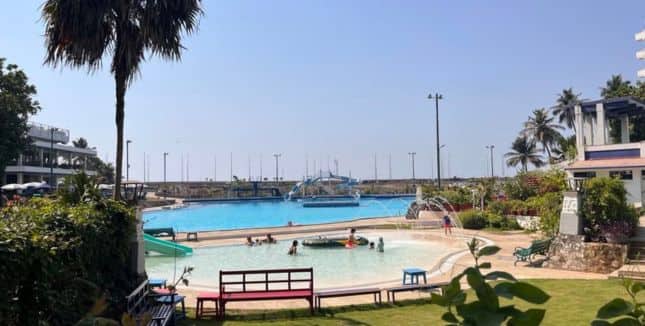
Over the years, the space and the club turned into symbols of privilege and exclusivity. As the club ultimately expanded, it featured indoor and outdoor swimming pools, restaurants, a gymnasium, a reading room, and facilities for tennis, basketball, and volleyball.
According to reports, Breach Candy Club's outdoor swimming pool is architecturally designed in the shape of British India.
As it evolved over the years, the club continued to operate as a Europeans-only institution, and Indians were barred from becoming members. Even after India's Independence in 1947, the prohibition persisted.
Its exclusionary policies faced intense pressure in 1960 following an incident involving a Black American diplomat.
According to reports, the diplomat had visited the club along with a white colleague; however, he was denied access, prompting massive outrage. This episode pushed the institution to commence opening its doors to Indians.
But the shift did not bring major change, and the access remained limited.
"Indians were not allowed voting or management power of the club," Moneycontrol reported, citing a 2023 report. Even today, management is “almost out of bounds for ‘plain-vanilla’ Indians.”
At the centre of scrutiny is not just its exclusivity, but also its membership structure.
According to a 2013 Economic Times report, the club reopened memberships after around 15 years, triggering competition among applicants, and many remained on waiting lists for over a year.
The report said the membership fee was fixed at Rs 1 crore, with an additional 12.36 per cent service tax, pushing the total cost of admission to nearly Rs 1.12 crore. Despite this, demand reportedly remained extremely high.
Mumbai-based developer Pujit Aggarwal told ET in 2013, "I had applied for the membership 15-16 years back and became a member recently."
“A city like Mumbai does not have too many open spaces and sporting facilities for oneself or one's family. These clubs offer those sports facilities and open spaces where one can take care of health and recreation," Aggarwal decoded the facilities.
That's not all, members also had to pay annual charges of roughly Rs 15,000, the report noted.
The club further gained popularity when it asked Shashi Tharoor, who was then a child, to leave the elite space. The now-Congress MP has publicly recalled his childhood experience at the club.
In his book The Elephant, The Tiger and the Cellphone, Tharoor wrote: “As a child, I was thrown out of the Breach Candy swimming pool in Mumbai for being an Indian, a state of existence my innocent American host had not imagined would pose a problem in India.”
He then visited with an American friend who had not expected the restriction.
"... It was in the mid '60s when an American classmate hoped he could ignore the whites and take an Indian friend along. That was India 20 years after Independence," Tharoor added.
Even today, effective decision-making authority remains with the rest of the small group of European trust members. Critics argue that such structures undermine the spirit of a modern and egalitarian India.
With inputs from agencies
The Breach Candy club has revived questions about its controversial legacy of exclusivity, European control, and astronomical membership costs.
The matter intensified after RPG Group Chairman Harsh Goenka spoke about the elite Mumbai club, where Indians are still discriminated.
Mumbai never tires of talking about inclusivity and progress. Yet a few decades ago, Indians were not allowed membership at Breach Candy Club, Mumbai. Astonishingly, even today, no Indian can be on its Trust Committee- only a European living in Mumbai is allowed.
The irony? The…
— Harsh Goenka (@hvgoenka) May 26, 2026
“Mumbai never tires of talking about inclusivity and progress. Yet a few decades ago, Indians were not allowed membership at Breach Candy Club, Mumbai. Astonishingly, even today, no Indian can be on its Trust Committee — only a European living in Mumbai is allowed," Goenka wrote on X.
Adding, "The irony? The land belongs to the Maharashtra Government.”
As the debate over Delhi Gymkhana’s future ignites, Mumbai’s Breach Candy club has also come under scrutiny for reserving real power for Europeans.
We take a look.
The Breach Candy club
Breach Candy club is officially known as the Breach Candy Swimming Bath Trust. It dates back to the 1800s, upholding its colonial legacy. It's an elite space where Europeans enjoy more privileges than Indians.
Founded in 1878, it traces its origins to the opening of the Suez Canal.
Before the canal cut travel time between Europe and India, Europeans residing in Bombay had set up a hostel in Aden to accommodate travellers undertaking the long sea journey.
As it evolved over the years, the Breach Candy Club continued to operate as a Europeans-only institution. Image courtesy: breachcandyclub/Instagram
After the canal's journey had been significantly reduced, the hostel became redundant. It was later sold for Rs 7,300, with the proceeds used to build a saltwater swimming facility in Bombay.
Reports suggest that the then Secretary of State for India donated five acres of land with the shore for the project. Till that time, the Breach Candy had not yet evolved into the ultra-premium South Mumbai neighbourhood it is known as today.
Over the years, the space and the club turned into symbols of privilege and exclusivity. As the club ultimately expanded, it featured indoor and outdoor swimming pools, restaurants, a gymnasium, a reading room, and facilities for tennis, basketball, and volleyball.
According to reports, Breach Candy Club's outdoor swimming pool is architecturally designed in the shape of British India.
As it evolved over the years, the club continued to operate as a Europeans-only institution, and Indians were barred from becoming members. Even after India's Independence in 1947, the prohibition persisted.
What led to the change in club policy
Its exclusionary policies faced intense pressure in 1960 following an incident involving a Black American diplomat.
According to reports, the diplomat had visited the club along with a white colleague; however, he was denied access, prompting massive outrage. This episode pushed the institution to commence opening its doors to Indians.
View this post on Instagram
But the shift did not bring major change, and the access remained limited.
"Indians were not allowed voting or management power of the club," Moneycontrol reported, citing a 2023 report. Even today, management is “almost out of bounds for ‘plain-vanilla’ Indians.”
Club's crore-rupee membership
At the centre of scrutiny is not just its exclusivity, but also its membership structure.
According to a 2013 Economic Times report, the club reopened memberships after around 15 years, triggering competition among applicants, and many remained on waiting lists for over a year.
The report said the membership fee was fixed at Rs 1 crore, with an additional 12.36 per cent service tax, pushing the total cost of admission to nearly Rs 1.12 crore. Despite this, demand reportedly remained extremely high.
Reports suggest that Breach Candy Club's outdoor swimming pool is architecturally designed in the shape of British India. Image courtesy: breachcandyclub/Instagram
Mumbai-based developer Pujit Aggarwal told ET in 2013, "I had applied for the membership 15-16 years back and became a member recently."
“A city like Mumbai does not have too many open spaces and sporting facilities for oneself or one's family. These clubs offer those sports facilities and open spaces where one can take care of health and recreation," Aggarwal decoded the facilities.
That's not all, members also had to pay annual charges of roughly Rs 15,000, the report noted.
Shashi Tharoor wasn't even good enough for the club
The club further gained popularity when it asked Shashi Tharoor, who was then a child, to leave the elite space. The now-Congress MP has publicly recalled his childhood experience at the club.
In his book The Elephant, The Tiger and the Cellphone, Tharoor wrote: “As a child, I was thrown out of the Breach Candy swimming pool in Mumbai for being an Indian, a state of existence my innocent American host had not imagined would pose a problem in India.”
He then visited with an American friend who had not expected the restriction.
"... It was in the mid '60s when an American classmate hoped he could ignore the whites and take an Indian friend along. That was India 20 years after Independence," Tharoor added.
Even today, effective decision-making authority remains with the rest of the small group of European trust members. Critics argue that such structures undermine the spirit of a modern and egalitarian India.
With inputs from agencies