





What is the story about?
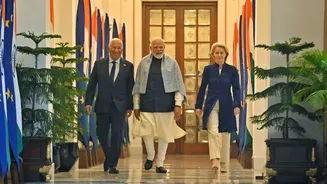
After the public bonhomie between Prime Minister Narendra Modi and European Union (EU) leaders at Kartavya Path, India and the EU announced ambitious trade and security deals on Tuesday that aim to usher in a new era of bilateral relations.
India and the EU announced the India-EU Free Trade Agreement (FTA), a security and defence partnership, and a mobility agreement among 13 outcomes of the 16th India-EU Summit talks. They are also set to adopt the 2030 joint comprehensive strategic agenda for the India-EU relationship. This was affirmed in joint statements released by the two sides.
The India-EU trade deal and the defence and security partnership are not only big deals for the sheer size of the two economies and militaries, but also signal growing proximity of the two powers.
ALSO READ — ‘Mother of all deals’: India-EU partnership emerges as geopolitical stabiliser in fractured world
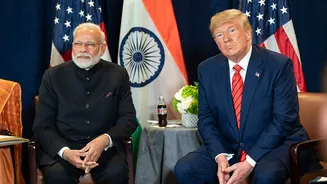
The convergence between India and the EU, however, could just be a beginning. The road ahead could require deft steering, say analysts, who link the rapprochement at least in part to US President Donald Trump’s tariffs. It remains to be seen how the relationship evolves once India and the EU make progress in their respective trade talks with the Trump administration.
A source in the know of the matter, however, told Firstpost that it would be incorrect to attribute the India-EU convergence largely to Trump’s tariffs. The source pointed out that the EU has long been India’s largest goods trading partner and several major European powers have historically been among India’s closest partners.
Within the 27‑member EU, France and Germany have emerged as the champions of the India-EU trade deal and have worked behind the scenes to rally support not only for the EU’s increased trade and economic engagement with India but also for strengthening security and strategic ties, Firstpost has learnt.
Historically, France has been among India’s closest partners and has been deeply tied to India’s security and defence establishments.
Firstpost understands that such ties with major EU members —including the increasingly close relationship with Germany— helped lay the groundwork for a deeper security and defence partnership between India and the EU. As a result,
India and the EU also signed a security and defence agreement at Tuesday’s India-EU Summit.
Trade to get a boost
It is no secret that both India and the EU have borne the brunt of Trump’s tariffs, with India facing 50 per cent duties —the highest in the world— and the EU hit with tariffs ranging from 10 to 50 per cent on various goods.
As both India and the EU lost access to the American market in several key sectors —textiles and seafood being India’s most affected— they found in each other 'shock absorbers'. Even before the trade deal, India had begun redirecting exports such as shrimps, seafood and textiles to the EU. Likewise, the EU found in India an alternative market for its exports.
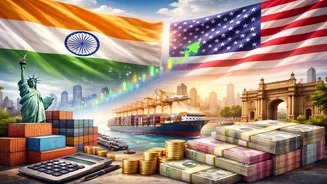
This mutually beneficial trade relationship is set to receive a significant boost under the India–EU trade deal, as tariffs are set to be lowered on most goods. As the India-EU negotiations have taken place in good faith —unlike the contentious talks with the Trump administration — the FTA has safeguarded India’s red lines on agriculture and dairy. At the same time, India has accommodated EU concerns on automobiles, spirits, wines, and machinery.
While India will gain substantially from improved access to the EU market for textiles, seafood, and chemical exports —sectors hit particularly hard by Trump’s tariffs— the EU will benefit from easier entry into India for high‑end machinery, aircraft and aircraft components, automobiles, electronics, and medical devices.
A win‑win arrangement to bring out the best in India and the EU
The India-EU FTA is likely to lower costs and expand trade rather than threaten domestic industries, according to the Global Trade Research Initiative (GTRI).
In its assessment, the think tank noted that the India–EU FTA will align Indian and European industries in a win‑win arrangement. Unlike other negotiations, it observed, the India–EU economic relationship stands out for its clarity of purpose.
The two sides are not rivals but partners operating on “different rungs of the value chain”, GTRI said.
India chiefly exports labour‑intensive, downstream and processing‑based products, while the EU supplies capital goods, advanced technology, and industrial inputs.
“This structural complementarity explains why an India–EU free trade agreement is likely to lower costs and expand trade rather than threaten domestic industry,” GTRI founder Ajay Srivastava told PTI.
ALSO READ: India-EU FTA could give major fillip to trade growth, boost exports by $50 billion
When India exports smartphones, garments and textiles, footwear, tyres, pharmaceuticals, auto parts, refined fuels, and cut diamonds to the EU, these largely replace EU imports from third countries rather than compete with Europe’s own manufacturing — much of which has long been offshored. Thus, India’s exports do not threaten Europe’s industrial base. Similarly, EU exports to India are poised to complement Indian industry rather than displace it.
The EU exports high‑end machinery, aircraft, electronic components, chemicals, medical devices, and metal scrap, which feed Indian factories, recycling firms and MSME clusters, raising productivity and export competitiveness, GTRI noted.
“Tariff elimination therefore compresses input costs instead of crowding out industry,” Srivastava said.
‘India and the EU to be shock absorbers’
As Trump’s tariffs have disrupted global trade and cut off large segments of Indian and EU exports to the United States, both sides have emerged as “shock absorbers” for each other, according to Ram Singh, professor of business and international trade at the Indian Institute of Foreign Trade (IIFT).
Singh said India and the EU have absorbed up to 25–30 per cent of exports that lost access to the American market because of tariffs.
Moreover, the India-EU FTA has strengthened their hand in their respective negotiations with the Trump administration, Singh said.
“The India-EU FTA is part of a broader strategy in which India has secured deals with the United Kingdom, Oman, and New Zealand, and is negotiating agreements with the Eurasian Economic Union (EEU) and Latin American countries such as Peru and Chile,” Singh said.
“The EU has also struck a deal with South America’s Mercosur bloc. These trade agreements give both India and the EU leverage in negotiations with the Trump administration, as it is becoming increasingly clear in Washington that the world is moving on without them and they risk being left behind.”
India–EU partnership to extend into the defence sector
At the India–EU Summit, the partnership is set to formally extend beyond trade and commerce.
Under the security and defence partnership to be announced, European powers are looking to establish manufacturing hubs in India in a mutually beneficial arrangement, Firstpost has learnt.
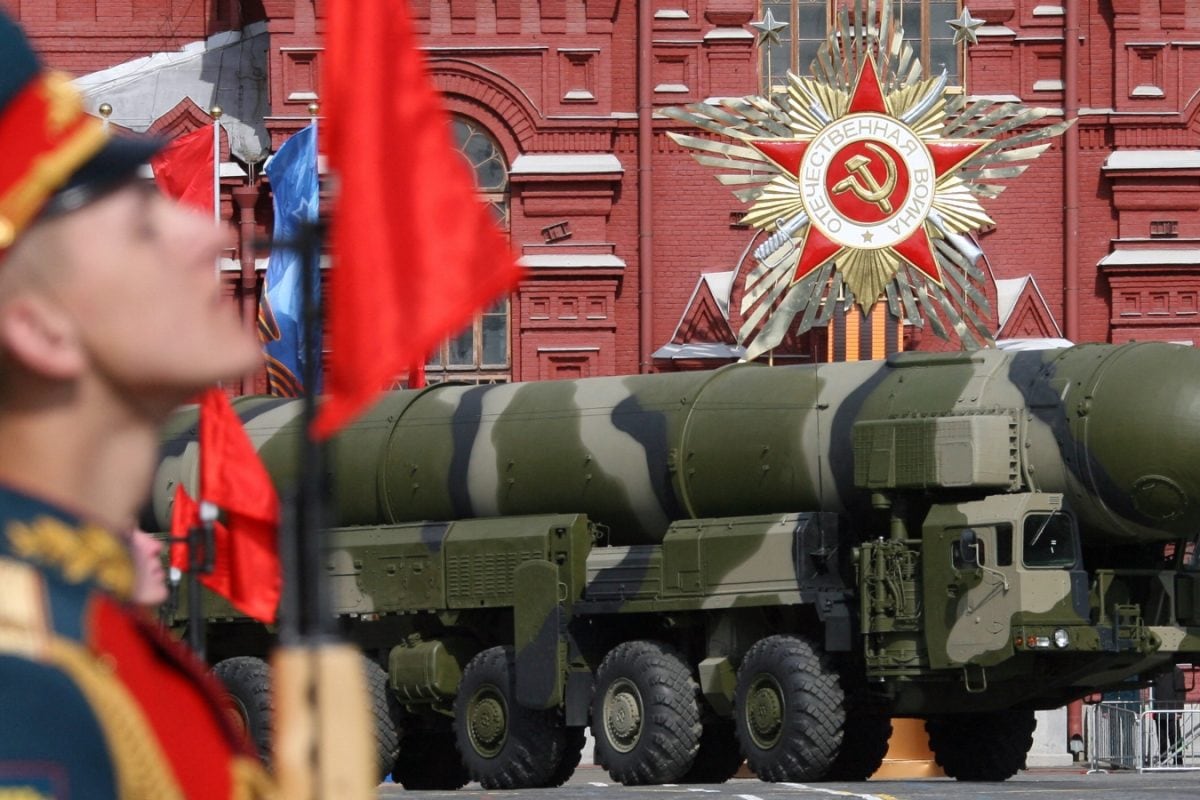
As Russian hybrid warfare has threatened European defence manufacturing units, establishing a second line of production in India would not only secure supplies for Europe at a distant location where Russian sabotage would be unlikely but would also provide India with investment and the technical know‑how of sophisticated arms production. This, a person familiar with the thinking behind the partnership told Firstpost, would support India’s Make in India initiative and wider indigenisation efforts in the defence sector.
The gaps
Even as India and the EU have focused on convergences that far outweigh divergences, four gaps remain unaddressed.
Firstpost has learnt that the four chapters yet to be concluded relate to the EU’s carbon tax, geographical indicators (GIs), the totalisation agreement, and data security.
Moreover, India and the EU differ on political issues such as their relationships with Russia. While the EU views Russia as a principal threat following the full‑scale invasion of Ukraine in 2022, India remains a key Russian partner and continues to buy Russian oil.
Whether these differences can remain compartmentalised from rising trade and defence cooperation remains to be seen.
India and the EU announced the India-EU Free Trade Agreement (FTA), a security and defence partnership, and a mobility agreement among 13 outcomes of the 16th India-EU Summit talks. They are also set to adopt the 2030 joint comprehensive strategic agenda for the India-EU relationship. This was affirmed in joint statements released by the two sides.
The India-EU trade deal and the defence and security partnership are not only big deals for the sheer size of the two economies and militaries, but also signal growing proximity of the two powers.
ALSO READ — ‘Mother of all deals’: India-EU partnership emerges as geopolitical stabiliser in fractured world
The convergence between India and the EU, however, could just be a beginning. The road ahead could require deft steering, say analysts, who link the rapprochement at least in part to US President Donald Trump’s tariffs. It remains to be seen how the relationship evolves once India and the EU make progress in their respective trade talks with the Trump administration.
A source in the know of the matter, however, told Firstpost that it would be incorrect to attribute the India-EU convergence largely to Trump’s tariffs. The source pointed out that the EU has long been India’s largest goods trading partner and several major European powers have historically been among India’s closest partners.
Within the 27‑member EU, France and Germany have emerged as the champions of the India-EU trade deal and have worked behind the scenes to rally support not only for the EU’s increased trade and economic engagement with India but also for strengthening security and strategic ties, Firstpost has learnt.
Historically, France has been among India’s closest partners and has been deeply tied to India’s security and defence establishments.
Firstpost understands that such ties with major EU members —including the increasingly close relationship with Germany— helped lay the groundwork for a deeper security and defence partnership between India and the EU. As a result,
The good news from India-EU deal
Trade to get a boost
It is no secret that both India and the EU have borne the brunt of Trump’s tariffs, with India facing 50 per cent duties —the highest in the world— and the EU hit with tariffs ranging from 10 to 50 per cent on various goods.
As both India and the EU lost access to the American market in several key sectors —textiles and seafood being India’s most affected— they found in each other 'shock absorbers'. Even before the trade deal, India had begun redirecting exports such as shrimps, seafood and textiles to the EU. Likewise, the EU found in India an alternative market for its exports.
This mutually beneficial trade relationship is set to receive a significant boost under the India–EU trade deal, as tariffs are set to be lowered on most goods. As the India-EU negotiations have taken place in good faith —unlike the contentious talks with the Trump administration — the FTA has safeguarded India’s red lines on agriculture and dairy. At the same time, India has accommodated EU concerns on automobiles, spirits, wines, and machinery.
While India will gain substantially from improved access to the EU market for textiles, seafood, and chemical exports —sectors hit particularly hard by Trump’s tariffs— the EU will benefit from easier entry into India for high‑end machinery, aircraft and aircraft components, automobiles, electronics, and medical devices.
A win‑win arrangement to bring out the best in India and the EU
The India-EU FTA is likely to lower costs and expand trade rather than threaten domestic industries, according to the Global Trade Research Initiative (GTRI).
In its assessment, the think tank noted that the India–EU FTA will align Indian and European industries in a win‑win arrangement. Unlike other negotiations, it observed, the India–EU economic relationship stands out for its clarity of purpose.
The two sides are not rivals but partners operating on “different rungs of the value chain”, GTRI said.
India chiefly exports labour‑intensive, downstream and processing‑based products, while the EU supplies capital goods, advanced technology, and industrial inputs.
“This structural complementarity explains why an India–EU free trade agreement is likely to lower costs and expand trade rather than threaten domestic industry,” GTRI founder Ajay Srivastava told PTI.
ALSO READ: India-EU FTA could give major fillip to trade growth, boost exports by $50 billion
When India exports smartphones, garments and textiles, footwear, tyres, pharmaceuticals, auto parts, refined fuels, and cut diamonds to the EU, these largely replace EU imports from third countries rather than compete with Europe’s own manufacturing — much of which has long been offshored. Thus, India’s exports do not threaten Europe’s industrial base. Similarly, EU exports to India are poised to complement Indian industry rather than displace it.
The EU exports high‑end machinery, aircraft, electronic components, chemicals, medical devices, and metal scrap, which feed Indian factories, recycling firms and MSME clusters, raising productivity and export competitiveness, GTRI noted.
“Tariff elimination therefore compresses input costs instead of crowding out industry,” Srivastava said.
‘India and the EU to be shock absorbers’
As Trump’s tariffs have disrupted global trade and cut off large segments of Indian and EU exports to the United States, both sides have emerged as “shock absorbers” for each other, according to Ram Singh, professor of business and international trade at the Indian Institute of Foreign Trade (IIFT).
Singh said India and the EU have absorbed up to 25–30 per cent of exports that lost access to the American market because of tariffs.
Moreover, the India-EU FTA has strengthened their hand in their respective negotiations with the Trump administration, Singh said.
“The India-EU FTA is part of a broader strategy in which India has secured deals with the United Kingdom, Oman, and New Zealand, and is negotiating agreements with the Eurasian Economic Union (EEU) and Latin American countries such as Peru and Chile,” Singh said.
“The EU has also struck a deal with South America’s Mercosur bloc. These trade agreements give both India and the EU leverage in negotiations with the Trump administration, as it is becoming increasingly clear in Washington that the world is moving on without them and they risk being left behind.”
India–EU partnership to extend into the defence sector
At the India–EU Summit, the partnership is set to formally extend beyond trade and commerce.
Under the security and defence partnership to be announced, European powers are looking to establish manufacturing hubs in India in a mutually beneficial arrangement, Firstpost has learnt.
As Russian hybrid warfare has threatened European defence manufacturing units, establishing a second line of production in India would not only secure supplies for Europe at a distant location where Russian sabotage would be unlikely but would also provide India with investment and the technical know‑how of sophisticated arms production. This, a person familiar with the thinking behind the partnership told Firstpost, would support India’s Make in India initiative and wider indigenisation efforts in the defence sector.
What’s not-so good
The gaps
Even as India and the EU have focused on convergences that far outweigh divergences, four gaps remain unaddressed.
Firstpost has learnt that the four chapters yet to be concluded relate to the EU’s carbon tax, geographical indicators (GIs), the totalisation agreement, and data security.
Moreover, India and the EU differ on political issues such as their relationships with Russia. While the EU views Russia as a principal threat following the full‑scale invasion of Ukraine in 2022, India remains a key Russian partner and continues to buy Russian oil.
Whether these differences can remain compartmentalised from rising trade and defence cooperation remains to be seen.