





What is the story about?
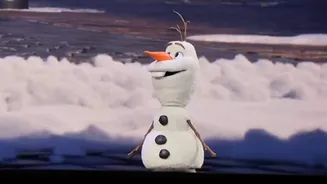
Disney is about to turn a beloved animated snowman into a real-world, walking, talking companion. Later this month, visitors to Disneyland Paris will meet Olaf not on a screen, but strolling freely through the park, chatting, gesturing, and bringing a touch of Arendelle magic into the physical world.
Developed by Disney Research & Development, this new robotic version of Olaf is designed to do something theme park characters have rarely achieved: move independently without tracks, puppeteers, or obvious mechanical constraints. The debut on March 29 inside the World of Frozen marks a significant step in Disney’s long-standing ambition to blur the line between animation and reality.
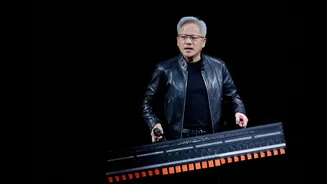
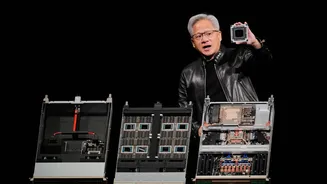
First teased in the series “We Call It Imagineering,” Olaf made a special appearance at the Nvidia GTC 2026.
Unlike traditional theme park animatronics, which are usually fixed in place, this Olaf can roam freely among guests. Powered by NVIDIA Newton, the robot uses advanced simulation and learning techniques to replicate the whimsical, slightly exaggerated movements fans recognise from the Frozen films.
Olaf can speak, react to guests, and express emotions through a fully articulated face. His eyes move, his mouth forms words, and his eyebrows lift to convey curiosity or excitement. Even his signature detachable features have been recreated. His twig arms, carrot nose, buttons, and hair are magnetically attached, allowing for playful “character gags” where parts can shift or wobble just like in the films.
The goal was not just realism, but personality. Disney’s Imagineers worked closely with animators to ensure that Olaf’s charm translated into physical movement. That means slightly bouncy steps, exaggerated gestures, and a sense of lightness, even though the robot itself is a complex piece of engineering.
Bringing Olaf to life posed a unique challenge. In the Frozen films, Olaf’s body defies physics. His snowball feet float beneath him, and his proportions are far from anything a typical robot could manage.
To recreate this illusion, engineers designed a clever hidden mechanism. Olaf actually walks on two asymmetric legs concealed beneath a soft foam “skirt” that forms his lower snowball. This allows him to appear as though he is gliding or shuffling naturally, without visible limbs.
Inside, a network of linkages and actuators drives his movements. His arms use spherical five-bar linkages powered by dual actuators, enabling fluid, expressive gestures. His head and facial features are controlled by smaller actuators in the neck and torso, allowing for nuanced expressions.
The most striking innovation lies in how the team tackled Olaf’s unusual proportions. With a large head and tiny feet, maintaining balance would normally be difficult. The solution involved reinforcement learning, where the robot was trained using animation references to move in ways that feel true to the character rather than strictly realistic.
According to Disney’s research team, Olaf became an “ideal platform for innovation” in stylised motion control. In simple terms, the robot was taught not just how to walk, but how to walk like Olaf.
For visitors, however, the complexity will remain invisible. What they will see is a cheerful snowman wandering through the park, cracking jokes, interacting with families, and turning a familiar animated figure into a tangible experience.
With plans to expand the technology to other parks, including Hong Kong Disneyland, Olaf may just be the beginning of a new generation of free-roaming, character-driven robots. If successful, it could redefine how theme parks bring stories to life, one step at a time.
Developed by Disney Research & Development, this new robotic version of Olaf is designed to do something theme park characters have rarely achieved: move independently without tracks, puppeteers, or obvious mechanical constraints. The debut on March 29 inside the World of Frozen marks a significant step in Disney’s long-standing ambition to blur the line between animation and reality.
First teased in the series “We Call It Imagineering,” Olaf made a special appearance at the Nvidia GTC 2026.
Olaf made a special appearance on stage with NVIDIA CEO Jensen Huang at #NVIDIAGTC.☃️
NVIDIA and Disney Research are working together to bring this beloved character into the real world using Newton, the open-source physics engine. pic.twitter.com/M8L8asNqh3
— NVIDIA Robotics (@NVIDIARobotics) March 17, 2026
Olaf, the snowman that walks, talks and jokes
Unlike traditional theme park animatronics, which are usually fixed in place, this Olaf can roam freely among guests. Powered by NVIDIA Newton, the robot uses advanced simulation and learning techniques to replicate the whimsical, slightly exaggerated movements fans recognise from the Frozen films.
Olaf can speak, react to guests, and express emotions through a fully articulated face. His eyes move, his mouth forms words, and his eyebrows lift to convey curiosity or excitement. Even his signature detachable features have been recreated. His twig arms, carrot nose, buttons, and hair are magnetically attached, allowing for playful “character gags” where parts can shift or wobble just like in the films.
The goal was not just realism, but personality. Disney’s Imagineers worked closely with animators to ensure that Olaf’s charm translated into physical movement. That means slightly bouncy steps, exaggerated gestures, and a sense of lightness, even though the robot itself is a complex piece of engineering.
Engineering the impossible illusion
Bringing Olaf to life posed a unique challenge. In the Frozen films, Olaf’s body defies physics. His snowball feet float beneath him, and his proportions are far from anything a typical robot could manage.
To recreate this illusion, engineers designed a clever hidden mechanism. Olaf actually walks on two asymmetric legs concealed beneath a soft foam “skirt” that forms his lower snowball. This allows him to appear as though he is gliding or shuffling naturally, without visible limbs.
Inside, a network of linkages and actuators drives his movements. His arms use spherical five-bar linkages powered by dual actuators, enabling fluid, expressive gestures. His head and facial features are controlled by smaller actuators in the neck and torso, allowing for nuanced expressions.
The most striking innovation lies in how the team tackled Olaf’s unusual proportions. With a large head and tiny feet, maintaining balance would normally be difficult. The solution involved reinforcement learning, where the robot was trained using animation references to move in ways that feel true to the character rather than strictly realistic.
According to Disney’s research team, Olaf became an “ideal platform for innovation” in stylised motion control. In simple terms, the robot was taught not just how to walk, but how to walk like Olaf.
For visitors, however, the complexity will remain invisible. What they will see is a cheerful snowman wandering through the park, cracking jokes, interacting with families, and turning a familiar animated figure into a tangible experience.
With plans to expand the technology to other parks, including Hong Kong Disneyland, Olaf may just be the beginning of a new generation of free-roaming, character-driven robots. If successful, it could redefine how theme parks bring stories to life, one step at a time.