





What is the story about?
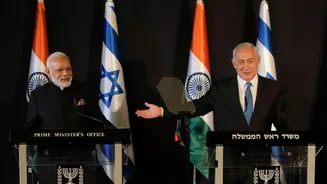
Prime Minister Narendra Modi is expected to arrive in Israel on February 25 for a two-day visit, during which he is likely to address the Knesset and meet Benjamin Netanyahu and Isaac Herzog. The visit, scheduled for Wednesday, will be his second to the country since 2017.
Netanyahu described Modi’s upcoming visit as “historic,” highlighting the deepening partnership between the two countries across innovation, security, and regional cooperation.
“This week, expression will be given to the special relationship that has been forged over recent years between Israel and the global power that is India, and between myself and its leader, Prime Minister Modi,” Netanyahu said at the start of the weekly government meeting.
The visit will mark the first-ever address by an Indian Prime Minister in the Knesset plenum.
According to the schedule, proceedings will begin at 16:30 with an official welcome ceremony in the Weil Courtyard, attended by Knesset Speaker Amir Ohana and his partner, and Prime Minister Netanyahu and his wife. The ceremony will be open only to official photographers and the Knesset Channel, and will be broadcast live.
At 16:35, Modi will sign the Knesset guestbook in the Chagall State Hall, followed by a joint photograph at 16:40 in the Speaker’s Office.
A special plenary session in honour of the Prime Minister of India will be held at 17:00. Speakers will include Speaker Ohana, Prime Minister Netanyahu, Leader of the Opposition Yair Lapid, and Prime Minister Modi.
“We are personal friends; we speak frequently on the phone and visit one another. I have visited India, and Modi has visited here. We waded together in the waters of the Mediterranean, and much water has flowed since then in the Mediterranean, the Ganges, and the Jordan, though less in the Jordan,” Netanyahu said.
Modi’s expected visit has become entangled in Israel’s domestic politics, with Lapid threatening to boycott the parliamentary address unless Supreme Court President Yitzhak Amit is invited, in line with convention.
Lapid insisted that Amit must be invited when Modi addresses the House, with opposition sources saying the government is “intentionally trying to force us into a bad situation.”
“We spoke to the Indian embassy ... They are in panic from this. Prime Minister of India, Modi, is invited to the Knesset next Wednesday, something that is a matter of honour for all of us,” Lapid said.
“If the coalition boycotts the President of the High Court during the special session with the Prime Minister of India, we will not be able to attend the debate,” he added, warning that Amit’s continued exclusion would cause “enormous embarrassment” to the legislature.
“We do not want India to be embarrassed by us, with the Prime Minister of a nation of a billion people standing here in front of a half-empty Knesset,” Lapid said.
Israel’s domestic politics remains sharply divided over a judicial overhaul that has split public opinion for more than two years and triggered large protests before the October 7 attack by Hamas.
Following Amit’s election as court President in January 2025, Justice Minister Yariv Levin has refused to recognise his authority as Chief Justice and has declined to meet him. His name has also not been published as Chief Justice in the State Gazette, as required by law.
Netanyahu described Modi’s upcoming visit as “historic,” highlighting the deepening partnership between the two countries across innovation, security, and regional cooperation.
“This week, expression will be given to the special relationship that has been forged over recent years between Israel and the global power that is India, and between myself and its leader, Prime Minister Modi,” Netanyahu said at the start of the weekly government meeting.
The visit will mark the first-ever address by an Indian Prime Minister in the Knesset plenum.
Programme at the Knesset
According to the schedule, proceedings will begin at 16:30 with an official welcome ceremony in the Weil Courtyard, attended by Knesset Speaker Amir Ohana and his partner, and Prime Minister Netanyahu and his wife. The ceremony will be open only to official photographers and the Knesset Channel, and will be broadcast live.
At 16:35, Modi will sign the Knesset guestbook in the Chagall State Hall, followed by a joint photograph at 16:40 in the Speaker’s Office.
A special plenary session in honour of the Prime Minister of India will be held at 17:00. Speakers will include Speaker Ohana, Prime Minister Netanyahu, Leader of the Opposition Yair Lapid, and Prime Minister Modi.
“We are personal friends; we speak frequently on the phone and visit one another. I have visited India, and Modi has visited here. We waded together in the waters of the Mediterranean, and much water has flowed since then in the Mediterranean, the Ganges, and the Jordan, though less in the Jordan,” Netanyahu said.
Visit caught in domestic political row
Modi’s expected visit has become entangled in Israel’s domestic politics, with Lapid threatening to boycott the parliamentary address unless Supreme Court President Yitzhak Amit is invited, in line with convention.
Lapid insisted that Amit must be invited when Modi addresses the House, with opposition sources saying the government is “intentionally trying to force us into a bad situation.”
“We spoke to the Indian embassy ... They are in panic from this. Prime Minister of India, Modi, is invited to the Knesset next Wednesday, something that is a matter of honour for all of us,” Lapid said.
“If the coalition boycotts the President of the High Court during the special session with the Prime Minister of India, we will not be able to attend the debate,” he added, warning that Amit’s continued exclusion would cause “enormous embarrassment” to the legislature.
“We do not want India to be embarrassed by us, with the Prime Minister of a nation of a billion people standing here in front of a half-empty Knesset,” Lapid said.
Judicial dispute behind the controversy
Israel’s domestic politics remains sharply divided over a judicial overhaul that has split public opinion for more than two years and triggered large protests before the October 7 attack by Hamas.
Following Amit’s election as court President in January 2025, Justice Minister Yariv Levin has refused to recognise his authority as Chief Justice and has declined to meet him. His name has also not been published as Chief Justice in the State Gazette, as required by law.