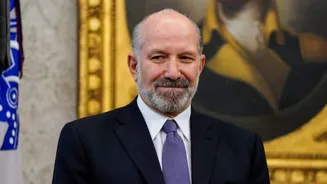

Speaking on the sidelines of the World Economic Forum in Davos, Lutnick said the Trump administration was sending a clear message that the existing global economic model no longer works.
“Globalisation has failed the West and the United States of America. It’s a failed policy,” Lutnick said, adding that while globalisation was promoted as a way to improve global prosperity, it ultimately hollowed out national industrial bases.
He said Western economies had prioritised cheap labour, far-shoring supply chains, and overseas production, weakening domestic manufacturing and economic resilience in the process.
Lutnick said the Trump administration was advancing an alternative model under its ‘America First’ policy, which places domestic workers and national interests at the centre of economic decision-making. He added that this approach was not just relevant for the United States, but something other countries should also consider.
“Our workers come first,” Lutnick said, linking economic policy directly with national sovereignty.
He argued that countries should not offshore industries critical to their independence, such as pharmaceuticals, semiconductors, and core manufacturing, warning that over-reliance on foreign suppliers undermines sovereignty. “If you are going to be dependent on someone, it had better be your best allies,” he said.
Lutnick also criticised what he described as policy contradictions in the West, particularly in Europe’s approach to energy and climate goals. Questioning Europe’s push for net-zero targets, he said committing to aggressive decarbonisation while lacking domestic battery manufacturing capacity risks deepening dependence on China, which dominates global battery production.
Overall, Lutnick said the America First approach represents a fundamental shift away from traditional Western economic thinking, emphasising national control, domestic industry, and strategic autonomy over globalised supply chains.