


What is the story about?
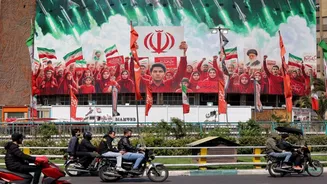
With an 8 pm ET deadline set by US President Donald Trump for Iran to accept his terms, the world is bracing for a major escalation as both sides have signalled dropping any restraint in their attacks after the deadline.
Trump on Monday threatened to wipe out Iran in its entirety, saying the "entire country can be taken out in one night, and that night might be tomorrow night".
Trump further said, "Every power plant will be out of business, burning, exploding and never to be used again. I mean complete demolition by 12 o'clock. It will happen over a period of four hours if we want it to."
Follow our live coverage of the US-Israeli war on Iran here
Instead of ceding ground, Iran said any American and Israeli attacks on civilian targets will be responded "much more crushingly and extensively, and the enemy’s losses and damages from persisting with this approach will be multiplied".
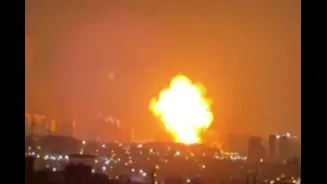
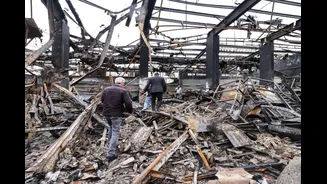
The United States and Israel have neither toned down their attacks on infrastructure nor senior Iranian figures, but Iran has not stopped striking across the Gulf.
In the latest such assassination, a US-Israeli strike on Monday killed Major General Seyed Majid Khademi, the intelligence chief of the Islamic Revolutionary Guards Corps (IRGC) of Iran. But Iran did not show any sign of accepting Trump's terms.
If Trump would go ahead with his threat of nationwide strikes on Iran's civilian infrastructure,
Gulf countries fear that Iran could drop all restraint to hit their vulnerable energy and desalination infrastructure
. While attacks on oil and gas facilities have already plunged the region's economy, strikes on desalination plant could cripple the region's water supply — major cities like Dubai, Abu Dhabi, or Doha, depend almost entirely on desalination plants for drinking water.
Overall, desalination plants provide drinking water to 90 per cent of Kuwait, 86 per cent of Oman, and 70 per cent of Saudi Arabia, according to Associated Press.
Economically, the Gulf region is expected to slip into recession this year and see contraction of -0.2 per cent, with Qatar and Kuwait suffering the highest GDP losses of around 13-15 per cent and suffering damages that could take up to five years to be repaired.
Observers have noted that both the United States and Iran believe they are winning.
On part of Trump, Iran's leadership has been taken out, military has been battered, and critical infrastructure has been shattered. In his worldview, Iran does not have a leg to stand on and must make a deal.
On part of Iran, however, the regime continues to function and there does not appear to be any internal revolt. As Iran's idea of victory in the asymmetrical war is quite different, it feels it's winning despite its losses.
Such a situation where both the sides feel they are winning is the "greatest enemy" of a deal, noted Adrian Blomfield in an article for The Daily Telegraph.
"If both sides still believe they can win, neither has the incentive to make the compromises needed to end the war...Despite US-Israeli military dominance, both sides continue to act as if victory remains within reach, making a negotiated end to the conflict unlikely in the near term," noted Blomfield.
As a result, the last-ditch effort led by Pakistan to bring the two sides to at least a temporary truce appears to have failed.
Trump on Monday threatened to wipe out Iran in its entirety, saying the "entire country can be taken out in one night, and that night might be tomorrow night".
Trump further said, "Every power plant will be out of business, burning, exploding and never to be used again. I mean complete demolition by 12 o'clock. It will happen over a period of four hours if we want it to."
Follow our live coverage of the US-Israeli war on Iran here
Instead of ceding ground, Iran said any American and Israeli attacks on civilian targets will be responded "much more crushingly and extensively, and the enemy’s losses and damages from persisting with this approach will be multiplied".
US & Israel keep hitting, Iran keeps imposing costs on Gulf
The United States and Israel have neither toned down their attacks on infrastructure nor senior Iranian figures, but Iran has not stopped striking across the Gulf.
In the latest such assassination, a US-Israeli strike on Monday killed Major General Seyed Majid Khademi, the intelligence chief of the Islamic Revolutionary Guards Corps (IRGC) of Iran. But Iran did not show any sign of accepting Trump's terms.
If Trump would go ahead with his threat of nationwide strikes on Iran's civilian infrastructure,
Overall, desalination plants provide drinking water to 90 per cent of Kuwait, 86 per cent of Oman, and 70 per cent of Saudi Arabia, according to Associated Press.
Economically, the Gulf region is expected to slip into recession this year and see contraction of -0.2 per cent, with Qatar and Kuwait suffering the highest GDP losses of around 13-15 per cent and suffering damages that could take up to five years to be repaired.
A peace deal eludes as both sides eye victory
Observers have noted that both the United States and Iran believe they are winning.
On part of Trump, Iran's leadership has been taken out, military has been battered, and critical infrastructure has been shattered. In his worldview, Iran does not have a leg to stand on and must make a deal.
On part of Iran, however, the regime continues to function and there does not appear to be any internal revolt. As Iran's idea of victory in the asymmetrical war is quite different, it feels it's winning despite its losses.
Such a situation where both the sides feel they are winning is the "greatest enemy" of a deal, noted Adrian Blomfield in an article for The Daily Telegraph.
"If both sides still believe they can win, neither has the incentive to make the compromises needed to end the war...Despite US-Israeli military dominance, both sides continue to act as if victory remains within reach, making a negotiated end to the conflict unlikely in the near term," noted Blomfield.
As a result, the last-ditch effort led by Pakistan to bring the two sides to at least a temporary truce appears to have failed.