







What is the story about?
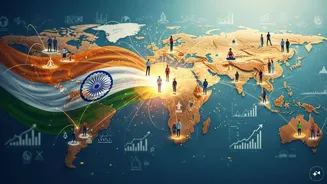
India’s diaspora, now estimated at over 35 million people across more than 200 countries, is emerging as a powerful global force with a combined annual income of $730 billion, according to a new report that calls for a shift beyond the traditional focus on remittances.
Titled India and its Diaspora: Partners in Progress, the report by Indiaspora was released in March and marks the first comprehensive effort to outline actionable strategies for deeper diaspora engagement.
The report highlights a transition in the role of the Indian diaspora—from being primarily a source of remittances to becoming a key partner in investment, knowledge exchange, technology collaboration, and global networking. It notes that while remittances remain significant, the broader potential of the diaspora is yet to be fully tapped.
At the same time, the report identifies structural barriers within India that continue to limit deeper engagement, suggesting the need for policy reforms and institutional support to unlock this potential.
The findings were presented at the Indiaspora Forum 2026 in Bengaluru, where Indiaspora founder MR Rangaswami underscored the rising political influence of the Indian diaspora, particularly in the United States.
He noted that more than 350 Indian-origin candidates contested public office in a recent US election cycle, reflecting the growing clout of the roughly five million-strong Indian community in the country.
The report includes insights from prominent global Indian figures such as Indra Nooyi, Vinod Khosla, and Romesh Wadhwani, among others.
Summing up the evolving dynamic, Rangaswami said: “In 1991, India opened its doors to the world. Today, the world is knocking on India’s door.”
Titled India and its Diaspora: Partners in Progress, the report by Indiaspora was released in March and marks the first comprehensive effort to outline actionable strategies for deeper diaspora engagement.
From remittances to global partnerships
The report highlights a transition in the role of the Indian diaspora—from being primarily a source of remittances to becoming a key partner in investment, knowledge exchange, technology collaboration, and global networking. It notes that while remittances remain significant, the broader potential of the diaspora is yet to be fully tapped.
At the same time, the report identifies structural barriers within India that continue to limit deeper engagement, suggesting the need for policy reforms and institutional support to unlock this potential.
Growing political and economic influence
The findings were presented at the Indiaspora Forum 2026 in Bengaluru, where Indiaspora founder MR Rangaswami underscored the rising political influence of the Indian diaspora, particularly in the United States.
He noted that more than 350 Indian-origin candidates contested public office in a recent US election cycle, reflecting the growing clout of the roughly five million-strong Indian community in the country.
Voices shaping the report
The report includes insights from prominent global Indian figures such as Indra Nooyi, Vinod Khosla, and Romesh Wadhwani, among others.
Summing up the evolving dynamic, Rangaswami said: “In 1991, India opened its doors to the world. Today, the world is knocking on India’s door.”