






What is the story about?
Barely two weeks after the United States and Iran signed a memorandum intended to halt months of hostilities, the agreement is encountering challenges.
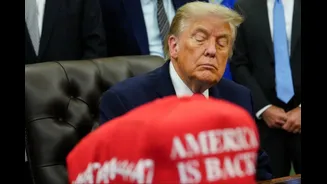
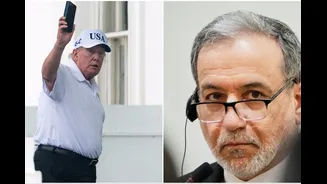
The interim arrangement, signed on June 17, by US President Donald Trump and Iranian President Masoud Pezeshkian, was expected to create space for negotiations on broader disputes ranging from sanctions relief to Iran's nuclear programme.
Instead, disagreement over a single provision governing one of the world's most strategically important waterways is threatening to push both countries back to direct military confrontation.
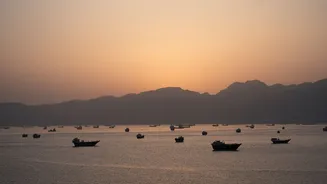
The latest crisis revolves around Article 5 of the memorandum of understanding (MoU), which lays down the framework for reopening the Strait of Hormuz after months of disruption caused by the conflict that began in late February.
The narrow maritime passage is among the most vital shipping lanes in the world, carrying roughly one-fifth to one-quarter of global crude oil and liquefied natural gas (LNG) exports.
Following months of fighting that effectively blocked normal maritime movement through the waterway, restoring commercial navigation became Washington's principal condition for entering into the 60-day interim arrangement.
The closure had disrupted global energy flows and affected one of the world's busiest maritime trade routes.
Article 5 establishes a series of obligations intended to restore safe commercial shipping while creating a framework for longer-term management of the strait.
Under the agreement, Iran committed itself to facilitating the safe movement of commercial vessels travelling between the Persian Gulf and the Sea of Oman for a period of 60 days without imposing any transit charges.
The agreement specifically states, "Iran will make arrangements using its best efforts for the safe passage of commercial vessels with no charge for 60 days only from the Persian Gulf to the Sea of Oman and vice versa."
Beyond guaranteeing navigation, the clause also requires Tehran to undertake extensive maritime clearance operations. Military obstacles created during months of conflict are to be removed, while demining activities throughout the shipping lanes must be completed within a 30-day timeframe to restore normal commercial traffic.
It also commits Iran to beginning discussions with the Sultanate of Oman and other Persian Gulf coastal states on establishing a longer-term governance structure for the Strait of Hormuz. Those future arrangements are expected to align with international law while recognising the sovereign rights of states bordering the strategic waterway.
While both governments publicly support reopening the Strait of Hormuz, they fundamentally disagree over how vessels should move through the waterway during the interim period and who should supervise those movements.
The United States has argued for routing commercial shipping through alternative transit corridors located closer to Oman's territorial waters. Washington considers this southern route a safer option while maritime security conditions remain unstable.
According to the American position, navigation should broadly resemble pre-war international shipping practices, allowing vessels to transit without being subjected to unilateral operational control by either party.
Iran, however, has interpreted Article 5 differently. Tehran maintains that the memorandum recognises its authority over operations within the Strait of Hormuz during the ongoing clearance process.
Iranian officials insist that commercial traffic should continue using the northern shipping corridor situated within Iranian territorial waters rather than shifting toward routes adjacent to Oman.
Iranian Foreign Minister Abbas Araghchi rejected attempts to establish separate navigation arrangements outside Iranian supervision.
"Any attempt to establish new or separate arrangements from those currently being carried out by the Islamic Republic of Iran will only lead to further complications, delay the reopening of the Strait of Hormuz and increase the level of tension," Araghchi said.
The disagreement escalated after a multinational maritime organisation operating under the oversight of the US Navy announced plans to expand a shipping route running closer to Oman for vessels entering and leaving the Gulf.
From Washington's perspective, such routing represented a practical measure aimed at reducing risks while maritime security operations continued.
Iran viewed the move very differently. Tehran regarded the proposal as an attempt to establish an alternative operational system outside its authority, arguing that such arrangements undermined the implementation of Article 5.
Complicating matters further is the unique legal status of the Strait of Hormuz itself. Although the waterway passes through the territorial waters of both Iran and Oman, it has long been regarded internationally as a passage open to global navigation.
According to developments preceding the latest military exchanges, the Islamic Revolutionary Guard Corps (IRGC) warned commercial shipping that only the northern corridor would be recognised as an authorised route.
Iranian forces subsequently compelled four commercial tankers travelling along the southern route near Omani waters to reverse course. In recent days, Iran also twice targeted vessels navigating near the Omani side of the strait.
The exchanges accelerated further after an Iranian drone struck a merchant vessel off the coast of Oman on Thursday, triggering American military retaliation.
The confrontation deepened over the following days. On June 26, the Singapore-flagged tanker Ever Lovely was hit by a loitering munition while passing through the Strait of Hormuz.
A day later, another commercial vessel — the Panama-flagged tanker Kiku, carrying crude oil for Qatar's state-owned energy company — was struck in what was described as an unclaimed drone attack.
The attack on the Qatar-linked vessel prompted another round of US military action. American forces announced strikes targeting what they described as Iranian military infrastructure, including surveillance installations, communications systems, air defence positions, drone storage facilities and capabilities associated with naval mine deployment.
Separately, US Central Command said operations also targeted missile infrastructure, coastal radar installations and drone depots located in southern Iran.
Trump accused Tehran of breaching the interim agreement and warned of further military consequences if attacks continued. "If that happens, the Islamic Republic of Iran will no longer exist!" Trump wrote.
He also warned separately that continued violations could leave the United States with no option but to "be forced to militarily complete the job."
Iran rejected the American position, arguing instead that the US strikes themselves constituted a breach of the memorandum, particularly its commitment to halt military operations.
Iran's Revolutionary Guard claimed responsibility for missile and drone attacks targeting Bahrain and Kuwait following the latest American strikes.
Kuwait, which hosts a significant US military installation, said its air defence systems intercepted Iranian drones and two incoming missiles shortly after the American operation inside Iran. Authorities reported no casualties or physical damage.
Bahrain confirmed that Iranian strikes damaged a residential building near Bahrain International Airport. Although no fatalities were reported, the incident occurred in a country that hosts the headquarters of the US Navy's Fifth Fleet, even though the affected building was not located near the naval base.
Bahrain's Foreign Ministry condemned the attacks, saying that it was "a dangerous escalation that reveals that what Tehran is doing is not a passing act, nor an isolated incident, but rather a deliberate approach and a systematic pattern of repeated aggression."
Meanwhile, Qatar reported that one civilian had been killed and another injured after shrapnel linked to "military operations in the area" struck following the failure of a vessel to return at its scheduled time on Saturday. Authorities did not provide additional details regarding the incident.
After a few days of direct exchanges that brought the interim agreement close to collapse, both Washington and Tehran moved to prevent a further escalation by agreeing to suspend military operations on June 29.
Senior officials from both countries confirmed a limited pause in kinetic activity, creating an opportunity for diplomats to return to the negotiating table before the wider framework unraveled.
The temporary stand-down has also allowed commercial vessels to continue transiting the Strait of Hormuz under what officials described as a fragile status quo.
While maritime traffic has not returned to normal levels, the pause in hostilities is intended to provide enough breathing room for technical negotiators to resolve the disagreement surrounding Article 5.
The agreement to halt the immediate exchange of attacks also helped calm financial markets that had reacted sharply to the renewed fighting, although analysts warned that the situation remained highly uncertain.
Despite the temporary reduction in military activity, neither side indicated that its interpretation of Article 5 had changed. Instead, both governments agreed that the dispute would now be addressed through emergency negotiations.
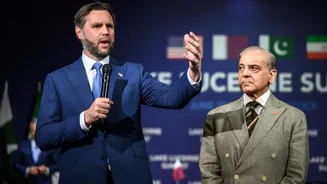
Pakistan confirmed that discussions between the United States and Iran would resume on Tuesday, June 30. The Trump administration likewise stated that the negotiations had not been abandoned and that technical discussions remained on schedule.
The venue for those negotiations will be Doha, Qatar.
Unlike previous rounds of diplomacy that focused on achieving a ceasefire, these talks are expected to concentrate almost entirely on the practical implementation of Article 5 and the operation of the Strait of Hormuz during the remainder of the interim agreement.
One of the principal objectives will be to establish mutually acceptable transit arrangements for commercial vessels moving through the waterway.
Negotiators are also expected to discuss the role that third-party actors could play in supervising maritime operations. Among the possibilities under consideration are enhanced involvement by Oman or technical participation by the International Maritime Organisation (IMO), particularly while demining work continues.
Another important issue concerns the extent of Iranian oversight during the remaining clearance period. Clarifying the scope of Tehran's authority without undermining international shipping operations has emerged as one of the central diplomatic challenges facing both delegations.
The wider agreement extends far beyond the Strait of Hormuz Although recent attention has focused almost exclusively on maritime security, Article 5 represents only one part of a much broader diplomatic understanding reached earlier this month.
Among the most significant components of the agreement is phased Iranian access to approximately $20 billion in hard currency. That package includes an estimated $12 billion in previously frozen assets, representing one of the most substantial financial provisions contained within the interim framework.
The memorandum also envisions negotiations on an extendable framework governing Iran's nuclear programme. Rather than seeking an immediate permanent settlement, the agreement establishes a process through which limitations on Iran's nuclear activities can be discussed during the 60-day period and potentially extended through subsequent negotiations.
Another major issue scheduled for discussion concerns the possible easing of American non-nuclear sanctions imposed on Iran.
Sanctions relief has long been among Tehran's principal objectives, while Washington has maintained that any changes would depend on progress across multiple areas covered by the interim agreement.
The talks are also expected to include discussions on removing the US blockade affecting Iranian ports, another issue identified by both sides as part of the ongoing negotiations.
In addition, negotiators will address the future of Iran's stockpile of highly enriched uranium, making the maritime dispute only one element within a much broader diplomatic process.
However, another regional conflict threatens to complicate those efforts. According to the terms of the memorandum, fighting in Lebanon must end before certain elements of the broader agreement can proceed.
Continued violence there therefore represents another challenge that could affect implementation even if the immediate dispute over the Strait of Hormuz is resolved.
Also Watch:
With inputs from agencies
The interim arrangement, signed on June 17, by US President Donald Trump and Iranian President Masoud Pezeshkian, was expected to create space for negotiations on broader disputes ranging from sanctions relief to Iran's nuclear programme.
Instead, disagreement over a single provision governing one of the world's most strategically important waterways is threatening to push both countries back to direct military confrontation.
The latest crisis revolves around Article 5 of the memorandum of understanding (MoU), which lays down the framework for reopening the Strait of Hormuz after months of disruption caused by the conflict that began in late February.
The narrow maritime passage is among the most vital shipping lanes in the world, carrying roughly one-fifth to one-quarter of global crude oil and liquefied natural gas (LNG) exports.
Why Article 5 has become the centre of the dispute
Following months of fighting that effectively blocked normal maritime movement through the waterway, restoring commercial navigation became Washington's principal condition for entering into the 60-day interim arrangement.
The closure had disrupted global energy flows and affected one of the world's busiest maritime trade routes.
Article 5 establishes a series of obligations intended to restore safe commercial shipping while creating a framework for longer-term management of the strait.
Under the agreement, Iran committed itself to facilitating the safe movement of commercial vessels travelling between the Persian Gulf and the Sea of Oman for a period of 60 days without imposing any transit charges.
The agreement specifically states, "Iran will make arrangements using its best efforts for the safe passage of commercial vessels with no charge for 60 days only from the Persian Gulf to the Sea of Oman and vice versa."
Beyond guaranteeing navigation, the clause also requires Tehran to undertake extensive maritime clearance operations. Military obstacles created during months of conflict are to be removed, while demining activities throughout the shipping lanes must be completed within a 30-day timeframe to restore normal commercial traffic.
It also commits Iran to beginning discussions with the Sultanate of Oman and other Persian Gulf coastal states on establishing a longer-term governance structure for the Strait of Hormuz. Those future arrangements are expected to align with international law while recognising the sovereign rights of states bordering the strategic waterway.
Washington and Tehran read the same clause very differently
While both governments publicly support reopening the Strait of Hormuz, they fundamentally disagree over how vessels should move through the waterway during the interim period and who should supervise those movements.
The United States has argued for routing commercial shipping through alternative transit corridors located closer to Oman's territorial waters. Washington considers this southern route a safer option while maritime security conditions remain unstable.
According to the American position, navigation should broadly resemble pre-war international shipping practices, allowing vessels to transit without being subjected to unilateral operational control by either party.
Iran, however, has interpreted Article 5 differently. Tehran maintains that the memorandum recognises its authority over operations within the Strait of Hormuz during the ongoing clearance process.
Iranian officials insist that commercial traffic should continue using the northern shipping corridor situated within Iranian territorial waters rather than shifting toward routes adjacent to Oman.
Iranian Foreign Minister Abbas Araghchi rejected attempts to establish separate navigation arrangements outside Iranian supervision.
"Any attempt to establish new or separate arrangements from those currently being carried out by the Islamic Republic of Iran will only lead to further complications, delay the reopening of the Strait of Hormuz and increase the level of tension," Araghchi said.
The disagreement escalated after a multinational maritime organisation operating under the oversight of the US Navy announced plans to expand a shipping route running closer to Oman for vessels entering and leaving the Gulf.
From Washington's perspective, such routing represented a practical measure aimed at reducing risks while maritime security operations continued.
Iran viewed the move very differently. Tehran regarded the proposal as an attempt to establish an alternative operational system outside its authority, arguing that such arrangements undermined the implementation of Article 5.
Complicating matters further is the unique legal status of the Strait of Hormuz itself. Although the waterway passes through the territorial waters of both Iran and Oman, it has long been regarded internationally as a passage open to global navigation.
According to developments preceding the latest military exchanges, the Islamic Revolutionary Guard Corps (IRGC) warned commercial shipping that only the northern corridor would be recognised as an authorised route.
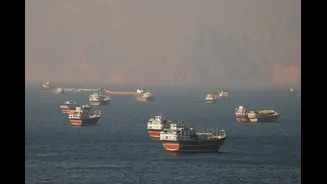
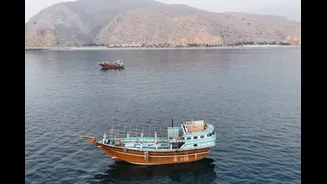
Iranian forces subsequently compelled four commercial tankers travelling along the southern route near Omani waters to reverse course. In recent days, Iran also twice targeted vessels navigating near the Omani side of the strait.
The exchanges accelerated further after an Iranian drone struck a merchant vessel off the coast of Oman on Thursday, triggering American military retaliation.
The confrontation deepened over the following days. On June 26, the Singapore-flagged tanker Ever Lovely was hit by a loitering munition while passing through the Strait of Hormuz.
A day later, another commercial vessel — the Panama-flagged tanker Kiku, carrying crude oil for Qatar's state-owned energy company — was struck in what was described as an unclaimed drone attack.
The attack on the Qatar-linked vessel prompted another round of US military action. American forces announced strikes targeting what they described as Iranian military infrastructure, including surveillance installations, communications systems, air defence positions, drone storage facilities and capabilities associated with naval mine deployment.
Separately, US Central Command said operations also targeted missile infrastructure, coastal radar installations and drone depots located in southern Iran.
Trump accused Tehran of breaching the interim agreement and warned of further military consequences if attacks continued. "If that happens, the Islamic Republic of Iran will no longer exist!" Trump wrote.
He also warned separately that continued violations could leave the United States with no option but to "be forced to militarily complete the job."
Iran rejected the American position, arguing instead that the US strikes themselves constituted a breach of the memorandum, particularly its commitment to halt military operations.
Iran's Revolutionary Guard claimed responsibility for missile and drone attacks targeting Bahrain and Kuwait following the latest American strikes.
Kuwait, which hosts a significant US military installation, said its air defence systems intercepted Iranian drones and two incoming missiles shortly after the American operation inside Iran. Authorities reported no casualties or physical damage.
Bahrain confirmed that Iranian strikes damaged a residential building near Bahrain International Airport. Although no fatalities were reported, the incident occurred in a country that hosts the headquarters of the US Navy's Fifth Fleet, even though the affected building was not located near the naval base.
Bahrain's Foreign Ministry condemned the attacks, saying that it was "a dangerous escalation that reveals that what Tehran is doing is not a passing act, nor an isolated incident, but rather a deliberate approach and a systematic pattern of repeated aggression."
Meanwhile, Qatar reported that one civilian had been killed and another injured after shrapnel linked to "military operations in the area" struck following the failure of a vessel to return at its scheduled time on Saturday. Authorities did not provide additional details regarding the incident.
What next?
After a few days of direct exchanges that brought the interim agreement close to collapse, both Washington and Tehran moved to prevent a further escalation by agreeing to suspend military operations on June 29.
Senior officials from both countries confirmed a limited pause in kinetic activity, creating an opportunity for diplomats to return to the negotiating table before the wider framework unraveled.
The temporary stand-down has also allowed commercial vessels to continue transiting the Strait of Hormuz under what officials described as a fragile status quo.
While maritime traffic has not returned to normal levels, the pause in hostilities is intended to provide enough breathing room for technical negotiators to resolve the disagreement surrounding Article 5.
The agreement to halt the immediate exchange of attacks also helped calm financial markets that had reacted sharply to the renewed fighting, although analysts warned that the situation remained highly uncertain.
Despite the temporary reduction in military activity, neither side indicated that its interpretation of Article 5 had changed. Instead, both governments agreed that the dispute would now be addressed through emergency negotiations.
Pakistan confirmed that discussions between the United States and Iran would resume on Tuesday, June 30. The Trump administration likewise stated that the negotiations had not been abandoned and that technical discussions remained on schedule.
The venue for those negotiations will be Doha, Qatar.
Unlike previous rounds of diplomacy that focused on achieving a ceasefire, these talks are expected to concentrate almost entirely on the practical implementation of Article 5 and the operation of the Strait of Hormuz during the remainder of the interim agreement.
One of the principal objectives will be to establish mutually acceptable transit arrangements for commercial vessels moving through the waterway.
Negotiators are also expected to discuss the role that third-party actors could play in supervising maritime operations. Among the possibilities under consideration are enhanced involvement by Oman or technical participation by the International Maritime Organisation (IMO), particularly while demining work continues.
Another important issue concerns the extent of Iranian oversight during the remaining clearance period. Clarifying the scope of Tehran's authority without undermining international shipping operations has emerged as one of the central diplomatic challenges facing both delegations.
The wider agreement extends far beyond the Strait of Hormuz Although recent attention has focused almost exclusively on maritime security, Article 5 represents only one part of a much broader diplomatic understanding reached earlier this month.
Among the most significant components of the agreement is phased Iranian access to approximately $20 billion in hard currency. That package includes an estimated $12 billion in previously frozen assets, representing one of the most substantial financial provisions contained within the interim framework.
The memorandum also envisions negotiations on an extendable framework governing Iran's nuclear programme. Rather than seeking an immediate permanent settlement, the agreement establishes a process through which limitations on Iran's nuclear activities can be discussed during the 60-day period and potentially extended through subsequent negotiations.
Another major issue scheduled for discussion concerns the possible easing of American non-nuclear sanctions imposed on Iran.
Sanctions relief has long been among Tehran's principal objectives, while Washington has maintained that any changes would depend on progress across multiple areas covered by the interim agreement.
The talks are also expected to include discussions on removing the US blockade affecting Iranian ports, another issue identified by both sides as part of the ongoing negotiations.
In addition, negotiators will address the future of Iran's stockpile of highly enriched uranium, making the maritime dispute only one element within a much broader diplomatic process.
However, another regional conflict threatens to complicate those efforts. According to the terms of the memorandum, fighting in Lebanon must end before certain elements of the broader agreement can proceed.
Continued violence there therefore represents another challenge that could affect implementation even if the immediate dispute over the Strait of Hormuz is resolved.
Also Watch:
With inputs from agencies