




What is the story about?
While the White House has publicly framed its actions against Venezuela’s Nicolás Maduro as part of a broader effort to counter drug trafficking and terrorism, developments over recent weeks point to Venezuela’s vast oil reserves as the core strategic focus of US President Donald Trump’s campaign.
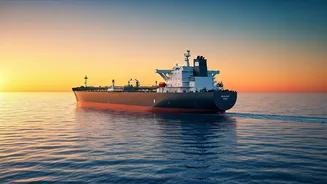
From the seizure of oil tankers to now a declaration of a blockade targeting sanctioned vessels, Trump’s actions have zeroed in on Caracas’ primary source of revenue.
The latest escalation came when Trump announced that the United States would impose what he described as a “total and complete blockade” on sanctioned oil tankers entering or leaving Venezuela.
The move is Washington’s most direct attempt yet to choke off the South American country’s oil exports, which remain the backbone of its economy.
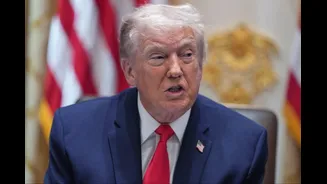
“For the theft of our Assets, and many other reasons, including Terrorism, Drug Smuggling, and Human Trafficking, the Venezuelan Regime has been designated a FOREIGN TERRORIST ORGANIZATION,” Trump wrote on Truth Social.
“Therefore, today, I am ordering A TOTAL AND COMPLETE BLOCKADE OF ALL SANCTIONED OIL TANKERS going into, and out of, Venezuela.”
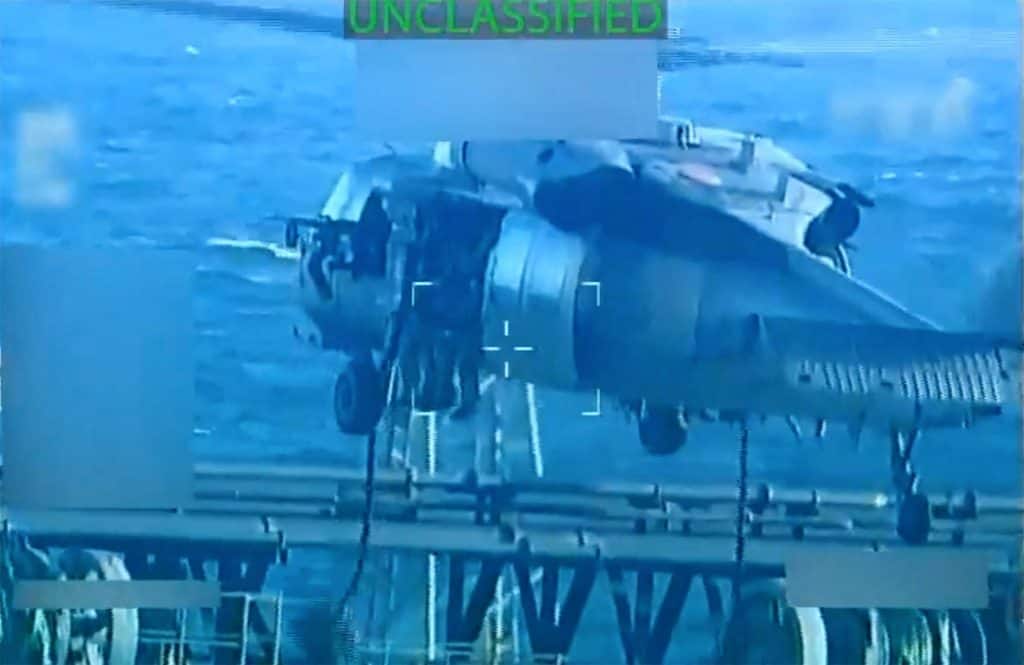
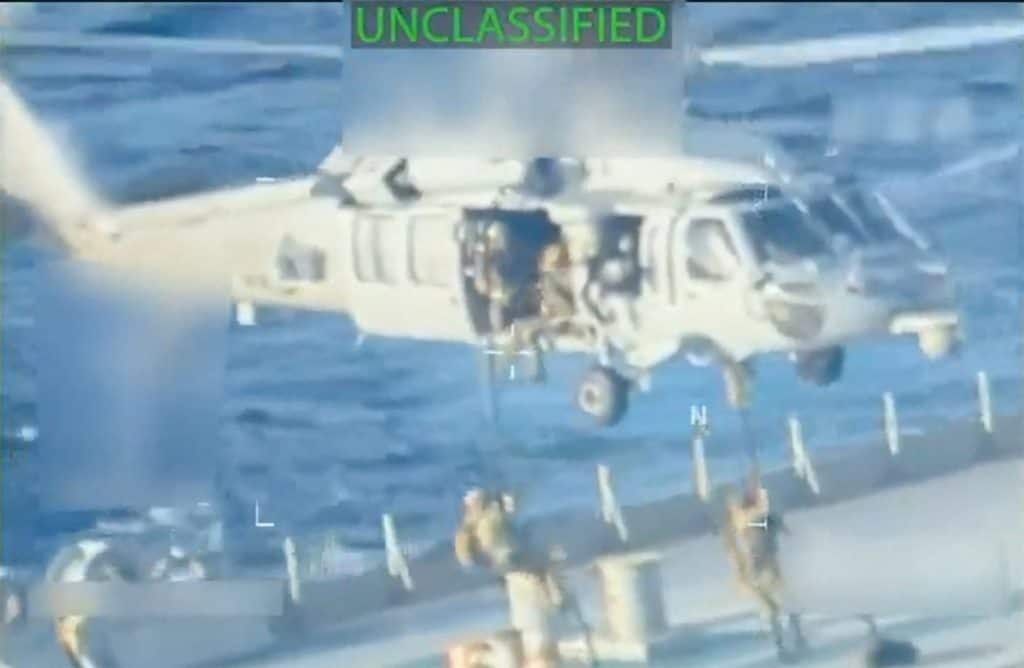
While Trump did not spell out how the blockade would be enforced, the announcement followed a recent US seizure of a sanctioned oil tanker off Venezuela’s coast.
That action has already had a chilling effect on shipping activity. Oil tankers carrying millions of barrels of Venezuelan crude have remained in local waters rather than risk interception, effectively creating a de facto embargo even before the blockade is fully implemented.
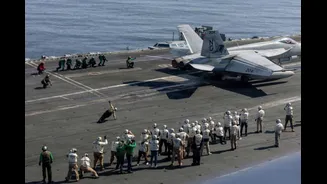
The administration has increased its military footprint in the region, deploying thousands of US troops and nearly a dozen naval vessels, including an aircraft carrier.
Questions remain over whether the US Coast Guard or the US Navy would be used to interdict ships, as Trump previously authorised maritime actions last week.
Caracas rejected the announcement. In an official statement, Venezuela’s government said it dismissed Trump’s “grotesque threat,” accusing Washington of aggression aimed at destabilising the country.
Global oil markets reacted quickly to the prospect of reduced Venezuelan exports. In Asian trading, Brent crude futures rose more than one per cent, climbing 70 cents to $59.62 a barrel, while US West Texas Intermediate gained 73 cents to reach $56.00 a barrel.
US crude futures also advanced over one per cent, reversing losses from the previous session when prices had settled at their lowest level since February 2021.
Traders attributed the price movement to expectations that Venezuelan supply
could be curtailed if the blockade is enforced.
However, market participants said uncertainty remained over the scope of the policy and whether it would apply solely to vessels already under sanctions or extend to others.
The oil market is currently well supplied, with large volumes of crude stored on tankers off China’s coast awaiting offloading.
Analysts say this surplus has helped cushion immediate price spikes. Still, a prolonged disruption could tighten supply significantly. Nearly one million barrels per day of Venezuelan crude could be removed from the market if exports remain blocked for an extended period.
The blockade announcement follows years of escalating US sanctions on Venezuela’s energy sector, first imposed in 2019.
Since then, traders and refiners purchasing Venezuelan oil have relied on a complex network of vessels designed to evade detection. This so-called “shadow fleet” frequently disguises ship locations and often includes tankers previously sanctioned for transporting Iranian or Russian oil.
Data compiled by TankerTrackers.com shows that more than 30 of the 80 vessels either present in Venezuelan waters or approaching the country last week were already under US sanctions.
Others transporting Venezuelan crude have avoided penalties, particularly ships authorised to carry oil produced under special licences.
Chevron, the US energy major, continues to operate in Venezuela under a specific exemption and transports oil using its own approved vessels.
However, Venezuela’s overall exports have fallen sharply since the recent tanker seizure, a decline compounded by a cyberattack that disrupted administrative systems at state-owned oil company Petróleos de Venezuela, SA (PDVSA).
US officials say further tanker seizures are likely. As with the recent action, Washington could justify future interceptions by citing a vessel’s prior involvement in transporting Iranian oil, which is subject to stricter sanctions than Venezuelan crude.
Venezuela holds the world’s largest proven oil reserves, estimated at more than 300 billion barrels, representing roughly 17 per cent of known global reserves.
Despite this immense resource base, the country’s oil industry operates far below its potential, hampered by years of underinvestment, sanctions, and difficulties in accessing equipment and spare parts.
Maduro has repeatedly argued that Washington’s pressure campaign is driven by a desire to control Venezuela’s energy wealth. He has accused the US of exploiting accusations of terrorism and drug trafficking to justify intervention.
“Imperialism and the fascist right want to colonize Venezuela to take over its wealth of oil, gas, gold, among other minerals. We have sworn absolutely to defend our homeland and in Venezuela peace will triumph,” Maduro has said.
Trump, by contrast, has made little effort to hide his interest in Venezuela’s resources. In past speeches, he has spoken openly about acquiring oil as compensation for US military action.
His approach aligns with his broader emphasis on energy dominance and control over the Western Hemisphere.
China is the single largest buyer of Venezuelan crude, accounting for approximately 80 per cent of the country’s oil exports. For years, oil shipments to China have functioned as repayment for loans extended by Chinese state-owned banks.
Venezuela’s debt to China stood at $19 billion in 2020, though lending has since slowed after Caracas struggled to meet its obligations.
The largest foreign investor in Venezuela’s oil industry is China National Petroleum Corporation (CNPC), which operates joint ventures with PDVSA. However, CNPC has adopted a more cautious stance since 2019 to avoid violating US sanctions, reported the
New York Times.
More recently, China Concord Resources Corporation, a private Chinese firm, signed a 20-year agreement with PDVSA to invest more than $1 billion in developing oil fields.
In April, Venezuelan Vice President Delcy Rodríguez visited Beijing, urging Chinese leaders to increase investment in the country’s energy sector and expand crude purchases. For Maduro’s government, China’s continued engagement is seen as a critical buffer against US economic pressure.
While Maduro frames oil as a geopolitical shield, Venezuela’s opposition has presented the sector as a commercial opportunity for US companies. María Corina Machado, the country’s main opposition leader, has actively courted American political and business circles.
Speaking via live video to a business conference in Miami attended by executives and politicians, including Trump, the Nobel Peace Prize recipient made an ambitious pitch. “I am talking about a $1.7 trillion opportunity,” she said.
She pledged that a post-Maduro government would fully open the energy sector, declaring, “We will open all, upstream, midstream, downstream, to all companies.”
Machado has consistently promoted Venezuela’s resource potential, including its oil, gas, minerals, and power infrastructure. Her message has resonated with Trump’s allies, including during appearances on platforms hosted by members of the president’s family.

US officials have engaged in conversations with Machado and other opposition figures while simultaneously holding secret negotiations with Maduro’s government focused on oil.
Trump’s pressure campaign has included more than two dozen US strikes on vessels in the Pacific Ocean and Caribbean Sea near Venezuelan waters, resulting in at least 90 deaths.
Trump has also indicated that land-based attacks could follow. He has reportedly authorised the CIA to conduct covert operations in Venezuela and retains the option of using either the agency or the US military
to attempt to remove Maduro from power.
Trump’s chief of staff, Susie Wiles, highlighted the administration’s aggressive posture in an interview with Vanity Fair, saying the US president “wants to keep on blowing boats up until Maduro cries uncle.”
Despite these threats, experts caution that forcibly removing Maduro could plunge Venezuela into instability. US officials across multiple agencies concluded during war games conducted in 2019 that the aftermath of such an intervention would likely be chaotic.
Even if Washington succeeds in reshaping Venezuela’s political landscape, uncertainty remains over how quickly American companies could benefit from the country’s oil reserves, reported the
New York Times.
Past US interventions in Iraq and Libya did not immediately lead to a surge of Western energy investment. Instead, years of conflict delayed large-scale operations, while Chinese firms demonstrated a greater willingness to operate in unstable environments.
With inputs from agencies
From the seizure of oil tankers to now a declaration of a blockade targeting sanctioned vessels, Trump’s actions have zeroed in on Caracas’ primary source of revenue.
How Trump is targeting Venezuela’s oil exports
The latest escalation came when Trump announced that the United States would impose what he described as a “total and complete blockade” on sanctioned oil tankers entering or leaving Venezuela.
The move is Washington’s most direct attempt yet to choke off the South American country’s oil exports, which remain the backbone of its economy.
“For the theft of our Assets, and many other reasons, including Terrorism, Drug Smuggling, and Human Trafficking, the Venezuelan Regime has been designated a FOREIGN TERRORIST ORGANIZATION,” Trump wrote on Truth Social.
“Therefore, today, I am ordering A TOTAL AND COMPLETE BLOCKADE OF ALL SANCTIONED OIL TANKERS going into, and out of, Venezuela.”
While Trump did not spell out how the blockade would be enforced, the announcement followed a recent US seizure of a sanctioned oil tanker off Venezuela’s coast.
That action has already had a chilling effect on shipping activity. Oil tankers carrying millions of barrels of Venezuelan crude have remained in local waters rather than risk interception, effectively creating a de facto embargo even before the blockade is fully implemented.
The administration has increased its military footprint in the region, deploying thousands of US troops and nearly a dozen naval vessels, including an aircraft carrier.
Questions remain over whether the US Coast Guard or the US Navy would be used to interdict ships, as Trump previously authorised maritime actions last week.
Caracas rejected the announcement. In an official statement, Venezuela’s government said it dismissed Trump’s “grotesque threat,” accusing Washington of aggression aimed at destabilising the country.
How oil prices are rising as markets assess supply risks
Global oil markets reacted quickly to the prospect of reduced Venezuelan exports. In Asian trading, Brent crude futures rose more than one per cent, climbing 70 cents to $59.62 a barrel, while US West Texas Intermediate gained 73 cents to reach $56.00 a barrel.
US crude futures also advanced over one per cent, reversing losses from the previous session when prices had settled at their lowest level since February 2021.
Traders attributed the price movement to expectations that Venezuelan supply
However, market participants said uncertainty remained over the scope of the policy and whether it would apply solely to vessels already under sanctions or extend to others.
US forces abseil onto an oil tanker during a raid described by US Attorney General Pam Bondi as its seizure by the United States off the coast of Venezuela, December 10, 2025, in a still image from video. Image/X-US Attorney General
The oil market is currently well supplied, with large volumes of crude stored on tankers off China’s coast awaiting offloading.
Analysts say this surplus has helped cushion immediate price spikes. Still, a prolonged disruption could tighten supply significantly. Nearly one million barrels per day of Venezuelan crude could be removed from the market if exports remain blocked for an extended period.
How US sanctions against Venezuela have been escalating
The blockade announcement follows years of escalating US sanctions on Venezuela’s energy sector, first imposed in 2019.
Since then, traders and refiners purchasing Venezuelan oil have relied on a complex network of vessels designed to evade detection. This so-called “shadow fleet” frequently disguises ship locations and often includes tankers previously sanctioned for transporting Iranian or Russian oil.
Data compiled by TankerTrackers.com shows that more than 30 of the 80 vessels either present in Venezuelan waters or approaching the country last week were already under US sanctions.
U.S. forces abseil onto an oil tanker during a raid described by U.S. Attorney General Pam Bondi as its seizure by the United States off the coast of Venezuela, December 10, 2025, in a still image from video. U.S. Attorney General/Handout via REUTERS
Others transporting Venezuelan crude have avoided penalties, particularly ships authorised to carry oil produced under special licences.
Chevron, the US energy major, continues to operate in Venezuela under a specific exemption and transports oil using its own approved vessels.
However, Venezuela’s overall exports have fallen sharply since the recent tanker seizure, a decline compounded by a cyberattack that disrupted administrative systems at state-owned oil company Petróleos de Venezuela, SA (PDVSA).
US officials say further tanker seizures are likely. As with the recent action, Washington could justify future interceptions by citing a vessel’s prior involvement in transporting Iranian oil, which is subject to stricter sanctions than Venezuelan crude.
What we know about Venezuela’s oil wealth
Venezuela holds the world’s largest proven oil reserves, estimated at more than 300 billion barrels, representing roughly 17 per cent of known global reserves.
Despite this immense resource base, the country’s oil industry operates far below its potential, hampered by years of underinvestment, sanctions, and difficulties in accessing equipment and spare parts.
Maduro has repeatedly argued that Washington’s pressure campaign is driven by a desire to control Venezuela’s energy wealth. He has accused the US of exploiting accusations of terrorism and drug trafficking to justify intervention.
“Imperialism and the fascist right want to colonize Venezuela to take over its wealth of oil, gas, gold, among other minerals. We have sworn absolutely to defend our homeland and in Venezuela peace will triumph,” Maduro has said.
Trump, by contrast, has made little effort to hide his interest in Venezuela’s resources. In past speeches, he has spoken openly about acquiring oil as compensation for US military action.
His approach aligns with his broader emphasis on energy dominance and control over the Western Hemisphere.
How China is deeply tied to Venezuelan oil
China is the single largest buyer of Venezuelan crude, accounting for approximately 80 per cent of the country’s oil exports. For years, oil shipments to China have functioned as repayment for loans extended by Chinese state-owned banks.
Venezuela’s debt to China stood at $19 billion in 2020, though lending has since slowed after Caracas struggled to meet its obligations.
The largest foreign investor in Venezuela’s oil industry is China National Petroleum Corporation (CNPC), which operates joint ventures with PDVSA. However, CNPC has adopted a more cautious stance since 2019 to avoid violating US sanctions, reported the
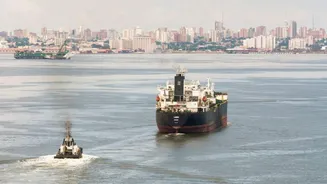
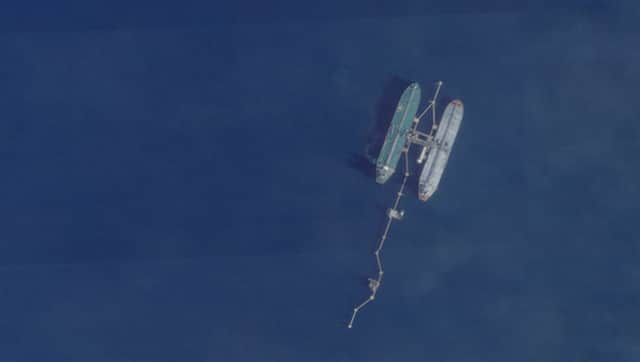
A satellite image shows the very large crude carrier (VLCC) Skipper, which British maritime risk management group Vanguard said was believed to have been seized by the US. File Image/Reuters
More recently, China Concord Resources Corporation, a private Chinese firm, signed a 20-year agreement with PDVSA to invest more than $1 billion in developing oil fields.
In April, Venezuelan Vice President Delcy Rodríguez visited Beijing, urging Chinese leaders to increase investment in the country’s energy sector and expand crude purchases. For Maduro’s government, China’s continued engagement is seen as a critical buffer against US economic pressure.
How Opposition in Venezuela is warming up to Trump
While Maduro frames oil as a geopolitical shield, Venezuela’s opposition has presented the sector as a commercial opportunity for US companies. María Corina Machado, the country’s main opposition leader, has actively courted American political and business circles.
Speaking via live video to a business conference in Miami attended by executives and politicians, including Trump, the Nobel Peace Prize recipient made an ambitious pitch. “I am talking about a $1.7 trillion opportunity,” she said.
She pledged that a post-Maduro government would fully open the energy sector, declaring, “We will open all, upstream, midstream, downstream, to all companies.”
Machado has consistently promoted Venezuela’s resource potential, including its oil, gas, minerals, and power infrastructure. Her message has resonated with Trump’s allies, including during appearances on platforms hosted by members of the president’s family.
Nobel Peace Prize laureate Maria Corina Machado reacts to the crowd gathered in front of the Grand Hotel, in Oslo, Norway, December 11, 2025. File Image/AP
US officials have engaged in conversations with Machado and other opposition figures while simultaneously holding secret negotiations with Maduro’s government focused on oil.
How Trump is attempting to remove Maduro
Trump’s pressure campaign has included more than two dozen US strikes on vessels in the Pacific Ocean and Caribbean Sea near Venezuelan waters, resulting in at least 90 deaths.
Trump has also indicated that land-based attacks could follow. He has reportedly authorised the CIA to conduct covert operations in Venezuela and retains the option of using either the agency or the US military
Trump’s chief of staff, Susie Wiles, highlighted the administration’s aggressive posture in an interview with Vanity Fair, saying the US president “wants to keep on blowing boats up until Maduro cries uncle.”
Despite these threats, experts caution that forcibly removing Maduro could plunge Venezuela into instability. US officials across multiple agencies concluded during war games conducted in 2019 that the aftermath of such an intervention would likely be chaotic.
Even if Washington succeeds in reshaping Venezuela’s political landscape, uncertainty remains over how quickly American companies could benefit from the country’s oil reserves, reported the
Past US interventions in Iraq and Libya did not immediately lead to a surge of Western energy investment. Instead, years of conflict delayed large-scale operations, while Chinese firms demonstrated a greater willingness to operate in unstable environments.
With inputs from agencies