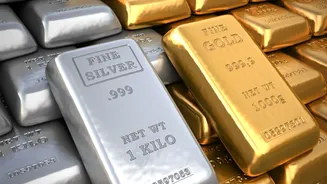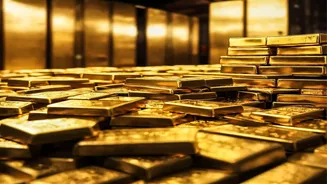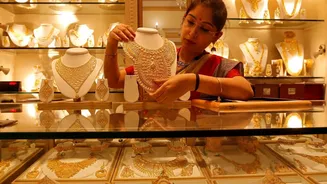

The precious metals have witnessed a consistent rise in 2026, with gold being up double digits and silver investors witnessing a massive upsurge. This came after gold increased 64 per cent in 2025, while silver rose over 150 per cent last year.
Then, on Thursday evening (January 29), something momentous happened. Trillions of dollars were wiped out from both precious metals in a matter of minutes, leaving traders shocked and numb. Some have speculated that the precious metals markets are being manipulated by banks or massive investors.
But what happened? How did such a vast amount of wealth vanish into thin air?
Let’s take a closer look.
Precious metals on a tear
Since January 1, the price of gold has increased by 21 per cent.
Earlier this week, gold crossed the $5,000 (Rs 4.60 lakh) mark for the first time. The bulls seemed to be fully on board with the gold rally after Indian gold and silver futures jumped six per cent to record highs on Thursday.
Domestic gold futures rose six per cent to a record Rs 175,869 per 10 grams for 24-carat gold and Rs 16,395 per gram for 22-carat gold. Meanwhile, international spot gold was trading at $5,500 (Rs 5.06 lakh) per ounce amid geopolitical and economic uncertainty.
Silver, meanwhile, skyrocketed over 60 per cent since January 1. Spot silver was trading between $118 (Rs 10,850) and $120 (Rs 11,034) per ounce, while silver prices crossed the Rs 4 lakh per kilogram mark for the first time on Thursday. Silver futures too spiked six per cent to an all-time high of Rs 407,456 per kg.

Since January 1, the price of gold has increased by 21 per cent.
Though some were cautious, many analysts were confidently predicting that gold would set further record highs in 2026. Some were even revising their 2026 estimates. UBS, for example, raised its gold price forecast to $6,200 (Rs 5.70 lakh) for the first three quarters of the year, though it projects that prices would decline to $5,900 (Rs 5.42 lakh) by the end of 2026.
Deutsche Bank forecasts gold could reach around $6,000 (Rs 5.52 lakh) per ounce in 2026. So did Société Générale, which suggests that this could be a conservative target if trends don’t change.
How gold, silver plummeted
Then, after the Indian markets closed on Thursday, bedlam struck the international markets.
Gold fell over $400 (Rs 36,772) — more than five per cent of its value — to $5,109.62 (Rs 4.70 lakh) after hitting a record high of $5,594.82 (Rs 5.14 lakh) earlier that day. Spot silver fell 2.1 per cent to $114.141 (Rs 10,492) an ounce after reaching a high of $121.64 (Rs 11,185).
The Kobeissi Letter claimed that gold witnessed the largest single-day swing in market capitalisation in history. It stated that the market value of gold swung by an unprecedented $5.5 trillion (Rs 505.62 lakh crore) within a single trading session.
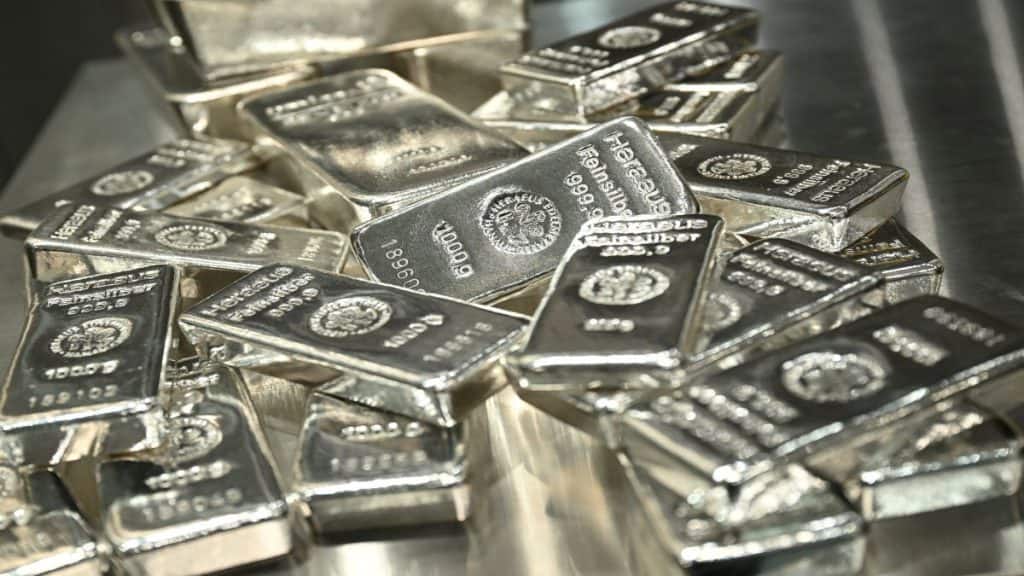
Gold bars and coins in the safe at Pro Aurum gold house in Munich
It noted that gold lost around $3.2 trillion (Rs 294.18 lakh crore) in market capitalisation — roughly $58 billion (Rs 5.33 lakh crore) per minute — between 8 pm and 8.55 pm on Thursday. However, by the time the United States market closed — in the early hours of Friday in India — gold had clawed back around $2.3 trillion (Rs 211.44 lakh crore) of its value.
Silver, meanwhile, plummeted over 11 per cent in the international market. It witnessed around $750 billion (Rs 68.95 lakh crore) of its market capitalisation being wiped out before clawing back around $500 billion (Rs 45.97 lakh crore) of value.
What do experts say?
They note that these markets are vulnerable to the whims of a few large investors because of their size.
The silver, platinum and palladium markets are small relative to gold or the S&P 500, making them vulnerable to speculative inflows that have left prices “totally detached from where physical demand is robust,” said Guy Wolf, global head of market analytics at Marex.
“We are seeing a dramatic sell-off after precious metals made new recent all-time highs,” said David Meger, director of metals trading at High Ridge Futures.
Some say there is still more room for upside.
“Rallies normally end because the drivers that took people into the gold market originally dissipate — and that’s just not the case,” said Michael Widmer, commodities strategist at Bank of America.
Others warn that more such swings could be ahead.
“There’s going to be a lot of volatility ahead, with risks of sharp pullbacks (in silver),” said Widmer, adding that strong fundamentals and exchange-traded fund inflows could support a $170 (Rs 15,628) price target.
Investors, meanwhile, continue to pile into gold.
From crypto money to central banks, demand for gold is widening as “precious metals are well in the limelight and investors always like to go where they can get high returns,” said Brian Lan, managing director at GoldSilver Central.
Crypto group Tether’s CEO earlier this week announced plans to allocate 10 per cent to 15 per cent of its investment portfolio to physical gold, while the world’s largest gold-backed exchange-traded fund, SPDR Gold Trust, saw holdings reach a nearly four-year high.
Meanwhile, Citi upgraded its short-term silver price forecast to $150 (Rs 13,790) per ounce from $100 (Rs 9,193) earlier.
Poland’s central bank has announced it will increase its reserves of gold from 550 to 700 tonnes.
The bank’s management board member Artur Sobon told Bloomberg News, “Our primary goal is to build an appropriate portfolio for these unstable geopolitical times, one that will guarantee Poland stability, security and credibility. The price is not a primary consideration for us.”
With inputs from agencies