








What is the story about?
Google has finally added its AI chatbot, Gemini, to Google Maps. In a new feature called Ask Maps, the tech giants aims to make it even easier to follow navigations. The highlight is that the artificial intelligence feature allows users to ask complex questions about places and receive detailed answers instantly.
Ask Maps enables users to ask almost any question about a location using either voice or text. Instead of searching through multiple listings or websites, users can now get tailored suggestions, directions, and insights directly within the app.
The feature is currently rolling out in English in the United States and India on both Android and iOS. Google says support for Hindi is expected to arrive soon.
According to the company, the AI assistant draws on Maps’ extensive data to deliver contextual responses and simplify travel planning. This includes information from more than 300 million places listed on the platform as well as reviews and updates contributed by a global community of more than 500 million users.
Google says the conversational tool is designed to help users quickly navigate everyday decisions, from choosing a restaurant to planning outings with friends.
Previously, organising something like a night out could involve multiple conversations and long searches to decide on the right venue. Ask Maps aims to streamline that process by allowing users to ask detailed questions in natural language.
For example, someone planning to watch a sports match with friends could ask: “What are some places with good veg appetisers where I can watch the live streaming of today’s match?”
The assistant can then recommend suitable venues and provide relevant information such as popular vegetarian dishes, the atmosphere on match days, and whether facilities like valet parking are available.
Users can also ask follow-up questions such as, “Which of these would be easiest to park in?” Ask Maps will refine its suggestions and highlight practical details sourced from reviews and other web information.
The system also offers travel directions and compares different transport options, including driving and public transport, taking into account traffic conditions and estimated travel time.
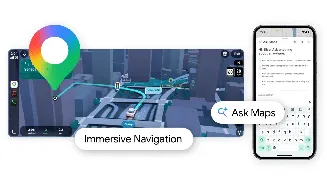
Using Ask Maps is relatively straightforward. Users simply need to tap the “Ask Maps” button within the app and enter their query through voice or text.
The tool can also assist with more complex travel planning scenarios. For instance, if someone is hosting relatives visiting a city for the first time, they could ask: “My parents, who are senior citizens, are coming to visit Mumbai for the first time this weekend. What places or experiences can I take them to that they can cover easily?”
Ask Maps will then generate recommendations tailored to those needs, such as places that require minimal walking or locations offering accessibility features.
Personalisation is another key element of the feature. Google Maps analyses a user’s past searches and saved places to refine suggestions. For example, if someone visiting Bengaluru typically searches for vegetarian food, asking for restaurant recommendations will prioritise highly rated vegetarian options.
In addition to suggesting places, Ask Maps can also help users book restaurant reservations, save locations to lists, or start navigation directly from the recommendations.
Ask Maps enables users to ask almost any question about a location using either voice or text. Instead of searching through multiple listings or websites, users can now get tailored suggestions, directions, and insights directly within the app.
The feature is currently rolling out in English in the United States and India on both Android and iOS. Google says support for Hindi is expected to arrive soon.
According to the company, the AI assistant draws on Maps’ extensive data to deliver contextual responses and simplify travel planning. This includes information from more than 300 million places listed on the platform as well as reviews and updates contributed by a global community of more than 500 million users.
Google Maps is now smarter
Google says the conversational tool is designed to help users quickly navigate everyday decisions, from choosing a restaurant to planning outings with friends.
Previously, organising something like a night out could involve multiple conversations and long searches to decide on the right venue. Ask Maps aims to streamline that process by allowing users to ask detailed questions in natural language.
For example, someone planning to watch a sports match with friends could ask: “What are some places with good veg appetisers where I can watch the live streaming of today’s match?”
The assistant can then recommend suitable venues and provide relevant information such as popular vegetarian dishes, the atmosphere on match days, and whether facilities like valet parking are available.
Users can also ask follow-up questions such as, “Which of these would be easiest to park in?” Ask Maps will refine its suggestions and highlight practical details sourced from reviews and other web information.
The system also offers travel directions and compares different transport options, including driving and public transport, taking into account traffic conditions and estimated travel time.
Google's Ask Maps: How to use
Using Ask Maps is relatively straightforward. Users simply need to tap the “Ask Maps” button within the app and enter their query through voice or text.
The tool can also assist with more complex travel planning scenarios. For instance, if someone is hosting relatives visiting a city for the first time, they could ask: “My parents, who are senior citizens, are coming to visit Mumbai for the first time this weekend. What places or experiences can I take them to that they can cover easily?”
Ask Maps will then generate recommendations tailored to those needs, such as places that require minimal walking or locations offering accessibility features.
Personalisation is another key element of the feature. Google Maps analyses a user’s past searches and saved places to refine suggestions. For example, if someone visiting Bengaluru typically searches for vegetarian food, asking for restaurant recommendations will prioritise highly rated vegetarian options.
In addition to suggesting places, Ask Maps can also help users book restaurant reservations, save locations to lists, or start navigation directly from the recommendations.