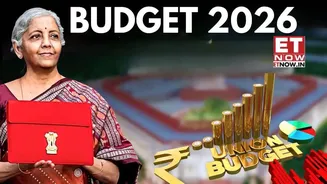







Union Budget 2026: As the date for the budget 2026-2027 nears, which is Sunday, February 1. The taxpayers are closely awaiting the possible changes in the income
tax slabs and deductions, and further reliefs allowed under the old and new tax regimes. Every year, ahead of the budget presentation, individuals, especially salaried taxpayers, and other groups have certain expectations that the government will introduce measures for rationalisation.
Some of the key areas that experts want in the Budget 2026 are- Customs overhaul, TDS rationalisation. With the Union Budget 2026 set to be presented soon, expectations are rising among salaried employees, pensioners and middle-class taxpayers. Rising inflation, higher living costs and stagnant deduction limits have increased pressure on household budgets.
Budget 2026: Expectations among taxpayers are high
Following the major relief announced in Budget 2025-26, which made annual income up to Rs 12 lakh tax-free under the new tax regime. This year, taxpayers are hoping for further income tax relief, simplified compliance norms and targeted benefits across sectors.
Ahead of the Budget, the Ministry of Statistics and Programme Implementation (MoSPI) projected India’s GDP growth at 7.4 per cent for the current fiscal, higher than the 6.5 per cent recorded in 2024-25. However, nominal GDP growth, which does not factor in inflation, is expected to ease to a five-year low of 8 per cent, an important consideration for estimating tax revenues in the 2026-27 Budget.
Income Tax Slabs: Will rates get friendlier?
One of the biggest expectations is a revision in income tax slabs under the new tax regime. Currently, the government is pushing the new regime as the default option, but many taxpayers still find it less beneficial than the old one due to fewer deductions.
In Budget 2026, experts expect:
- Customs overhaul, TDS rationalisation
- Exporters seek tax incentives, import duty rationalisation in the Budget to push growth
- A hike in standard deductions
Union Budget 2026 expectations: Customs overhaul, TDS rationalisation
Finance Minister Nirmala Sitharaman will present her ninth consecutive Budget on February 1 in the Lok Sabha amid expectations of an overhaul of the Customs duty regime, much on the lines of GST structure rationalisation, and more reform measures to boost the economy in the wake of hightened geo-political uncertainty.
Budget is also likely to outline the path of targeting the debt-to-GDP ratio as India's fiscal management focus shifts from managing deficit to lowering debt.
Exporters seek tax incentives, import duty rationalisation in Budget
Exporters on Thursday, January 22, sought a series of measures, including tax incentives, rationalisation of import duties, and support for branding and marketing initiatives in global markets, in the forthcoming Budget to boost shipments.
They suggested that the Budget should urgently address the problem of inverted customs duty structures, where import duties on raw materials, components, or intermediates are higher than those on finished goods.
Budget 2026 Income Tax Expectation: A hike in standard deductions
Currently, the standard deduction is different depending on the tax treatment preferred by the taxpayer. Under the old income tax treatment, the standard deduction has remained constant at Rs 50,000 for many years. On the other hand, in a major step to make the new tax treatment more favourable, the government has increased the standard deduction to Rs 75,000 for salaried class taxpayers and pensioners in 2024.
As the Centre remains committed to encouraging more people to switch over to the new income tax system, it is likely that any changes, including an increase in the standard deduction, will be announced in the new system.
As the government pushes for the adoption of the new income tax regime, any major changes, including those in standard deduction limits, are expected only in that regime.