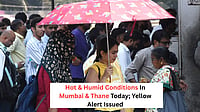







Sudden Weather Shift
On Thursday afternoon, Mumbai's suburbs, along with neighboring Thane and Navi Mumbai, experienced a dramatic change in weather, marked by intense, gusty
winds and storm-like conditions. This sudden atmospheric disturbance followed a day where maximum temperatures soared, reaching up to 37 degrees Celsius in several areas, including the Ram Mandir automatic weather station. Similar high temperatures were recorded in Vikhroli and Bandra, while Thane's observatory also registered 37 degrees. These elevated temperatures occurred while a yellow alert for hot and humid weather was in effect across the entire Konkan region, a condition predicted to persist until Saturday. The unexpected windy spell began after 4 PM, whipping up dust and signaling a significant atmospheric shift.
IMD Warnings Issued
In response to the developing weather patterns, the India Meteorological Department (IMD) issued a nowcast warning. This alert specifically targeted Thane and Navi Mumbai, as well as districts like Palghar, Raigad, and Ratnagiri, anticipating the possibility of winds reaching speeds of 30-40 kmph. The warning also included the potential for thunderstorms, lightning, and rain. This warning was issued at 4 PM, though the stormy conditions had already begun to affect the region. Notably, this sudden squall occurred despite the absence of prior warnings specifically for thunderstorms. Later, at 5:05 PM, the IMD updated its forecast bulletin for Thane and Palghar, placing these districts under a yellow alert for potential thunderstorms and light rain expected to continue until Friday morning.
Elusive Rain and Thunder
Despite the nowcast warnings and the visible storm-like activity, the actual rainfall, thunder, and lightning remained absent in Mumbai and its adjacent areas. By 5:30 PM on Thursday, IMD observatories recorded 'NIL' rainfall, meaning no precipitation was detected. According to IMD director Bikram Singh, this phenomenon was likely attributed to the development of thunderclouds in the vicinity. He explained that the combination of an active cyclonic circulation, atmospheric moisture, and heat contributes to cloud formation. Even though the thunderclouds were positioned a few kilometers away, their proximity was sufficient to generate strong gusty winds that impacted the eastern suburbs of Mumbai. This event highlighted how localized atmospheric conditions can lead to significant wind activity without necessarily bringing immediate rain to the core urban areas.