







Immediate Pilot Response
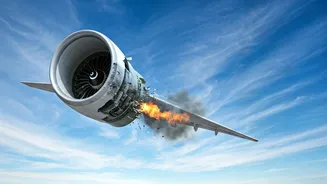
When an engine fails mid-flight, the pilots' reaction is swift and follows a pre-defined checklist. Initially, the pilots must identify which engine has
failed by observing various instruments. Following the identification of the failed engine, the pilots typically shut it down to prevent further damage. The primary concern is to maintain control of the aircraft, which may require adjustments to the plane's flight path. Communication with Air Traffic Control (ATC) is immediately established to declare an emergency and request assistance. Depending on the situation and aircraft type, the pilots might decide to return to the departure airport or divert to the nearest suitable airport for an emergency landing.
ATC's Crucial Role
Air Traffic Control (ATC) plays a critical role in managing emergencies. Upon receiving a distress call from the pilots, ATC coordinates the response, which includes alerting emergency services on the ground, such as fire and medical teams. ATC provides the pilots with updated weather reports and information about nearby airports suitable for landing, considering factors like runway length and weather conditions. ATC also clears the airspace for the affected aircraft, ensuring a clear path for its approach and landing. They may also reroute other air traffic to avoid the area, minimizing potential conflicts and ensuring the smooth conduct of the emergency landing.
Factors Affecting Landing
Numerous factors affect the outcome of an engine failure emergency. The altitude of the aircraft is a key element; higher altitudes grant more time for the pilots to assess the situation, communicate with ATC, and prepare for an emergency landing. The aircraft's weight is another consideration, as a heavier aircraft may require a longer runway. Furthermore, the type of aircraft matters; multi-engine planes can usually continue to fly on a single engine, while single-engine aircraft face more immediate challenges. Wind conditions are significant, as they can affect the aircraft's approach and landing, and can impact the available runway length needed. Finally, weather conditions like visibility and turbulence can impact the safety of the landing.
Emergency Procedures Overview
In the event of an engine failure, several procedures come into play. Pilots will initiate engine shutdown, and the aircraft may descend to a lower altitude to maintain lift and control. The crew then consults checklists to ensure all emergency protocols are correctly followed. The pilots will typically declare an emergency and communicate with air traffic control. Preparing for landing involves configuring the aircraft for descent and landing, deploying flaps and landing gear. After the aircraft is successfully landed, passengers will be evacuated, following established safety protocols, by the cabin crew and emergency services.
Technological Safety Nets
Modern aircraft are equipped with a suite of technologies designed to improve safety in emergency situations. Advanced navigation systems provide pilots with precise guidance. Automated systems can assist with engine management and flight control. Enhanced communication systems ensure reliable communication between the pilots and ATC. Aircraft are designed with redundancies in critical systems, like multiple engines and backup systems for power, allowing the aircraft to continue functioning even if a primary system fails. Furthermore, simulation training and regular maintenance contribute significantly to pilot readiness and aircraft reliability.