
Budget Basics Explained
The Union Budget, also known as the Annual Financial Statement, is a comprehensive financial document presented annually by the Indian government. It's
essentially a detailed account of the government's anticipated income and expenses for the upcoming fiscal year, running from April 1st to March 31st. This crucial document outlines how the government plans to generate revenue, allocate funds to various sectors, and manage the country's finances. The budget's primary aim is to promote economic growth, reduce poverty, and improve the overall standard of living for the citizens. It serves as a financial blueprint, showcasing the government's priorities and strategies. The budget is not just a collection of numbers; it reflects the government's vision for the future, detailing initiatives related to infrastructure, healthcare, education, and social welfare, all contributing to the nation's progress. Preparing and presenting the Union Budget is a complex process, involving numerous government departments and agencies. The process usually begins several months before the fiscal year's start, allowing enough time for thorough planning and meticulous calculations.
Budgetary Process Unveiled
The creation of the Union Budget is a meticulous process, commencing months before the fiscal year's onset, usually around August or September. The Ministry of Finance plays a pivotal role, coordinating the efforts of various departments and ministries. Each ministry submits its expenditure proposals, which are then scrutinized and consolidated. The budget-making process involves extensive consultations with various stakeholders, including economists, industry experts, and representatives from different sectors. These consultations help the government understand the diverse needs and challenges faced by different segments of the economy. The budget is then presented in Parliament by the Finance Minister, typically in February. The presentation is followed by detailed discussions and debates in both the Lok Sabha and Rajya Sabha. Parliamentarians thoroughly examine the budget proposals, seeking clarifications and suggesting amendments. After the debate, the budget is voted on, and once approved by both houses, it is enacted. The implementation phase begins on April 1st of the new fiscal year. The government closely monitors the budget's execution, making adjustments as needed based on economic conditions and unforeseen circumstances. The budget's success hinges on effective implementation, regular monitoring, and a commitment to fiscal discipline.
Key Budget Terms
Understanding key budget terms is vital for interpreting the document effectively. 'Fiscal deficit' is the difference between the government's total expenditure and its total revenue, excluding borrowings. It indicates the government's borrowing needs. 'Revenue receipts' encompass the income the government gets from taxes and non-tax sources like fees. 'Capital receipts' include money the government receives from sources such as loans and disinvestment. 'Revenue expenditure' covers the day-to-day spending on salaries, interest payments, and subsidies. 'Capital expenditure' involves investments in infrastructure, such as building roads, bridges, and other assets. 'Direct taxes' are levied directly on individuals and corporations, such as income tax and corporate tax. 'Indirect taxes' are levied on goods and services, such as Goods and Services Tax (GST). 'Fiscal policy' involves the use of government spending and taxation to influence the economy. These terms provide a foundation for understanding the budget and how it affects the nation's financial landscape.
Important Budget Documents
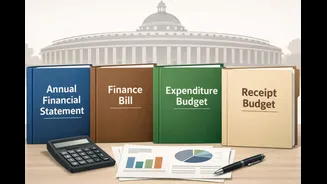
Several essential documents accompany the Union Budget, providing a comprehensive view of the government's financial plans. The 'Annual Financial Statement' is the primary document, outlining the government's estimated receipts and expenditures. The 'Demand for Grants' details the funds requested by each ministry and department for the upcoming fiscal year. The 'Finance Bill' contains the government's proposals for new taxes, tax changes, and related financial matters. The 'Economic Survey' provides an overview of the Indian economy's performance during the previous year and offers insights into the challenges and opportunities ahead. The 'Budget at a Glance' presents a concise summary of the budget's key highlights. These documents, collectively, offer a transparent and thorough account of the government's financial strategy. Accessing and studying these documents is crucial for anyone seeking a deeper understanding of the budget and its implications. They are typically made available to the public online, fostering transparency and public engagement.